Maharashtra Board Class 9 Geography Solutions Chapter 11 Transport and Communication

Balbharti Maharashtra State Board Class 9 Geography Solutions Chapter 11 Transport and Communication Notes, Textbook Exercise Important Questions and Answers.

Maharashtra State Board Class 9 Geography Solutions Chapter 11 Transport and Communication

Class 9 Geography Chapter 11 Transport and Communication Textbook Questions and Answers

1. Differentiate between:

(A) Railways and roadways
Answer:

BasisRailwaysRoadways
(1) Carrying CapacityCarrying capacity is moreCarrying capacity is limited
(2) DistanceSuitable for long distancesSuitable for short distance
(3) Door to door serviceRailway does not provide door to door service.Roadways provide door to door service.
(4) TrafficThere is no problem of traffic jam on railways.There is a problem of traffic jam on roadways.
(5) PollutionRailways do not create a problem of air pollution.Roadways create a problem of air pollution.

(B) Transportation and communication
Answer:

BasisTransportationCommunication
(1) MeaningTransportation is the movement of humans, animals and goods from one location to another.Communication is the exchange of information, ideas and messages by speaking, writing or some other medium.
(2) MeansIt is done through railways, roadways, waterways, airways and pipelines.It is done through telephones, mobiles, video-conferencing, email and post etc.
(3) ThreatsThe threats like a traffic jams, accidents, noise pollution, air pollution are associated with transportation.The threats like technical issues, cyber crimes, etc. are associated with the communication.

(C) Conventional and modern means of communication.
Answer:

BasisConventional means of CommunicationModem means of Communication
(1) MeaningThe means of communication – used since olden times – conventional means of communication.The means of communication – used in modern times – modern means of communication.
(2) ExamplesLetter, newspapers, radio, television.Mobile phone, internet, etc.
(3) InteractionMay not facilitate the direct interaction between – sender and receivers of information.Facilitates the direct interaction between – sender and the receivers of information.

2. Answer in detail:

Question 1.
‘Newspapers are used for communication’. Explain the statement.
Answer:

  • The news related to economic events, politics, social issues, culture, education, etc. are published in newspapers.
  • Newspapers arecheap means of communication. Through newspapers information gets spread to masses at a time.
  • Newspapers are published in various languages.
  • In this way, newspapers are used for communication.

Thus, newspapers are used for communication.

Maharashtra Board Class 9 Geography Solutions Chapter 11 Transport and Communication

Question 2.
Explain how T.V. is a cheap means of communication.
Answer:

  • Various programs, serials, etc. related to entertainment, social issues, culture, education, politics, economic events, sports, weather conditions, etc. are broadcasted on television.
  • Through television the information is exchanged to masses at a time with high speed.
  • Television can broadcast both audio and video for communication. In this way, television is a cheap means of communication.

Thus, TV is a cheap means of communication.

Question 3.
What types of communications can be done through mobiles?
Answer:

  • Calling and SMS (Short message system) facilitates easy one-to-one communication, using mobiles anywhere and at any time.
  • Video conferencing and applications like ‘Whatsapp’ allow one to communicate with many people simultaneously.
  • Various functions like, money transfer, payment of bills, purchase of goods and services and online trading can be done using smart phones’ various apps like BHIM, SBI anywhere, etc.
  • Internet and social media can also be accessed through mobile phones.

3. Name them on the basis of the given information:

Question 1.
Five cities with airways services in Maharashtra
Answer:
Mumbai, Pune, Nagpur, Kolhapur, Aurangabad, Nashik and Nanded.

Question 2.
Services available in post offices
Answer:

  • Financial Services: Saving schemes, insurance services and mutual fund.
  • Mail services: Speed post, postcard, parcel and courier.

Question 3.
National Highways near your area
Answer:

  • Mumbai- Goa Highway (NH 66)
  • Mumbai- Bangaluru highway (NH 04)
  • Mumbai- Agra Highway (NH 08)
    Note: Answer may vary.

Question 4.
Ports along the coast of Maharashtra
Answer:

  • Malvan
  • Venture
  • Vasai
  • Dahanu
  • Gharapuri

Maharashtra Board Class 9 Geography Solutions Chapter 11 Transport and Communication

4. Identify the relation and match the columns making a chain

Group ‘A’Group ‘B’Group ‘C’
(1) Postal servicesRoadwaysSpeed post
(2) ShivneriWorld network of connected computersExchange of information
(3) InternetConventional means of communicationComfortable journey
(4) RoRo transportRailwaysEnergy, time and labour saving

Answer:

Group ‘A’Group ‘B’Group ‘C’
(1) Postal services Conventional means of communication Speed post.
(2) Shivneri Roadways Comfortable journey.
(3) Internet World network of connected computers Exchange of information.
(4) RoRo transport Railways Energy, time and labour saving.

5. Read the following maps and answer the questions:
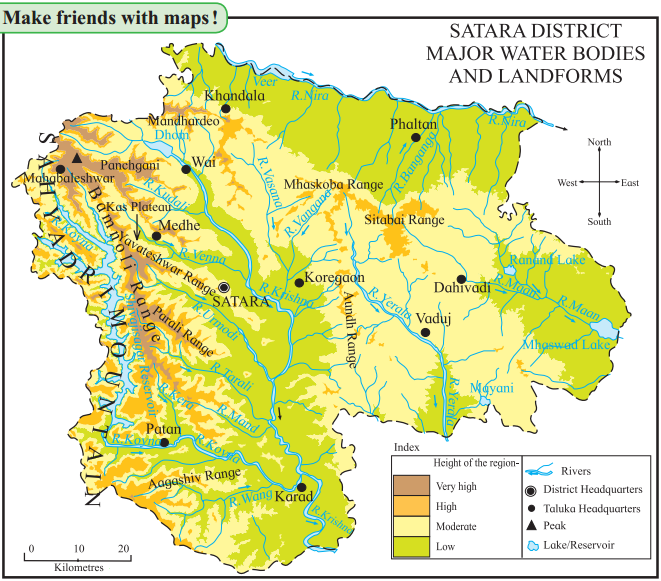
Maharashtra Board Class 9 Geography Solutions Chapter 11 Transport and Communication 1

Question 1.
In which region do you find a dense network of transport routes in the map?
Answer:
The central part of the district has dense network of transport routes.

Question 2.
How is the physiography of the region with dense network?
Answer:
The central part of the district has lower and medium elevation as compared to the Western part.

Question 3.
Which region has a sparse network of transport routes?
Answer:
The transport network is sparse in the Eastern part of the district.

Question 4.
How is the physiography of this region?
Answer:
The region with sparse network of transport . routes is comparatively of lower and medium elevations.

Question 5.
Look for the region lacking transport routes.
Answer:
The Western region lacks transport routes.

Maharashtra Board Class 9 Geography Solutions Chapter 11 Transport and Communication

Question 6.
What kind of obstruction can you find there?
Answer:
Sahyadri Mountains and Shivsagar reservoir of Koyna dam are the obstructions found here.

Class 9 Geography Chapter 11 Transport and Communication Intext Questions and Answers

Let’s Recall

Complete the following table:

TransportMeans ofUsed for
RouteTransport
RoadwaysRickshawPassengers
RoadwaysTrucks
Metro
Waterways
Helicopter
Airways
Submarine
WaterwaysFreight
Mules
Railways
Pipelines

Answer:

TransportMeans of TransportUsed for
RoadwaysRickshawPassengers
RoadwaysTrucksGoods
RailwaysMetroPassengers
WaterwaysCruise/BoatsPassengers
AirwaysHelicopterPassengers
AirwaysAeroplanePassengers
WaterwaysSubmarineDefence & Research
WaterwaysCargo-shipFreight / Goods
RoadwaysMulesGoods
RailwaysCargo goods trainGoods
PipelinesPipesOil, Water and Gas

Can you tell?

We have given some specific conditions. In this context, tell with reasons which means of transport route will you take?

Maharashtra Board Class 9 Geography Solutions Chapter 11 Transport and Communication

Question 1.
You have to reach Bhopal from Nagpur due to some emergency.
Answer:
Airways : As it is the fastest mode of transport.

Question 2.
You have to reach Kanyakumari carrying the message of cleanliness. There is no time limit for it.
Answer:
Roadways : Since roadways connect even the remotest places the message can reach to all persons.

Question 3.
Send the Alphonso mangoes from Konkan to Arab countries.
Answer:
Airways – Since mango is a perishable commodity, the fastest mode of transportation is used. ,

Question 4.
Indrayani variety of rice has to be exported from Pune to Cape Town of South Africa at low expenditure.
Answer:
In such conditions, we will choose waterways as a route and ship as a means of transport. Because rice is comparatively durable agricultural good in the given situation it has to be transported at low cost.

Question 5.
Large-scale production of vegetables in Nandurbar has taken place but is not fetching a good price. The Nagpur-Surat National Highway and the Surat-Bhusawal Railway line passes through the district.
Answer:
In a given situation, we will choose roadways and railways as a route and truck and goods’ ways/train respectively as a means of transport. Because the highway and railway line that pass through the district, connects the important towns and cities from the district.

Question 6.
You have to go to Singapore from your village/ town. You have 10 days to do the same.
Answer:
Roadway and Airways: I will first reach the nearest airport of a city by road and then take an Airway. It is the fastest mode of transport.

Can you tell?

Question 1.
Make a list of various means of communication you are aware of.
Answer:
Letters, radio, television, telephones, mobile phones, newspaper, internet, satellites etc. are the various means of communication.

Maharashtra Board Class 9 Geography Solutions Chapter 11 Transport and Communication

Question 2.
How many of these do you actually use? Make a box around them.
Answer:
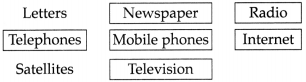
Maharashtra Board Class 9 Geography Solutions Chapter 11 Transport and Communication 2

Question 3.
For what do you use them ?
Answer:
We use these means of communication to exchange important information, ideas, opinions etc. with friends, parents, relatives and teachers.

Question 4.
Who uses the remaining means ?
Answer:
The remaining means are used by parents, other relatives, businessmen from locality and government agencies.

Can you do it?

Observe the image and the instructions given on page 87 of the textbook and answer the following questions:

Question 1.
Which are the dates mentioned in the image?
Answer:
The dates mentioned are 15/5/2017 and 19/5/2017

Question 2.
What does the information in the image tell?
Answer:
The image informs that the person’s email account has been hacked. He cannot access his important files as they have been encrypted and to recover his files, he will have to pay a certain amount to the hacker.

Question 3.
What is the price asked for recovering the files and in what currency?
Answer:
The price asked for recovering the files is 300 US dollars in bitcoins.

Maharashtra Board Class 9 Geography Solutions Chapter 11 Transport and Communication

Question 4.
What is the type of crime here?
Answer:
This is a cyber crime.

Give it a try
Think about the transport issues you come across during your journeys. Write the innovative changes you would suggest in the transport routes or means in your copy.

Question 1.
Congested city roads and Pollution
Answer:
Electric cars which are smaller and smarter.

Question 2.
Time-consuming travel
Answer:
Dedicated bus corridors, carpooling, more number of Expressways.

Give it a try

Question 1.
Look for the other uses of artificial satellites? Try to understand how they are related to your daily life?
Answer:
(a) The other uses of artificial satellites are as follows:

  • Studying about other planets.
  • Live broadcasting of a program/event from any region of the earth.
  • Studying the resources on the earth’s surface.
  • Regional planning.
  • Planning defense strategies.
  • Forecasting weather etc.

Maharashtra Board Class 9 Geography Solutions Chapter 11 Transport and Communication

(b) The artificial satellites are directly or indirectly related to personal, social, educational, economic, cultural, political aspects in everyone’s daily life. For eg. through artificial satellites, one can enjoy a live program like award functions/cricket match, etc. on television.

Class 9 Geography Chapter 11 Transport and Communication Additional Important Questions and Answers

Complete the statement choosing the correct option from the bracket:

Question 1.
The price of the goods can be kept low if the transportation is ………….. .
(a) feasible
(b) expensive
(c) costly
(d) affordable
Answer:
(d) affordable

Question 2.
…………… growth gets a boost due to transportation.
(a) Physical
(b) Culture
(c) Economic
(d) Political
Answer:
(c) Economic

Question 3.
Freight transport through …………… is costlier than railways.
(a) trucks
(b) horses
(c) bullock-cart
(d) yak
Answer:
(a) trucks

Question 4.
The western part of Satara district is occupied by the …………… of its off shoots.
(a) Vindhyas
(b) Satpudas
(c) Sahyadris
(d) Aravallis
Answer:
(c) Sahyadris

Maharashtra Board Class 9 Geography Solutions Chapter 11 Transport and Communication

Question 5.
The use of RORO (Roll on Roll off) services started in …………… railways in India.
(a) Goa
(b) Maharashtra
(c) Konkan
(d) Pune
Answer:
(c) Konkan

Question 6.
In the modem age, man-made …………… are an important and effective means of communication.
(a) planets
(b) asteroids
(c) satellites
(d) rockets
Answer:
(c) satellites

Question 7.
Satellite images obtained by …………… facilitate study of resources on Earth’s surface and help in regional planning.
(a) GPS
(b) radio
(c) remote sensing1
(d) drones
Answer:
(c) remote sensing

Question 8.
Communication is not just limited to talking on telephones or sending messages but …………… is also available now.
(a) tele-calling
(b) STD-Calling
(c) video-calling
(d) Local-calling
Answer:
(c) Video-calling

Maharashtra Board Class 9 Geography Solutions Chapter 11 Transport and Communication

Question 9.
There is a correlation between transport routes and the …………… of region.
(a) soil type
(b) rainfall
(c) climate
(d) physiography2
Answer:
(d) physiography

Question 10.
Transport facilities can develop well in …………… region.
(a) mountainous
(b) plain
(c) forest
(d) plateau
Answer:
(b) plain

Question 11.
Shiv sagar reservoir of the …………… dam is located in the Satara district.
(a) Ram Krishna
(b) Bhakra-Nagal
(c) Koyna
(d) Tehri
Answer:
(c) Koyna

Question 12.
The …………… part of Satara district has a dense transport network.
(a) Western
(b) Central
(c) Eastern
(d) Southern
Answer:
(b) central.

Write answers in one sentence

Question 1.
What is transportation?
Answer:
The movement of goods and people from one place to another is called transportation.

Maharashtra Board Class 9 Geography Solutions Chapter 11 Transport and Communication

Question 2.
Which are the different kinds of transport routes?
Answer:
Roadways, railways, waterways, airways and pipelines are the different kinds of transport routes.*

Question 3.
For what reasons does a region become devoid of any transport route?
Answer:
Due to mountains, valleys, rivers, reservoirs

  1. remote sensing – obtaining information regarding any place or an object without actually establishing direct contact with it is called remote sensing.
  2. physiography – nature and slope of land and undulating1 topography2 a region becomes devoid of any transport route.

Question 4.
Why does a dense network of transportation develop in some regions?
Answer:
A dense network of transportation develops in some regions due to lower and medium elevation, plains, flat and regular topography, etc.

Question 5.
What does Ro-Ro transport stand for?
Answer:
Ro-Ro transport is Roll-on, Roll-off transport.

Question 6.
Why was the Ro-Ro transport introduced?
Answer:
Freight transport by trucks is costlier than railways, so as a solution the Ro-Ro transport has been introduced.

Question 7.
What are Cyber Crimes?
Answer:
Crimes like website/email hacking, theft of information, economic frauds, wars, terrorism, etc. that are committed by using computers and internet are called ‘cyber crimes’.

Maharashtra Board Class 9 Geography Solutions Chapter 11 Transport and Communication

Question 8.
How are BHIM app, SBI anywhere app useful?
Answer:
BHIM App, SBI Anywhere app, helps us to pay various bills, sell, buy and carry out various transactions through mobile phones.

Question 9.
Where was Ro-Ro service introduced for the first time in India?
Answer:
Ro-Ro service, was introduced for the first time in India by the Konkan Railway.

Give Reasons:

Question 1.
The development of transportation is an indicator of the development of that region.
Answer:

  • With development of transportation there is an increase in the movement of freight and passengers of that region.
  • Development of transportation develops industries and markets.
  • Per capita Income (PCI) and Gross Domestic product (GDP) increases leading to economic growth.
  • So it is said that development of transportation is an indicator of the development of that region.

Question 2.
Green Corridor saves many lives.
Answer:

  1. Green Corridor is a route cleared of all traffic obstacles, so that a dead person’s (donor’s) organs can be speedily transported to the receiver
  2. It is called ‘green’ corridor because the traffic lights are turned green for the speedy movement of the vehicle carrying the organ.
  3. Thus, Green Corridor saves many lives.

Question 3.
Ro-Ro Transport helps to reduce cost of transport.
Answer:

  • In Ro-Ro (Roll-on, Roll-off) transport, the trucks loaded with goods are transported to desired railway stations through a goods train.
  • From there the trucks take the goods ahead to the desired locations.
  • Ro-Ro transport helps to reduce the cost of transport as railways are used for the part of the distance.
  • Ro-Ro transport also reduces cost of fuel and pollution caused by trucks.

Answer in details:

Question 1.
Give the Importance of transportation.
Answer:
Transportation is a basic infrastructure.
The development of transportation infrastructure is an indicator of the development of the particular region or a country.

The importance of transportation can be explained with the help of the following points :

  • Extending trade and network.
  • Rapid industrialisation.
  • Availability of employment opportunities.
  • Regional connectivity.
  • Utility of the site.
  • Overcoming scarcity (deficit).
  • Decreasing regional imbalance1.
  • Tourism development.

Maharashtra Board Class 9 Geography Solutions Chapter 11 Transport and Communication

Question 2.
Give the Importance of a communication system.
Answer:

  • Communication or exchange of information is an important process in today’s era. Communication is basic infrastructure.
  • Man-made satellites are an important and effective means of communication.
  • The exchange of messages through mobiles, watching progammes on television, getting updates of climatic condition etc. is possible simultaneously through man-made satellites.
  • Satellite images obtained by remote sensing facilitate study of resources on earth’s surface and helps in regional planning.
  • Many apps which can be used on mobile phones have been developed for the same.
  • For e.g. BHIM app, SBI anywhere, etc. By using these communicational facilities, we can pay various bills, sell and buy goods and services and carry other such transactions.
  • Nowadays, communication is not just limited to talking on telephone or sending messages but also video calling is available now.

Explain:

Question 1.
Factors to be kept in mind while selecting the route way and the means of transport.
Answer:
The following factors should be kept in mind while selecting the route way and means of transport:

  • Distance
  • Duration
  • Cost
  • Time
  • Products
  • Climate
  • Market
  • Routes and means
  • Physiography

Question 2.
Importance of Transportation.
Answer:

  1. The development of transportation infrastructure is an indicator of the development of the country or that region.
  2. The reforms in the transport sector enhance the dynamicity of freight and passengers in a region.
  3. Industries and markets develop. Economic growth gets a boost. Per Capita Income (PCI) and Gross Domestic Product (GDP) increases too.
  4. Transportation leads to –
    • Extending trade and network
    • Rapid industrialisation
    • Availability of employment opportunities
    • Regional connectivity
    • Utility of the site
    • Overcoming scarcity (weakness)
    • The decrease in regional imbalance
    • Tourism development

Maharashtra Board Class 9 Geography Solutions Chapter 11 Transport and Communication

Question 3.
Importance of man-made satellites.
Answer:

  • In the modern age, man-made satellites are an important and effective means of communication.
  • The exchange of messages through mobiles, watching programmes on TV and getting updated information regarding climatic conditions is possible simultaneously through man-made satellites.
  • Satellite images obtained by remote sensing facilitate study of resources on earth’s surface and help in regional planning.

Thus, man-made satellites are important.

Question 4.
Green Corridor.
Answer:

  • It happens that sometimes a dead person has donated his organs.
  • In such cases, such organs need to be transported from the donor’s location to the receiver urgently.
  • For this organ transfer, all types of routes are cleared of all obstacles. This is called Green Corridor.
  • Consequently, this kind of rapid transport corridor can save the receiver’s life.

Maharashtra Board Class 9 Geography Solutions Chapter 11 Transport and Communication

Question 5.
Threats associated with means of communication.
Answer:

  • Besides facilities, means of communication have a few threats associated with them.
  • Many crimes are happening through the internet like website/email hacking, fraud, theft, attack, wars and terrorism. Possibilities of threats like theft of information, economic frauds, attacking important websites etc. arise.
  • Therefore, one should take precautions while using social networks.
  • One should not reveal personal information before ensuring safety.
  • One should not put any sensitive information or personal information on social networking sites, blogs, etc.
Maharashtra Board Class 9 Geography Solutions Chapter 9 Trade

Balbharti Maharashtra State Board Class 9 Geography Solutions Chapter 9 Trade Notes, Textbook Exercise Important Questions and Answers.

Maharashtra State Board Class 9 Geography Solutions Chapter 9 Trade

Class 9 Geography Chapter 9 Trade Textbook Questions and Answers

1. Classify the trade taking place between the following regions:

(1) Maharashtra and Punjab
(2) India and Japan
(3) Lasalgaon and Pune
(4) China and Canada
(5) India and European Union
Answer:
(1) Internal trade
(2) International trade
(3) Internal trade
(4) International trade
(5) International trade

Maharashtra Board Class 9 Geography Solutions Chapter 9 Trade

2. Write the correct word- Import or Export for the following :

(1) India buys crude oil from the Middle-East Asian countries.
(2) Wheat is sent to Asian countries from Canada.
(3) Japan sends machine parts to APEC countries.
Answer:
(1) Import
(2) Export
(3) Export

3. Correct and rewrite the wrong statements:

(A) India is a self-sufficient country.
Answer:
India is not a self-sufficient country as it depends on other countries for crude oil, machinery, etc.

(B) The place where there is excess production does not have demand for those products.
Answer:
The place where there is excess production more creates ‘supply’ for those products.

(C) International trade processes are easier than local trade.
Answer:
International trade processes are relatively more difficult than local trade.

4. Identify and write the type of trade:

(A) Srushti brought sugar from the grocery shop.
Answer:
Retail Trade.

(B) The traders from Surat bought cotton from the farmers of Maharashtra.
Answer:
Wholesale Trade.

(C) Sameer has exported pomegranates from his farms to Australia.
Answer:
International Trade.

(D) Sadabhau bought 10 sacks of wheat and 5 sacks of rice from Market Yard for selling in his own shop.
Answer:
Wholesale Trade.

5. Write answers in short:

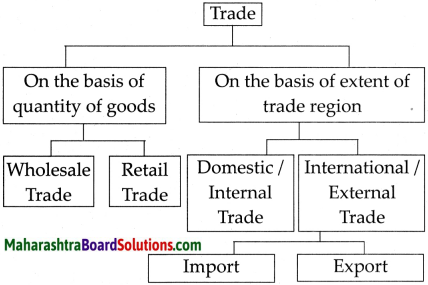
(A) Create a flowchart showing the types of trade
Answer:
Trade refers to buying and selling for fulfilling each other’s needs.
Trade is divided into two categories:

  • On the basis of the quantity of goods.
  • On the basis of the extent of trade region.
    Maharashtra Board Class 9 Geography Solutions Chapter 9 Trade 7

(B) Explain the difference in types of balances of trade.
Answer:
The difference between the import and export values of a country in a specific period is called balance of trade.
The different types of balance of trade are:

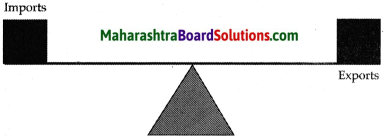
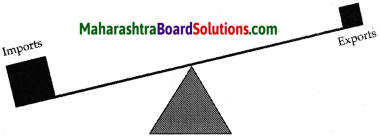
  • Unfavourable Balance of Trade: When the value of imports is more than the value of exports, it is called ‘Unfavourable Balance of Trade.’
    Maharashtra Board Class 9 Geography Solutions Chapter 9 Trade 5
  • Favourable Balance of Trade: When the value of exports is more than the value of imports, it is called ‘Favourable Balance of Trade.’ Maharashtra Board Class 9 Geography Solutions Chapter 9 Trade
  • Balanced Balance of Trade: When the value of exports and imports is almost the same, it is called ‘Balanced Balance of Trade.’
    Maharashtra Board Class 9 Geography Solutions Chapter 9 Trade 6

(C) State the objectives of WTO.
Answer:
WTO stands for World Trade Organisation. The main objectives of WTO are:

  • To provide platform for negotiations in international trade.
  • To handle the differences related to trade.
  • To monitor the trade policies of member states.
  • To provide a technological assistance and training to developing countries.

(D) What is the difference between the OPEC and APEC in terms of their functions?
Answer:

OPECAPEC
(i) OPEC stands for Organisation of Petroleum Exporting Countries.APEC stands for Asia-Pacific Economic Cooperation (APEC).
(ii) OPEC is the organisation of oil-producing and exporting countries.APEC is the regional organisation of the countries in the Asia Pacific region.
(iii) It keeps control over the international trade of crude oil.It promotes free trade and economic cooperation among the member countries.
(iv) It keeps control on the rates of crude oil production among member states.It promotes regional and technical cooperation among members.

(E) Write the functions of the important trade organisations in Asia.
Answer:
Important trade organisations in Asia are:
Association of South East Asian Nations (ASEAN)

  • To expand social and cultural harmony along with economic growth in South East Asia.
  • To promote regional peace.
  • To promote tax waivers for trade growth in member states.

Asia Pacific Economic Co-operation (APEC)

  • To promote free trade and economic co¬operation in the Asia-Pacific Ocean region.
  • To promote regional and technical co-operation among members.

(F) What is the importance of marketing from farmers ‘point of view’?
Answer:
Marketing involves price of a commodity, its sales promotion, its advertising and its proper distribution.

  • In the traditional marketing system, the farmers used to sell their products in the local market at whatever price available. This is because the fruits and vegetables are perishable, so the farmers used to incur losses,
  • However, the modem farmers have acquired skills in marketing. They are aware of the trends in the market.
  • They produce food grains and fruits as per the international standards.
  • They undertake grading and packaging of their products. The presentation of any product has become indispensable now. Maharashtra Board Class 9 Geography Solutions Chapter 9 Trade
  • They advertise the quality of their product and keep the same for sale, along with samples, in the mall.
  • These commercial-minded farmers contact the supermarkets and exporters through the internet.
  • As a result, their products are sold at a higher price in the malls. They also fetch a good price from exports.
  • Thus marketing is as important as the cultivation of crops. By following modem marketing techniques, the income of the farmers can increase and that can improve their standard of living.

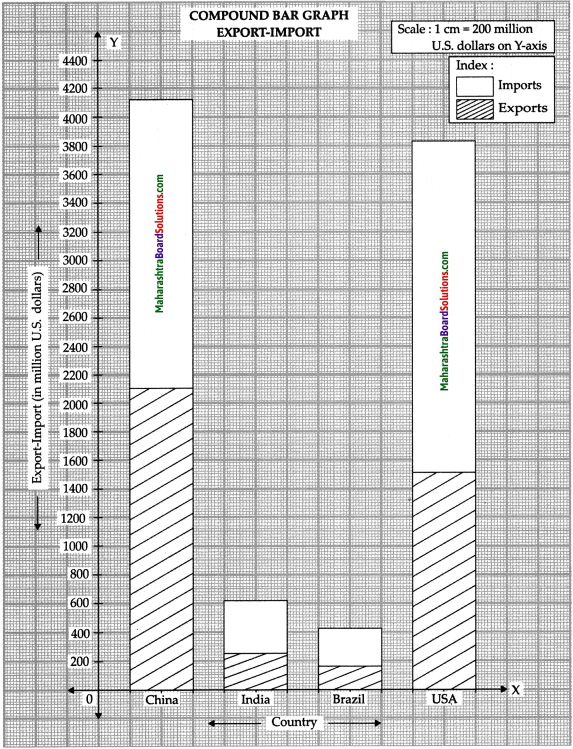
6. In the following table, export-import of some countries in the year 2014-15 is given in million U.S. dollars. Make a compound bar graph of the given statistical information. Read the bar diagram carefully and comment upon the balance of payments of the respective countries.

CountryExportImport
China21431960
India272380
Brazil190241
USA15102380

Answer:
Maharashtra Board Class 9 Geography Solutions Chapter 9 Trade 1

  • China has a balance of trade.
  • India, USA and Brazil have an unfavourable balance of trade.
  • The volume of international trade of China and the USA is maximum.
  • International trade of India and Brazil is insignificant.
  • International trade is dominated by China and the USA.

Class 9 Geography Chapter 9 Trade Intext Questions and Answers

Make friends with maps!

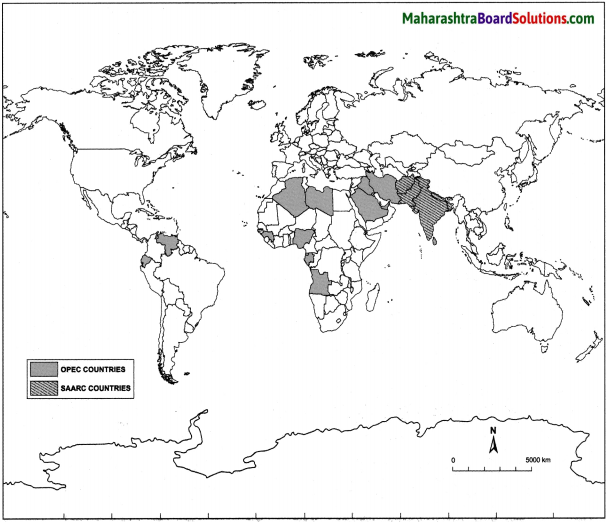
Find out the names of the member-states of the following organisation with the help of internet. Show these member nations on the outline map given in the figure using different colour for each organisation.
(1) OPEC member – countries
(2) SAARC member – countries
Answer:
Maharashtra Board Class 9 Geography Solutions Chapter 9 Trade 2

(1) OPEC member- countries
Republic of Iran, Iraq, Kuwait, Saudi Arabia, Venezuela, Qatar, Libya, The United Arab Emirates, Algeria, Nigeria, Ecuador, Gabon, Angola, Equatorial Guinea (2017).

(2) SAARC countries
Afghanistan, Bangladesh, Bhutan, India, Nepal, Maldives, Pakistan, Sri Lanka.

Maharashtra Board Class 9 Geography Solutions Chapter 9 Trade

Can you tell?

With a lot of hard work Dhondiba used to grow best varieties of vegetables and other agricultural commodities. But his products could not fetch a good price. His college-going son, saw this situation and he first packed the commodities nicely after cleaning them neatly. Then he contacted the supermarket in the town. Looking at the quality of his product, they advertised the farm product and kept it for sale in the mall. Today, Dhondiba’s commodities are being sold for higher prices than before.

Question 1.
Why did Dhondiba’s commodities start getting higher prices?
Answer:
For any commodity to be accepted in the market and fetch a better price, it should have an appropriate presentation. The price of the commodity is determined by its quality, its grading and how it is presented before the customer. Dhondiba’s son who was educated, realized this and took the necessary actions in time which helped Dhondiba to fetch better price.

Question 2.
What did Dhondiba’s son do for that?
Answer:
Dhondiba’s college-going son realised that the agricultural commodities sold by his father lacked proper presentation and marketing. So he adopted modem marketing practices like cleaned the commodities well and packed them nicely. He then got in touch with the supermarket in the town. The supermarket was impressed with the quality of Dhondiba’s products, they advertised the farm product and kept it for sale in the mall. Dhondiba’s commodities were in great demand and sold at higher prices than before.

Question 3.
What measures would you suggest to the farmers near you so that then commodities can fetch a good price?
Answer:
Some of the measures that we can suggest to the farmers so that then commodities can fetch a better price are:

  • Clean their vegetables, fruits well.
  • Grade the commodities.
  • Pack them nicely.
  • Advertise their farm products.
  • Sell it in the market.

Give it a try.

Obtain information regarding the bilateral trade between India and Japan for any financial year and the value of the export and import of major goods. Write two paragraphs on it.
Answer:
India’s Trade with Japan (April 2016-Jan 2017)

Exports₹ 20,000 Cr
Imports₹ 55,000 Cr
Trade Balance₹ 35,000 Cr

This shows that India has an Unfavourable Balance of Trade with Japan, in which the value of Imports is more than the value of Exports.

Maharashtra Board Class 9 Geography Solutions Chapter 9 Trade

India’s major exports to Japan
Petroleum products, Iron ore, Fish Meat (including lobsters, crabs, shrimps etc) Motor parts, Insecticides, Fungicides, Turbo-jets, Gas turbines etc.

India’s major imports from Japan
Iron and Steel Products, Transport Equipments, Plastic, Machinery items like Drilling Platforms, Floating Cranes, Printing machinery etc.

Think about it.

Question 1.
What will happen if there is only one currency used in the whole world?
Answer:
The European Union is an example, which has one common currency ‘Euro’.
Advantages of having one common currency. If the whole world has one common currency, international trade will become much easier and move will increase international trade also. Disadvantages of having one common currency.

If all the countries adopt one common currency, there will be one uniform policy. No country will be able to have their own monetary and fiscal policy.

Find out.

You get products from other places. Similarly, find out where the special products/items made in your village/city are sent?
Answer:
I live in Mumbai.
Special products exported from Mumbai and where they are sent:
Cotton textiles – China, USA
Commercial vehicles – Mexico, South Africa

Try this.

(I) Obtain the following information.

Question 1.
Make a list of commodities which you use daily.
Answer:
Toothpaste, powder, tea, hair oil, biscuits, food grains.

Question 2.
Who uses these commodities?
Answer:
We as consumers use these commodities.

Question 3.
Write the sources of supplies of these commodities.
Answer:
Producers are the source of supplies.

Question 4.
From where do you buy these commodities?
Answer:
Retail Shop.

Question 5.
What do you call the act of buying and selling?
Answer:
Trade.

Maharashtra Board Class 9 Geography Solutions Chapter 9 Trade

Question 6.
What does the shopkeeper take in lieu of the commodity?
Answer:
The shopkeeper takes money (currency) in lieu of the commodity.

(II) A list of few goods you regularly use at home, is given here. Write the names of the product, the producer company’s name and the source of information in front of it.

Goods that Name of the you useName of the companySource of information
Colgate ToothpastePalmoliveT.V. advertisement
Coffee NescafeNestleT.V. advertisement
Bathing Soap LuxUnileverT.V. advertisement
Hair Oil ParachuteMarica IndiaT.V. advertisement
Biscuits Parle GParle ProductsT.V. advertisement

 Choice may vary from consumer to consumer.

(F) Use your brain power! (Textbook Page no. 70) Suppose you are a trader and you want to sell your product in other states of the country and also in other parts of the world

Question 1.
Which of these is an easier way of doing trade?
Answer:
To sell the product in other states of the country, domestic or internal trade is easier. To sell the product in other parts of the world, international trade, i.e. export trade is done

Question 2.
Which trade can bring some limitations?
Answer:
International trade.

Question 3.
Look for reasons behind them
Answer:
Factors like economy of the country, government policis, markets, laws, judicial system, currency, language and political relation between the two trading countries can bring limitations in international trade.

Class 9 Geography Chapter 9 Trade Additional Important Questions and Answers

Complete the statements choosing a colored option from the bracket:

Question 1.
…………………. refers to buying and selling goods and services to fulfill each other’s needs.
(a) Trade
(b) Business
(c) Labelling
(d) Branding
Answer:
(a) Trade

Maharashtra Board Class 9 Geography Solutions Chapter 9 Trade

Question 2.
When there is buying and selling of goods it is called ………………….. trade.
(a) invisible
(b) visible
(c) impossible
(d) possible
Answer:
(b) visible

Question 3.
Buying and selling in large quantities is called ………………….. trade.
(a) wholesale
(b) retail
(c) invisible
(d) none of these
Answer:
(a) wholesale

Question 4.
………………….. trade refers to buying and selling in small quantities.
(a) Invisible
(b) Retail
(c) Wholesale
(d) None of these
Answer:
(b) Retail

Question 5.
………………….. trade means buying goods and services from another country
(a) Export
(b) Retail
(c) Wholesale
(d) Import
Answer:
(d) Import

Maharashtra Board Class 9 Geography Solutions Chapter 9 Trade

Question 6.
When the value of imports is more than the value of exports it is called ………………….. balance of trade.
(a) favourable
(b) unfavorable
(c) balanced
(d) possible
Answer:
(b) unfavorable

Question 7.
………………….. was formed to control the international trade of crude oil.
(a) OPEC
(b) APEC
(c) ASEAN
(d) WTO
Answer:
(a) OPEC

Question 8.
BRICS stands for …………………. .
(a) Brazil, Russia, Indonesia, China and Sudan
(b) Belgium, Rome, India, China and South Africa
(c) Brazil, Russia, India, China and South Africa
Answer:
(b) Brazil, Russia, India, China and South Africa

Question 9.
………………….. was formed to establish an integrated market2 in member nations in Europe.
(a) EU
(b) ASEAN
(c) BRICS
(d) OPEC
Answer:
(a) EU

Question 10.
………………….. trade means the exchange of goods and services of one country with other countries.
(a) Retail
(b) Wholesale
(c) International
(d) None of these
Answer:
(c) International

Match the following:

Question 1.

Column ‘A’Column ‘B’
(1) WTO(a) Brazil, Russia, India, China and South Africa.
(2) BRICS(b) World Trade Organisation.
(3) Favourable balance of trade(c) Value of exports is more than value of imports.

Answer:
(1 – b),
(2 – a),
(3 – c)

Maharashtra Board Class 9 Geography Solutions Chapter 9 Trade

Question 2.

International organisationsHeadquarters
(1) EU
(2) WTO
(3) SAARC
(a)  Kathmandu (Nepal)
(b) Jakarta (Indonesia)
(c)  Geneva (Switzerland)
(d)  Brussels (Belgium)

Answer:
(1 – d),
(2 – c),
(3 – a)

Question 3.

Column ‘A’Column ‘B’
(1) OPEC(a) Expanding social and cultural harmony in South East Asia.
(2) APEC(b) Controlling international trade of crude oil.
(3) ASEAN(c) Free trade in Asia- Pacific Ocean region.
(d) When value of imports is more than the value of exports.

Answer:
(1 – b),
(2 – c),
(3 -a)

Write answers in one sentence each:

Question 1.
What do you mean by trade?
Answer:
Trade refers to buying and selling of goods and services to fulfil each other’s needs.

Question 2.
What is visible trade3?
Answer:
When there is buying and selling of goods it is known as visible trade.

Maharashtra Board Class 9 Geography Solutions Chapter 9 Trade

Question 3.
What is invisible trade4?
Answer:
When there is exchange of services, it is known as invisible trade.

Question 4.
Who conducts wholesale trade?
Answer:
Wholesale trade is conducted by wholesalers.

Question 5.
What do you mean by domestic trade?
Answer:
Domestic or internal trade is the trade that takes place within the geographical boundaries of one country. For eg. Trade between Maharashtra and Gujarat.

Question 6.
What is international trade?
Answer:
International trade means buying and selling of goods and services between two or more countries. For example, trade between USA and India.

Question 7.
What do you mean by import trade?
Answer:
Import trade means buying goods and services from another country. For eg. India imports crude oil from Kuwait.

Question 8.
What is export trade?
Answer:
When country sells its goods and services to another country, it is called export trade. For eg. India exports rice to USA.

Maharashtra Board Class 9 Geography Solutions Chapter 9 Trade

Question 9.
What is balance of trade?
Answer:
The difference between the import and export values of a country in a specific period is called balance of trade.

Question 10.
What do you mean by unfavourable balance of trade?
Answer:
When the value of imports is more than the value of exports it is called unfavourable balance of trade.

Question 11.
What is favourable balance of trade?
Answer:
When the value of exports is more than the value of imports it is called favourable balance of trade.

Question 12.
What is balanced balance of trade?
Answer:
When the value of exports and imports is almost same, it is called balanced balance of trade.

Question 13.
What is WTO?
Answer:
WTO stands for World Trade Organisation.

Question 14.
What does EU stand for?
Answer:
EU stands for European Union which comprises of 28 European countries.

Question 15.
What does OPEC stand for?
Answer:
OPEC stands for Organisation of Petroleum Exporting Countries.

Question 16.
Give extended form of.
(i) SAARC
(ii) ASEAN
(iii) APEC
(iv) BRICS
Answer:
(i) SAARC – South Asian Association for Regional Co-operation.
(ii) ASEAN – Association of South-East Asian Nations.
(iii) APEC – Asia-Pacific Economic Co-operation.
(iv) BRICS – Brazil, Russia, India, China and South Africa.

Maharashtra Board Class 9 Geography Solutions Chapter 9 Trade

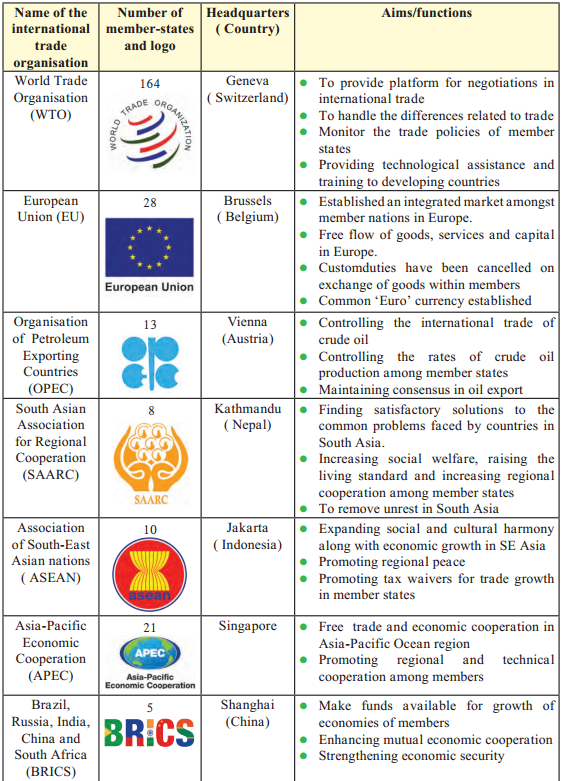
Some economic organisations of the world
Maharashtra Board Class 9 Geography Solutions Chapter 9 Trade 3

Give Reason

Question 1.
Some international economic organisations were set up
Answer:
Some international economic organisations were set up:

  • To smoothen the process of trade between countries of different economic status.
  • To facilitate the growth of international trade.

Question 2.
The Consumer Protection Act been enacted
Answer:

  1. The Consumer Protection Act has been enacted to protect the consumers from fraudulent traders supplying sub-standard products.
  2. Many advertisements make exaggerated statements to cheat the consumers and these advertisements use incorrect information.
  3. The Consumer Protection Act empowers consumers with their rights and duties. Consumers have right to complain and seek redressal.

Explain the following:

Question 1.
What do you mean by wholesale trade?
Answer:

  • In wholesale trade, the traders buy goods on a large scale from industrialists, farmers, etc. For eg. the orchard owners of mangoes or oranges sell their entire production to wholesale traders.
  • The wholesalers in turn sell these commodities to the retail traders.

Maharashtra Board Class 9 Geography Solutions Chapter 9 Trade

Question 2.
What is retail trade?
Answer:

  • The process of buying in small quantities from wholesalers and selling in small quantities to the consumers is called retail trade.
  • For eg. the shopkeepers selling food grains, vegetable vendors in markets.

Question 3.
What is marketing?
Answer:

  • An invisible flow develops when a product goes from producer1 to consumer.
  • The commercial functions involved in this flow are collectively called marketing.

Answer in brief :

Question 1.
Explain the importance of trade.
Answer:
The importance of trade are:

  • Trade is an important economic activity.
  • The economic life of people is dependent on each other.
  • No region or country is self-sufficient.
  • Trade between two regions is necessary to fulfill the needs of the people.
  • As each region has different geographical conditions, each region produces specific commodities.

Question 2.
What is barter trade?
Answer:

  • In ancient and medieval periods, trade was done through barter system.
  • Barter trade means exchange of commodities for commodities without using money, is a medium.
  • For eg. grains in exchange of work done or salt exchanged for oil.
  • But it created the problem of estimating the price of a commodity correctly. As a result, currency started being used.

Question 3.
Mention the functions of the European Union.
Answer:
The main functions of the European Union are:

  • Establishing an integrated market in member nations amongst Europe.
  • Free flow of goods, services and capital in Europe.
  • Custom duties have been cancelled on exchange of goods within members.
  • Common ‘Euro’ currency for the member countries.

Maharashtra Board Class 9 Geography Solutions Chapter 9 Trade

Question 4.
Which factors influence trade?
Answer:
The factors which influence trade are:

  • Factors like the economy of the country, government policies, markets, laws, judicial systems, currency, language, etc. influence trade.
  • Political relations between two countries also influence trade between them.

Maharashtra Board Class 9 History Solutions Chapter 9 Changing Life 1

Balbharti Maharashtra State Board Class 9 History Solutions Chapter 9 Changing Life 1 Notes, Textbook Exercise Important Questions and Answers.

Maharashtra State Board Class 9 History Solutions Chapter 9 Changing Life 1

Class 9 History Chapter 9 Changing Life 1 Textbook Questions and Answers

1. Choose the proper option and rewrite the completed statements:

Question 1.
The first open-heart surgery under the leadership of Dr N Gopinath was successfully performed in the city of _____.
(a) Chennai
(b) Vellore
(c) Hyderabad
(d) Mumbai
Answer:
(b) Vellore

Maharashtra Board Class 9 History Solutions Chapter 9 Changing Life 1

Question 2.
_______is known as the father of the ‘Jaipur foot’.
(a) Dr N. Gopinathan
(b) Dr Pramod Sethi
(c) Dr Mohan Rao
(d) None of the above
Answer:
(b) Dr Pramod Sethi

2. Identify the wrong pair and rewrite the corrected one:

Question 1.
(1) Dr N. Gopinath – open heart surgery
(2) Ramchandra Sharma – a skilled craftsman
(3) Dr Subhash Mukhopadhyaya – test tube baby
(4) Dr Mohan Rao – polio
Answer:
Wrong Pair: Dr Mohan Rao – polio

3. Explain the concepts:

Question 1.
The institution of the family.
Answer:
The institution of family can be explained as follows:

  • During the pre-independence period, the institution of the family was an important identifying feature of Indian society.
  • India was known all over the world as the country of joint families.
  • However, the wave of globalisation has now given an impetus to the system of nuclear families.

Question 2.
Jaipur Foot technology
Answer:
(i) Dr Pramod Sethi designed and manufactured artificial limbs, noses and ears, with the help of the skilled craftsman Ramchandra Sharma.

(ii) These artificial body parts manufactured with the help of the Jaipur foot technology have made it easy for the differently-abled to walk bare-foot on rough surfaces, run, go cycling, work in the fields, climb trees, and even climb mountains, etc.
Maharashtra Board Class 9 History Solutions Chapter 9 Changing Life 1

Question 3.
Urbanization
Answer:
(i) Urbanisation is a process of the concentration of population in a city or urban area. Increasing population is one major reason for urbanisation.

(ii) A few other factors affecting urbanisation are air, water and the economic as well as social organisations necessary for community life.

(iii) In the context of post-independence India, the increase in urban population is also due to factors such as a reduction in the mortality rate, industrialisation, unavailability of means of livelihood in rural areas, job opportunities in cities and the resulting migration.

Question 4.
Changing economic life
Answer:
(i) Earlier, every village was economically self-sufficient. A majority of the villagers were dependent on farming. Farm produce used to be distributed among artisans as payment for their work.
(ii) Now this situation has changed. Rural areas are engaged in agriculture and occupations ancillary to farming while urban society is engaged in non-agricultural production and the service sector.

4. Give reasons:

Question 1.
The campaign for pulse polio immunisation was initiated.
Answer:
The campaign of pulse polio immunisation was initiated because:

  • Before 1978, every year, six Indian infants out of every 10 who were bom faced fatal health problems in the very first year of their birth.
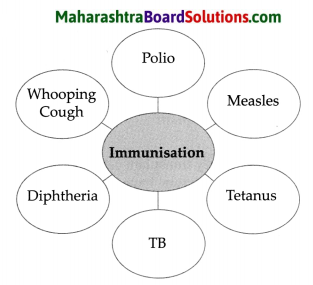
  • The immunisation programme was taken up to overcome the threat of polio, measles, tetanus, TB, diphtheria, and whooping cough.
  • The ‘pulse polio’ immunisation programme started in 1995 has controlled polio.

Question 2.
The Rural Water Supply Scheme was started.
Answer:
The State started the Rural Water Supply Scheme for sinking wells and providing piped water because:

(i) It is necessary to give priority to facilities for public hygiene and health-care. However even today, the rural population faces problems related to year-round provision of drinking water, toilets, open drainage, narrow roads, inadequate electrification and lack of facilities for medical treatment.

(ii) There is a lack of good quality educational facilities from primary level to higher education, centres for recreation and libraries.

(iii) The collective development scheme had an important place in all the first four five year plans of the government of India. The State of Maharashtra registered remarkable achievements under this scheme. By 1971,1677 small dams had also been built.

5. Answer the following questions in 25-30 words:

Question 1.
Which kinds of discrimination does the Constitution prohibit?
Answer:
(i) According to our Constitution, all Indians are equal before the law, and they cannot be discriminated against on the basis of religion, race, caste, gender or place of birth.

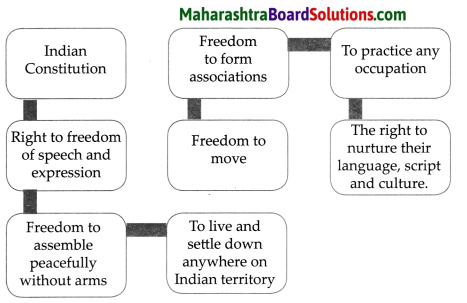
(ii) All citizens have the right to freedom of speech and expression, freedom to assemble peacefully without arms, freedom to form associations, freedom to move, to live and settle down anywhere on Indian territory and to practice any occupation.

(iii) Indian citizens living anywhere in India enjoy the right to nurture their language, script and culture.

Maharashtra Board Class 9 History Solutions Chapter 9 Changing Life 1

Question 2.
What is the aim of the social welfare programme?
Answer:
(i) The objective to establish the welfare state has been incorporated in the Constitution itself.

(ii) The social welfare programmes aim to make opportunities for full-time employment, health care, education and development available to all Indian citizens. Indian society is riddled with large scale economic, social, educational and cultural inequalities.

(iii) However, it is necessary that opportunities for development reach women, children, the differently-abled, the scheduled castes and tribes as well as other minorities.

(iv) Hence on 14th June 1964, the government of India constituted the Ministry of Social Welfare. Under this ministry, various programmes are implemented for nutrition and child- development, social security and social protection, women’s welfare and development.

Question 3.
What are the challenges facing rural development?
Answer:

(i) In 1961, 82% of India’s population resided in villages. In 1971, the percentage was 80.01%.
(ii) So far, the rural area has shouldered the responsibility of providing food grains and other raw material to urban areas, supplying labour to the industrial sectors of the city, and taking care of natural resources.
(iii) However there are three major challenges with reference to rural development, namely, bringing about economic development, developing facilities to meet social needs and finally bringing about a change of attitude in matters concerning society, culture and ways of thinking.
(iv) It is also equally necessary to expedite irrigation projects and bring about land reforms.

6. Write a brief review of the significant events in the field of public health in India.
Answer:
The Constitution of India states that the primary duty of the government is to raise the people’s standard of living, to ensure proper nutrition and to improve public health. The Ministry of Health and Social Welfare at the Centre helps the state governments in this regard.

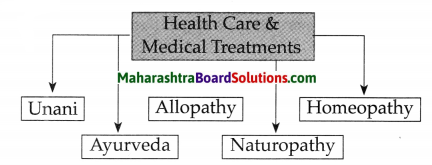
(i) To make primary health services as well as medical care available to rural people, the tribals and the poor was an objective of the Sixth Five Year plan. Efforts were made towards helping people maintain good health by giving recognition to Unani, Homoeopathy, Ayurveda and Naturopathy in addition to Allopathy.

(ii) In 1962, the first successful open heart surgery was performed under the leadership of Dr N. Gopinath at Christian Medical College Hospital at Vellore in Tamil Nadu. Hence, it is no longer necessary to go abroad for such treatment.

(iii) The invention of the ‘Jaipur Foot’ has transformed the lives of the disabled in India.

(iv) Before 1968, if a person lost a leg in an accident, he had to suffer for the rest of his life. In order to remedy the situation, Dr Pramod Sethi designed and manufactured artificial limbs, noses and ears, with the help of the skilled craftsman Ramchandra Sharma.

(v) These artificial body parts manufactured with the help of the Jaipur foot technology have made it easy for the differently-abled to walk bare-foot on rough surfaces, run, go cycling, work in the fields, climb trees, and even climb mountains, etc.
(vi) They save on the expenses on shoes as there is no need for footwear on these artificial limbs. They can bend their legs at the knees and sit cross-legged.

(vii) These feet are also convenient while working in water or under wet conditions.

Class 9 History Chapter 9 Changing Life 1 Additional Important Questions and Answers

Choose the correct option from the given options and rewrite the statements:

Question 1.
On 14th June 1964, the government of India constituted the Ministry of ________.
(a) Home Affairs
(b) Social Justice
(c) Social Welfare
(d) Education
Answer:
(c) Social Welfare

Question 2.
According to the 1971 Census, _____ people in India belonged to scheduled castes.
(a) 21%
(b) 22%
(c) 23%
(d) 24%
Answer:
(b) 22%

Maharashtra Board Class 9 History Solutions Chapter 9 Changing Life 1

Question 3.
UNESCO awarded its international prize for the spread of literacy to ______ in 1972 and tribes.
(a) Gujarat
(b) Bengal
(c) Maharashtra
(d) Karnataka
Answer:
(c) Maharashtra

Question 4.
‘Sinhagad Express’ on the Pune-Mumbai route and ‘ _____’ on the Mumbai-Kolkata route were started which had no class divisions.
(a) Karmabhoomi Express
(b) Howrah Mail
(c) Shalimar Express
(d) Gitanjali Express
Answer:
(d) Gitanjali Express

Question 5.
A _______ was formed to help the development of industry in rural areas.
(a) Village Industries Planning Committee
(b) Co-operative Credit Societies
(c) Industrial Development Association
(d) Rural Industrial Council
Answer:
(a) Village Industries Planning Committee

Question 6.
A settlement smaller than a village is called a _____.
(a) Town
(b) Taluka
(c) Hamlet
(d) Locality
Answer:
(c) Hamlet

Identify and write the wrong pair in the following sets:

Question 1.
(1) Kothari Commission – Agricultural Universities
(2) Durga – Open heart surgery
(3) Pramod Sethi – Artifical limbs
(4) Dr Mohan Rao – Kidney transplant
Answer:
Wrong Pair : Durga – Open heart surgery

Question 2.
(1) Christian Medical College – Tamil Nadu
(2) Vidya Niketan – Chikhaldara
(3) Gitanjali Express – Pune-Mumbai route
(4) First successful artificial conception – Kolkata
Answer:
Wrong Pair : Gitanjali Express – Pune-Mumbai route

Maharashtra Board Class 9 History Solutions Chapter 9 Changing Life 1

Question 3.
(1) Ministry of Social welfare established in -1962
(2) Pulse polio immunisation started – 1995
(3) Maharashtra received a prize for literacy in Maharashtra -1972
(4) Rural Electrification Corporation – 1969
Answer:
Wrong Pair : Ministry of Social welfare established in -1962

Question 4.
(1) Village Industries Planning Committee – Development of Industries in rural areas
(2) Vidya Niketan – residential highschools
(3) Rural water supply schemes – sinking wells
(4) Objective of Sixth Five Year Plan – Advanced technology
Answer:
Wrong Pair : Objective of Sixth five year plan – Advanced technology

Do as Directed:

Complete the table

Question 1.
Answer:

InstitutesLocation
Rural Electrification Co-operative societiesAndhra Pradesh, Gujarat, Karnataka, Maharashtra and Uttar Pradesh
Agriculture UniversitiesRahuri, Akola, Parbhani and Dapoli in Maharashtra
Vidya NiketanSatara, Aurangabad, Nasik and Chikhaldara

Question 2.
Answer:

Rural Community in Pre-Globalisation periodUrban Community in Pre-Globalisation period
Priority to farming and ancillary vocations (jobs)Priority to nonagricultural production and services.
Small in size, homogeneous in terms of language, culture and tradition.Large in size, heterogeneous in terms of languages, cultures and traditions.
Elementary kinds of vocations; trend of sending villagers to cities rather than accommodating outsiders in rural occupations.Large industries, production for global consumption, accommodating outsiders.
Large proportion of vocations running in the familyLess proportion of vocations running in the family.
Priority to the head of the family and to the family as an institution. Joint family system.Family secondary, priority to individuals. Trend towards – nuclear families.

Maharashtra Board Class 9 History Solutions Chapter 9 Changing Life 1

Complete the web diagram

Question 1.
Answer:
Maharashtra Board Class 9 History Solutions Chapter 9 Changing Life 1 2

Question 2.
Answer:
Maharashtra Board Class 9 History Solutions Chapter 9 Changing Life 1 3

Write short notes:

Question 1.
Rural Development
Answer:
(i) In 1961, 82% of India’s population resided in villages.

(ii) In 1971, the percentage was 80.01%. So far, the rural area has shouldered the responsibility of providing food grains and other raw material to urban areas, supplying labour to the industrial sectors of the city, and taking care of natural resources.

(iii) There are three major challenges with reference to rural development, namely, bringing about economic development, developing facilities to meet social needs and finally bringing about a change of attitude in matters concerning society, culture and ways of thinking.

(iv) It is equally necessary to expedite irrigation projects and bring about land reforms.

Question 2.
Social Welfare
Answer:
(i) The objective to establish the welfare state has been incorporated in the Constitution itself. India is the first country in the world to do so.

(ii) The social welfare programmes aim to make opportunities for full-time employment, health care, education and development available to all Indian citizens.

(iii) It is necessary that opportunities for development reach women, children, the differently abled, the scheduled castes and tribes as well as other minorities.

(iv) This was the greatest challenge facing the government during the post-independence period

(v) That is why, on 14 June 1964, the government of India constituted the Ministry of Social Welfare.

(vi) Under this ministry various programmes are implemented for nutrition and child development, social security and social protection, women’s welfare and development.

Maharashtra Board Class 9 History Solutions Chapter 9 Changing Life 1

Question 3.
Kidney transplant
Answer:
(i) Since kidney transplant can now be performed in India, doctors have succeeded in saving patients’ lives. Such surgeries were not so common in India till 1971.

(ii) But in 1971, it was successfully performed at the Christian Medical College hospital at Vellore in Tamil Nadu.

(iii) Dr. Johny and Dr. Mohan Rao transplanted the kidney donated by a living person into the patient’s body.

(iv) Nowadays, patients from underdeveloped countries come to India for such surgeries.

Question 4.
Test-tube baby
Answer:
(i) Right from early times, having a baby is considered to be of utmost importance in the Indian family system.
(ii) The support of ‘test-tube baby’ technology has been available to childless couples since 1978.
(iii) It was under the supervision of Dr. Subhash Mukhopadhyaya that the experiment of the test-tube baby was successfully carried out at Kolkata.
(iv) This was the first successful attempt at artificial conception. A girl named Durga was born.
(v) This technology helped to solve the problem of childless couples who wanted children.

Explain statements with reason:

Question 1.
Rural electrification is essential.
Answer:
Rural electrification is essential because:

(i) Electricity is essential for the development of rural areas. Automatic pumps are needed to water the fields.

(ii) Electricity is also needed to preserve perishable food items such as milk, eggs, fruits, and vegetables, to run fertilizer projects and for fans and TV, and for lights for studying at night.

(iii) During the first five-year plan, electricity had been provided to three thousand villages in India. By 1973, it reached 1,38,646 villages. From 1966, it was decided to supply more electricity for pumps and borewells.

(iv) ‘Rural Electrification Corporation’ was established in 1969.

Question 2.
It is necessary to give special attention to rural areas.
Answer:
(i) It is necessary to give priority to facilities for public hygiene and health-care.

(ii) Even today the rural population faces problems related to year round provision of drinking water, toilets, open drainage, narrow roads, inadequate electrification and lack of facilities for medical treatment.

(iii) There is a lack of good quality educational facilities from primary level to higher education, centres for recreation and libraries. That is why it is necessary to give special attention to rural areas.

Question 3.
The Rural Local Self-Government was empowered with more authority.
Answer:
(i) Keeping in mind the goal of rural development, the collective development scheme has come into force.

(ii) Plans were made for improving farming technology, increasing the area of irrigated land, extending educational facilities, enacting the laws for land reform under this scheme.

(iii) It also aimed at increasing agricultural produce as well as expanding the means of transport, health services and scope for education in the rural areas.

(iv) The government undertook this work through the medium of Gram Panchayats which included the people from all castes and tribes.

(v) To achieve this, the Gram Panchayats, Panchayat Samitis and Zilla Parishads were empowered with more authority.

Maharashtra Board Class 9 History Solutions Chapter 9 Changing Life 1

Read the following passage and answer the questions below:

Public health: The Constitution of India states that ‘ the primary duty of the government is to raise the people’s standard of living, to ensure proper nutrition i and to improve public health. The ministry of health i and Social Welfare at the Centre helps the state governments in this regard. To make primary health services as well as medical care available to rural people, the tribals and the poor was an objective of the Sixth Five Year plan. Efforts were made towards helping people maintain good health by giving recognition to Unani, Homoeopathy, Ayurveda and Naturopathy in addition to Allopathy, Progress in the medical field has made the life of Indians relatively free of health concerns. In 1962, the first successful open heart surgery was performed under the leadership of Dr. N. Gopinath at Christian Medical College Hospital at Vellore in Tamil Nadu, Hence, it is no longer necessary to go abroad for such treatment.

Question 1.
Prepare a concept map of recognised health care and medical treatments in India.
Answer:
Maharashtra Board Class 9 History Solutions Chapter 9 Changing Life 1 1

Question 2.
Who was Dr. N. Gopinath? State his achievement?
Answer:
Dr. N. Gopinath was an experienced surgeon at Christian Medical College Hospital of Vellore under whose leadership an Open Heart Surgery was performed for the first time in India in 1962.

Question 3.
Which disease among children do you consider most threatful? Why?
Answer:
I would consider Polio as one of the most threatening diseases. It renders an infant physically impaired or incapacitated for life. Without physical development, it is not possible for a child to lead a normal life. He/she becomes dependent on others for daily chores and cannot become self-reliant.

Answer the following questions in detail:

Question 1.
State the achievements of Christian Medical College Hospital.
Answer:
(i) In 1962, the first successful open heart surgery was performed under the leadership of Dr. N. Gopinath at Christian Medical College Hospital at Vellore in Tamil Nadu.

(ii) In 1971, kidney transplant was successfully performed at the Christian Medical College hospital at Vellore in Tamil Nadu. Dr Johny and Dr Mohan Rao transplanted the kidney donated by a living person into the patient’s body.

Maharashtra Board Class 9 History Solutions Chapter 9 Changing Life 1

Question 2.
Explain, how ‘Jaipur Foot’ has transformed the lives of the disabled in India?
Answer:
(i) The invention of the ‘Jaipur Foot’ has transformed the lives of the disabled in India. Before 1968, if a person lost a leg in an accident, he had to suffer for the rest of his life.

(ii) In order to remedy the situation, Dr Pramod Sethi designed and manufactured artificial limbs, noses and ears, with the help of the skilled craftsman Ramchandra Sharma.

(iii) These artificial body parts manufactured with the help of the Jaipur foot technology have made it easy for the differently abled to walk bare-foot on rough surfaces, rim, go cycling, work in the fields, climb trees, and even climb mountains, etc.
(iv) They save on the expenses on shoes as there is no need for footwear on these artificial limbs. They can bend their legs at the knees and sit cross-legged.

(v) These feet are also convenient while working in water or wet conditions.

Question 3.
What measures were taken up to uplift the scheduled castes and tribes?
Answer:
(i) According to the 1971 Census, 22% people in India belonged to scheduled castes and tribes.

(ii) Laws were enacted so that they got educational scholarships, and representation in Parliament as well State Assemblies. Some seats are also reserved for them in Government services.

Question 4.
Give an account of the collective development scheme that was featured in the first four Five Year Plans.
Answer:
(i) The collective development scheme had an important place in all the first four five year plans of the government of India.

(ii) The State of Maharashtra registered remarkable achievements under this scheme. For example, ‘Zilla Parishads’ was established in 1962.

(iii) Nutritious diet scheme was launched in 1970-1971. The State also started the ‘Rural Water Supply Scheme’ for sinking wells and providing piped water.

(iv) By 1971,1677 small dams had also been built.

Maharashtra State Board Class 9 Science Solutions

Balbharati Solutions for Class 9 Science Solutions Digest Answers Maharashtra State Board

Balbharati Maharashtra State Board 9th Std Science Textbook Solutions Answers Digest

Maharashtra State Board Class 9 Textbook Solutions

Maharashtra Board Class 9 History Solutions Chapter 4 Economic Development

Balbharti Maharashtra State Board Class 9 History Solutions Chapter 4 Economic Development Notes, Textbook Exercise Important Questions and Answers.

Maharashtra State Board Class 9 History Solutions Chapter 4 Economic Development

Class 9 History Chapter 4 Economic Development Textbook Questions and Answers

1.A Choose right option and write the sentence:

Question 1.
On 19th July, 1969 ______ major banks in India were nationalised.
(a) 12
(b) 14
(c) 16
(d) 18
Answer:
(b) 14

Question 2.
_________ declared a 20 – point programme.
(a) Pandit Nehru
(b) Lai Bahadur Shastri
(c) Indira Gandhi
(d) P.V. Narasimha Rao
Answer:
(c) Indira Gandhi

Maharashtra Board Class 9 History Solutions Chapter 4 Economic Development

B. Identify the wrong pair and rewrite the corrected one:

Question 1.
(1) Kawasajee Dawar – Iron and Steel factory.
(2) Dr. Datta Samant – Leadership of mill workers.
(3) N. M. Lokhande – Holiday for mill workers.
(4) Narayan Surve – Depiction of lives of workers through poems.
Answer:
Wrong Pair : Kawasajee Dawar – Iron and Steel factory.

2.A Complete the following chart:

Question 1.

Five Year PlanDurationPurposes
First……………….Agriculture and Social Development
Second1956 -1961Industrialisation
Third………………Elimination of inequality, increasing opportunities for employment, increase in national income.
………….1969 -1974Scientific research, health and family planning.
Fifth…………….…………………..

Answer:

Five Year PlanDurationPurposes
First1951 -1956Agriculture and Social Development
Second1956 -1961Industrialisation
Third1961 -1966Elimination of inequality, increasing opportunities for employment, increase in national income.
Fourth1969 -1974Scientific research, health and family planning.
Fifth1974 -1979Making India economically self-sufficient by alleviating poverty.

B. Explain the concepts:

Question 1.
Mixed Economy
Answer:
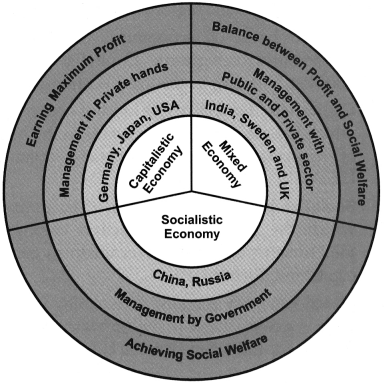
(i) In a capitalist system, the means of production are privately owned. In a socialist economy, the means of production are owned by the State in the name of the society.
(ii) A mixed economy works both in the private and the public sector.
(iii) In order to achieve economic development of modem India, we gave preference to a model of ‘mixed economy’. We can see three parts in this kind of economy:

(a) Public Sector: The industries in this sector are completely under the control and management of the government. For example, production of defence equipment.

(b) Private Sector: The industries in this sector are owned by private industrialists. Of course, the government supervises and controls them too. For example, consumer goods.

(c) Joint Sector: In this sector, some industries are owned by private industrialists, while some are run under government management.

(iv) For mixed economy to run smoothly there is a need for co-ordination between the private sector and the public sector.
(v) This system aims at maximisation of production and popular participation on a large scale.
(vi) An effort has been made in this system to bring together the good aspects of both the capitalist and the socialist systems.
(vii) A mixed economy cannot ignore the profit motive, entrepreneurship, discipline, time bound planning, etc.
Question 2.
20 – Point Programme
Answer:
20-Point Programme: Prime Minister Indira Gandhi announced the 20-Point Programme on 1st July 1975 and resolved to make efforts towards rapidly becoming a developed nation. The main provisions of the 20 point programme are as follows:

  • Land ceiling for cities and agricultural land, equal division of wealth, minimum wages for workers, increase in water conservation schemes.
  • Workers’ participation in industry, national training scheme, freeing bonded labour.
  • Prevention of tax evasion, economic crimes and smuggling.
  • Regulation of prices of basic necessities, improvement in the public distribution system.
  • Improvement in the textile industry by developing handloom sector, waiving loans for weaker sections, housing, communication facilities, making educational equipment available to schools.

Maharashtra Board Class 9 History Solutions Chapter 4 Economic Development

3.A Give reasons.

Question 1.
Independent India opted for mixed economy.
Answer:
(i) Our Prime Minister Pandit Nehru adopted the middle path rather than taking recourse to any extremes. Some countries had adopted Capitalism, while some had adopted Socialism. Each type of economy had its own advantages.

(ii) In a capitalist system, the means of production are privately owned. In a socialist economy, the means of production are owned by the State in the name of the society.

(iii) A mixed economy works both in the private and the public sector. In order to achieve economic development of modem India, we gave preference to a model of ‘mixed economy’.

Question 2.
Banks were nationalised in 1969.
Answer:
(i) During the tenure of Prime Ministers Pandit Nehru and Lai Bahadur Shastri, banking was a monopoly of the private sector.

(ii) These banks represented different industrial groups. The Directors of these banks were working towards developing industrial sector and increasing its profit.

(iii) In order to stop this, the government nationalised the ‘Imperial Bank’ in 1955 and it got converted into State Bank of India.

(iv) This Bank opened several branches all over the country in a short while and played a major role in development.

(v) India had adopted a mixed economy after independence. Nationalisation of banks was essential to cover the deficits if they occurred while implementing different schemes.

(vi) Also the profit of these banks would come into the government treasury once they were nationalised. Prime Minister Indira Gandhi nationalised 14 banks on 19th July, 1969.

Question 3.
Mill workers went on strike.
Answer:
(i) During the Diwali of 1981, the workers expected to get a bonus of 20%.
(ii) The Rashtriya Mill Mazdoor Sangh, which was negotiating with the employers, agreed upon 8 to 17% bonus without taking the workers into confidence.
(iii) The cut in the bonus proved to be the cause of unrest. Some workers went to Dr. Datta Samant.
(iv) They asked him to accept their leadership. Workers of 65 mills came together and Dr. Datta Samant led the strike. On 18th January 1982, two and a half lakh workers went on strike.

B. Answer the following questions in 25 to 30 words.

Question 1.
Which programmes were started in the Eighth Five Year Plan?
Answer:
Following programmes were started in the Eighth Five Year Plan:

  • Pradhanmantri Rozgar Yojana
  • Mahila Samriddhi Yojana
  • Rashtriya Samajik, Arthik Sahayya Yojana
  • Midday Meal Scheme
  • Indira Mahila Scheme
  • Ganga Kalyan Scheme

Question 2.
Which heavy industries were set up under the Second Five Year Plan?
OR
Which projects were started in the Second Five Year Plan?
Answer:
(i) Iron and steel industries at Durgapur, Bhilai and Rourkela; Chemical fertilisers plant at Sindri; rail engine factory at Chittaranjan; factory of railway bogies at Perambur, Ship building factory at Vishakhapattanam and other heavy industries were set up in the Public Sector.

(ii) Huge dams like Bhakra-Nangal, Damodar, etc. were built to make water available for agriculture.

Class 9 History Chapter 4 Economic Development Additional Important Questions and Answers

Choose the correct option from the given options and and rewrite the statements:

Question 1.
India removed the import restriction on several commodities for _____ countries.
(a) BRICS
(b) SAARC
(c) Third – World
(d) Middle – East countries
Answer:
SAARC

Maharashtra Board Class 9 History Solutions Chapter 4 Economic Development

Question 2.
The efforts of _____ resulted in the weekly Sunday holiday for mill workers from 1st January 1882.
(a) Mahatma Jyotirao Phule
(b) Sane Guruji
(c) Babu Jagjeevan Ram
(d) Narayan Meghaji Lokhande
Answer:
Narayan Meghaji Lokhande

Question 3.
During the tenure of Prime Minister Indira Gandhi ,________ a group in the Congress Party, made a demand for nationalisation of commercial banks.
(a) Congress Socialist Party
(b) Congress Forum for Socialist Action
(c) Congress wing of Socialist Propaganda
(d) Agency of Socialist Congress
Answer:
Congress Forum for Socialist Action

Question 4.
In 1995, India became a member of _______.
(a) World Trade Organisation
(b) International Monetary Fund
(c) GATT
(d) SAARC
Answer:
World Trade Organisation

Question 5.
In order to overcome drought and food shortages ______ undertook the experiment of Green Revolution.
(a) Chaudhary Charansingh
(b) Gulzarilal Nanda
(c) H D Deve Gowda
(d) Lal Bahadur Shastri
Answer:
Lal Bahadur Shastri

Question 6.
During the tenure of Prime Minister P.V. Narasimha Rao, _______ was our Finance Minister.
(a) John Mathai
(b) Yashwant Sinha
(c) P. Chidambaram
(d) Dr. Manmohan Singh
Answer:
Dr. Manmohan Singh

Question 7.
The first textile mill was started in Mumbai on 11th July, 1851 by _______.
(a) Pirojsha Burjorji Godrej
(b) Jamsedji Nusserwanji Tata
(c) Kawasjee Dawar
(d) Azim Hashim Premji
Answer:
Kawasjee Dawar

Question 8.
The new government of Janata Party ended the fifth Five Year plan by March 1978 and started the _______ from April 1978.
(a) Development Plan
(b) Enrolling Plan
(c) Rolling Plan
(d) Redemption Plan
Answer:
Rolling Plan

Question 9.
Manmohan Singh signed the agreement with the WTO and launched the policy of privatisation, ______ and globalisation.
(a) Liberalisation
(b) Industrialisation
(c) Maximisation
(d) Profitisation
Answer:
Liberalisation

Question 10.
On 18th January 1982, two and a half lakh workers went on a strike under the leadership of _________.
(a) Dhondo Keshav Karve
(b) Baba Amte
(c) Dr. Datta Samant
(d) Anna Hazare
Answer:
Dr. Datta Samant

Question 11.
The _______ plan is a reflection of the liberalisation and free market policy adopted in 1991.
(a) Seventh
(b) Eighth
(c) Fifth
(d) Sixth
Answer:
Eighth

Question 12.
The government nationalised the ‘Imperial Bank’ in 1955 and it got converted into ______
(a) Syndicate Bank
(b) Bank of India
(c) State Bank of India
(d) Reserve Bank of India
Answer:
State Bank of India

Question 13.
The term ‘Girangaon’ means ________.
(a) Town of hills
(b) Town of mills
(c) Group of industries
(d) Cottage industries
Answer:
Town of mills

Maharashtra Board Class 9 History Solutions Chapter 4 Economic Development

Identify and write the wrong pair in the following sets:

Question 1.
(1) Public Sector – Controlled and managed by government
(2) Mixed Economy – Coordination in private and public sector
(3) 20 point programme – Nationalisation of 13 textile mills.
(4) Increased oil prices – Invasion of Kuwait by Iraq.
Answer:
Wrong Pair : 20 point programme Nationalisation of 13 textile mills.

Question 2.
(1) Congress Forum for Socialist Action – demanded nationalisation of banks.
(2) Rashtriya Mill Mazdoor Sangh – negotiations with the employer.
(3) Imperial Bank – converted in State Bank of India.
(4) National Stock Exchange – existed before WTO.
Answer:
Wrong Pair : National Stock Exchange – existed before WTO.

Question 3.
(1) SAPTA – Preferential trade
(2) SAARC – removal of import restrictions by India
(3) SEBI – established in 1998
(4) WTO – regulate global trade
Answer:
Wrong Pair : SEBI – established in 1998

Question 4.
(1) Barrister A.R.Antulay – leader of Rashtriya Mill Mazdoor Sangh
(2) Dr. Manmohan Singh – Finance Minister
(3) Indira Gandhi – nationalised 14 banks
(4) V.P. Singh – waived off loans of the farmers
Answer:
Wrong Pair : Barrister A.R.Antulay – leader of Rashtriya Mill Mazdoor Sangh

Question 5.
(1) Babasaheb Bhonsale – Chief Minster of Maharashtra
(2) Namdev Dhasal – Marathi Poet
(3) Shahir Sable – Programmes of public education
(4) Chandrashekhar – Associate of Mahatma Jyotirao Phule.
Answer:
Wrong Pair : Chandrashekhar – Associate of Mahatma Jyotirao Phule.

Complete the concept maps and flow charts of various programmes and schemes introduced:

Question 1.
Answer:

SECOND FIVE YEAR PLAN (1956-1961)
Iron and Steel industriesDurgapur, Bhilai, Rourkela
Chemical Fertilisers PlantSindri
Rail Engine FactoryChittaranjan
Factory of railway bogiesPerambur
Ship building FactoryVishakhapattanam

Question 2.
Answer:
Maharashtra Board Class 9 History Solutions Chapter 4 Economic Development 1

Question 3.
Answer:
Maharashtra Board Class 9 History Solutions Chapter 4 Economic Development 2

Question 4.
Answer:
Maharashtra Board Class 9 History Solutions Chapter 4 Economic Development 3

Question 5.
Answer:
Maharashtra Board Class 9 History Solutions Chapter 4 Economic Development 4

Question 6.
Answer:
Maharashtra Board Class 9 History Solutions Chapter 4 Economic Development 5

Maharashtra Board Class 9 History Solutions Chapter 4 Economic Development

Question 7.
Answer:
Maharashtra Board Class 9 History Solutions Chapter 4 Economic Development 6

Give Reasons:

Question 1.
India established the Planning Commission to deal with economic repercussions of British colonialism,
Answer:
(i) The colonial power had exploited India economically. The country faced severe problems like poverty, unemployment, population growth, low standards of living, low productivity of agriculture and industries and backwardness in the fields of knowledge, science and technology. Planning was essential to solve these problems.

(ii) India established the Planning Commission in 1950 with Prime Minister Pandit Jawaharlal Nehru as its Chairman.

(iii) It formulated India’s five year plans that included rural and agricultural development, : balanced industrialisation, provision for a minimum standard of living and economic development consistent with democratic ideals.

(iv) It focused on people’s participation and individual development in the formulation and implementation of the five year plans.

Read the passage and answer the questions.

Passage I

Issues of workers: The first textile mill was started in Mumbai on 11th July, 1851 by Kawasjee Dawar. Eventually, mills started in Dadar, Parel, Bhaykhala, Shivdi, Prabhadevi and Worli. This part came to be i known as Girangaon or ‘town of mills’. In the 1980s, the increasing unrest among workers was due to the economic conditions in other sectors. In some industries the wages of the workers were increasing. They were also getting more amounts as bonus. They were getting more facilities than the textile mill workers.
In the Diwali of 1981, the workers expected to get a bonus of 20%. The Rashtriya Mill Mazdoor Sangh, which was negotiating with the employers, agreed upon 8 to 17% bonus without taking the workers into confidence. The cut in the bonus proved to be the cause of unrest. Some workers went to Dr. Datta Samant. They asked him to accept their leadership, Workers of 65 mills came together and Dr. Datta Samant led the strike. On 18th January 1982, two and a half lakh workers went on strike. Girangaon mills stopped running making it seem like Mumbai’s heart topped throbbing.
The Chief Minister of Maharashtra, Barrister A. R. , Antulay set up a committee to solve this issue. Later Babasaheb Bhosale became the Chief Minister of Maharashtra State. He insisted that as per law, he would talk only with the Rashtriya Mill Mazdoor Sangha. Dr. Datta Samant demanded that the law be revoked. In the beginning, the striking workers received help from their native villages. It was also , not very difficult for them to help each other. They set up departmental committees and distributed food grains, assistance in the form of funds, etc. The left parties had supported the strike. As the strike , dragged on, efforts were made to split the striking workers’ ranks. Even as the strike completed 6 months, the central government completely ignored it. The workers started a Jail Bharo Agitation’. In , September 1982, one and a half lakh workers took a march on the Legislative Assembly of Maharashtra State. It didn’t help at all. The strike completed a year. This was the first strike to have gone on for a year. In this period, about one and a half lakh workers became unemployed. As polyester had come into greater demand than cotton cloth, the sale of mill , cloth had already got affected. The mills moved from Mumbai to Surat in Gujarat. The Central government nationalised 13 textile mills. Appointment of i arbitrators did not help to resolve the issue.

Question 1.
Name the worker’s union mentioned in the passage. Why were the workers agitated with it?
Answer:
(i) The worker’s organisation mentioned in the passage is Rashtriya Mill Mazdoor Sangh.
(ii) The workers were agitated because they received less bonus and facilities in their textile mills, whereas economic conditions in the other sectors of the economy were far better.
(iii) The Rashtriya Mill Mazdoor Sangh that negotiated with the employers, settled at 8 to 17% of bonus as against the expectation of 20% by the workers.
(iv) The cut in the bonus led to the workers agitation.

Maharashtra Board Class 9 History Solutions Chapter 4 Economic Development

Question 2.
State the contribution of Dr. Datta Samant in raising workers issues in Maharashtra?
Answer:
(i) Dr. Datta Samant was the leader of two and a half lakh workers who went on strike.
(ii) He demanded that the law be revoked which had empowered Rashtriya Mill Mazdoor Sangh alone to talk on behalf of the workers.

Question 3.
What is mixed economy?
Answer:
(i) In a capitalist system, the means of production are privately owned. In a socialist economy, the means of production are owned by the State in the name of the society.
(ii) A mixed economy works both in the private and the public sector.
(iii) In order to achieve economic development of modem India, we gave preference to a model of ‘mixed economy’.

Passage II

General Agreement on Tariffs and Trade (GATT) existed at the international level before the World Trade Organisation came into being. It regulated commerce. In India there were opposed, extreme views about the World Trade Organisation. Yet India decided to take its membership. The provisions of the World Trade Organisation are regarding grants, import-export, foreign investment, agriculture, technology and services. The sectors of electricity, water transportation, education and health rapidly commercialised since India became a member of the World Trade Organisation. As per the various reports of the World Trade Organisation, India has made a considerable improvement in different areas like reduction in the below poverty line (BPL) population, decline in infant mortality, availability of facilities regarding drinking water and waste water management. India signed the South Asian Preferential Trade Agreement (SAPTA) along the lines of the World Trade Organisation. India removed the import restrictions on several commodities for SAARC countries. India also gave discounts on import duties. India opened up the insurance sector to private and foreign investment.

Question 1.
Study the passage and give the full forms of GATT and SAPTA.
Answer:
GATT – General Agreement on Tariff and Trade.
SAPTA – South Asian Preferential Trade Agreement.

Question 2.
Explain, in your own words, the economic policy of “Make in India”.
Answer:
’Make in India’ is an economic policy as well as an organised progamme of the Government of India to encourage and promote various companies and enterprises to start manufacturing and producing goods in India. The aim of this initiative is to generate employment, enhance the skill of Indians and also to attract foreign investment.

Question 3.
What do the provisions of the WTO cater to?
Answer:
The provisions of the WTO cater to grants, import -export, foreign investment, agriculture, technology and services.

Answer the following questions in detail:

Question 1.
What is the fundamental principle of the Five Year Plans? Which economic goals are set forth by the Government?
Answer:
Fundamental principle of planning: A general principle of planning is the proportionate distribution of the resources of a country and the appropriate use of the human resources to fulfill the needs of the people.
Goals of Plans:
The general goals of the economic planning of India are as follows:

  • Increase in the national income.
  • Bringing about rapid industrialisation by focusing on the basic industries.
  • Bringing about an increase in agricultural production so that the country becomes self-sufficient in foodgrain production.
  • Use the human resources in the country optimally by availing increasing employment opportunities.
  • Remove inequality in earnings and wealth.
  • Maintain stable prices of commodities.
  • Controlling the growth of population through family planning.
  • Improve the standard of living by eradicating poverty.
  • Develop social services.
  • Make the economy self-sufficient.

Maharashtra Board Class 9 History Solutions Chapter 4 Economic Development

Question 2.
Describe the prolonged agitation of the mill workers under Dr. Datta Samant.
Answer:
(i) In the beginning, the striking workers received help from their native villages. It was also not very difficult for them to help each other.

(ii) They set up departmental committees and distributed food grains, assistance in the form of funds, etc

(iii) The left parties had supported the strike. As the strike dragged on, efforts were made to split the striking workers’ ranks.

(iv) Even as the strike completed 6 months, the central government completely ignored it. The workers started a ‘Jail Bharo Agitation’.

(v) In September 1982, one and a half lakh workers took a march on the Legislative Assembly of Maharashtra State.

(vi) It didn’t help at all. The strike completed a year. This was the first strike to have gone on for a year.

(vii) In this period, about one and a half lakh workers became unemployed.

(viii) As polyester had come into greater demand than cotton cloth, the sale of mill cloth got affected. The mills moved from Mumbai to Surat in Gujarat.

(ix) The Central government nationalised 13 textile mills. Appointment of arbitrators did not help to resolve the issue.

Question 3.
Which enterprises came under government due to the lack of capital investment?
Answer:
(i) The industries like defence, scientific research, education, roads, railways, waterways, sea port and airport development require huge capital investment but the returns in these areas are delayed.
(ii) Not many private industrialists are keen to invest in these areas. In such a situation, the government has to take the initiative.

Question 4.
State the Industrial policy of 1973.
Answer:
(i) The industrial policy of 1973 increased the speed of development.
(ii) Priority was given in this policy to control the influence of heavy industries, industrial families and foreign industries and remove the imbalance in regional development.
(iii) The government focused on the development of small scale industries and cottage industries.

Question 5.
What were the aims of the ‘Third Five Year Plan’?
Answer:
(i) This plan was aimed at bringing about a balance in industries and agriculture.
(ii) The other goals of the plan included increase in national income, heavy industries, development in transport and mineral industry, alleviation of poverty and to expand the opportunities for employment.

Question 6.
What was the background for . the nationalisation of banks?
Answer:
(i) India had adopted a mixed economy after independence.
(ii) Nationalisation of banks was essential to cover the deficits if they occurred while implementing different schemes.
(iii) Also the profits of these banks would come into the government treasury once they are nationalised.

Question 7.
State the cultural contributions of the working class.
Answer:
(i) The working class has contributed culturally as well through folk theatre, folk art and literature. Anna Bhau Sathe, Shahir Amar Sheikh, Shahir Sable were popular for their programmes aimed at public education.
(ii) Poets like Narayan Surve, Namdev Dhasal, etc., portrayed the real life of the workers through their poems.

Maharashtra Board Class 9 History Solutions Chapter 4 Economic Development

Question 8.
Who took responsibility to bring the Indian economy in sync with the global mainstream?
Answer:
(i) The year 1991 is very important in the history of modem India. After the 10th General elections, P. V. Narasimha Rao became the Prime Minister of India.

(ii) With Dr. Manmohan Singh as Finance Minister, he adopted the new economic policy of linking India’s economy with the global economy.

(iii) For this, fundamental changes were brought about in the Indian economy. Indian economy was brought in tune with the global mainstream.

Question 9.
Which corrective measures were taken by Manmohan Singh to relieve the crisis of the Indian economy?
Answer:
(i) Dr. Singh undertook many corrective measures. The situation began to change.
(ii) He removed the restrictions on foreign investments.
(iii) He restricted the licence system to 18 industries. In view of the increasing losses in the public sector industries, he opened up the public sector for investment by private industries.
(iv) In order to bring the share market under control, he established the Securities and Exchange Board of India (SEBI) in 1992.
(v) National Stock Exchange was computerised. He gave priority to remove the spectre of recession.

Question 10.
State the impact of corrective measures taken by Dr. Manmohan Singh on the economy of our country.
Answer:
(i) Foreign Investment in India grew during the first tenure of Dr. Manmohan Singh as Finance Minister.
(ii) India could recover the gold mortgaged with the Bank of England.
(iii) The government got the support of the capitalist class as well as the middle class.
(iv) As the government opened up the telecom sector, mobile phone services started all over the country.
(v) Dr. Manmohan Singh signed the agreement with the World Trade Organisation and launched the policy of “privatisation, liberalisation and globalisation.”

Question 11.
What were the objectives of the WTO?
Answer:
(i) In 1995, India became a member of the World Trade Organisation (WTO).
(ii) The organisation had the following objectives: to free trade between countries, to put an end to all those discriminatory laws, restrictions, rules and policies that are hurdles in the way of international free trade and to regulate global trade with the help of a formal multi – party mechanism.

Question 12.
Do you agree that membership with the WTO has ushered in changes in the economic sector of our country? State the reason for your answer.
Answer:
(i) Yes, of course. The provisions of the World Trade Organisation have included grants, import-export, foreign investment, agriculture, technology and services.

(ii) The sectors of electricity, water transportation, education and health have been rapidly commercialised since India became a member of the World Trade Organisation.

Question 13.
State the improvements which have occurred in our economy as per the reports of WTO.
Answer:
As per the various reports of the World Trade Organisation, India has made considerable improvement in different areas like reduction in the below poverty line (BPL) population, decline in infant mortality, availability of facilities regarding drinking water and waste water management.

Maharashtra Board Class 9 History Solutions Chapter 4 Economic Development

Question 14.
Which economic challenges were faced by the Government of Prime Minister Chandra Shekhar?
Answer:
(i) During the tenure of Chandra Shekhar the rate of inflation was 17%.
(ii) Economic growth rate had decreased by 1.1%. India had foreign exchange reserves only enough to last for imports for a week.
(iii) It had become difficult to pay back its loan and the interest on it.
(iv) In May 1991, the government had tried to control the situation by selling some of its gold reserves and by mortgaging some.

Question 15.
Which economic liabilities were incurred by V. P. Singh government?
Answer:
(i) The V. P. Singh government had incurred a liability of over 10 thousand crore rupees on the economy by waiving off the loans of all the farmers.
(ii) The proportion of internal loans of central and state government together to the Gross Domestic Product was 55%.
(iii) In 1980-81 foreign loan was 2350 crore dollars. It increased to 8380 crore dollars in 1990-91.
(iv) At this time, India had foreign exchange reserves of only 100 crore dollars.
(v) This also had the background of the increased oil prices due to the invasion of Kuwait by Iraq.
(vi) It became difficult for India to raise a loan. Even the non-resident Indians started withdrawing their deposits in foreign currency from India.

Identify the picture and give relevant information.

Question 1.
Maharashtra Board Class 9 History Solutions Chapter 4 Economic Development 7
Answer:
(i) Nationalisation of banks was essential to cover the deficits if they occurred while implementing different schemes and profit of these banks came under the government treasury.

(ii) Also the profit of these banks would come into the government treasury once they were nationalised. Prime Minister Indira Gandhi nationalised 14 banks on 19th July, 1969.

Question 2.
Maharashtra Board Class 9 History Solutions Chapter 4 Economic Development 8
Answer:
(i) P. V. Narasimha Rao and Manmohan Singh.
(ii) They removed the restrictions on foreign investments.
(iii) Restricted the license system to 18 industries.
(iv) Opened up the public sector for investment by private industries.
(v) Established the SEBI (Securities and Exchange Board of India) in 1992 to regulate and bring share market under control.
(vi) Foreign investment in India grew.
(vii) India could recover the gold mortgaged with the Bank of England.

Maharashtra Board Class 9 Geography Solutions Chapter 10 Urbanisation Human

Balbharti Maharashtra State Board Class 9 Geography Solutions Chapter 10 Urbanisation Human Notes, Textbook Exercise Important Questions and Answers.

Maharashtra State Board Class 9 Geography Solutions Chapter 10 Urbanisation Human

Class 9 Geography Chapter 10 Urbanisation Human Textbook Questions and Answers

1. Suggest measures for the following problems:

(A) The slums in the cities are increasing.
Answer:

  • Creating more job opportunities in the rural areas so that migration is minimised.
  • Poverty alleviation schemes need to be implemented to improve the standard of living of the poor.
  • Initiative for improvement of sanitation, housing and other facilities must be facilitated.

Maharashtra Board Class 9 Geography Solutions Chapter 10 Urbanisation Human

(B) Because of the increasing traffic jams within the city, lot of time is consumed in commuting.
Answer:

  • To reduce traffic jams, carpooling is a great way to get to and fro work.
  • Planning the route in advance will help to avoid any road construction or other traffic jams.
  • Making use of public transportation like Railways, BEST, etc. will also help in reducing traffic congestion and precious fuel.

(C) The question of law and order in the urban areas is serious.
Answer:

  • Many crimes are due to poverty and unemployment. Poverty alleviation and employment generation programmes should be given priority.
  • The semi-literate / educated unemployed persons should be given skill-training and be prepared for self-employment.
  • The police and the judicial system “should be strengthened to wipe out criminals.

(D) The problem of pollution is grave because of urbanisation.
Answer:

  • Walking or cycling to the work place will not only help in improving the health conditions of individuals but will also help in reducing pollution.
  • Cities need to green up (plant more trees) as trees are considered to be the natural purifiers.
  • Strict action should be taken against polluting industrial units.

(E) Migration has created questions of health and education in urban areas.
Answer:

  • Migration from rural to urban areas can be reduced if employment opportunities are provided in the rural areas.
  • Infrastructure like transport, electricity, public distribution system, etc. need to be provided in the rural areas.
  • Educational institutes and health centres need to be upgraded in the rural areas.

Maharashtra Board Class 9 Geography Solutions Chapter 10 Urbanisation Human

2. Match the correct pairs :

Group A – Group B
(1) Technological development and mechanization – (A) Urban areas
(2) Permanently staying away from your original place – (B) Lack of planning
(3) 75% males are engaged in non-agricultural occupation – (C) Migration
(4) The problems of solid waste – (D) Urbanisation
Answer:
(1-d),
(2- c),
(3 – a),
(4 – b)

3. Outline the importance/ advantages of the following:

(A) Technology and mechanisation
Answer:

  • Technology and mechanisation increase industrial production, creates employment and is useful for urbanisation.
  • In recent decades, the use of technology and mechanisation has increased in agriculture.
  • Due to the mechanisation of agriculture, the surplus manpower employed in agriculture have become devoid of agricultural work.
  • This working class started coming to cities to look for work and as a result urban population started increasing.

(B) Trade
Answer:

  • When a place in a region is favourable in terms of transport, loading-unloading and storage of goods, it developes into a trade centre.
  • This leads to the growth of business complexes, banks, credit societies, godowns, cold storage, houses, etc.
  • For example, Nagpur’s central location has facilitated trade and hence urbanisation has also taken place here.

(C) Industrialisation
Answer:

  • Industrialisation leads to increase in the hopes of people who are attracted towards the industries from surrounding areas for employment.
  • Rapid growth of Mumbai in the 19th century was due to the textile mills which were started here.
  • Many fishing villages (Koliwadas) became part of Mumbai metropolitan2 area due to industrialisation and urbanisation.

Maharashtra Board Class 9 Geography Solutions Chapter 10 Urbanisation Human

(D) Amenities in urban areas
Answer:

  • Urbanisation leads to development of a number of amenities and facilities in urban areas.
  • Transportation, communication, educational facilities, medical facilities, fire brigade, various sources of entertainment, etc. are examples of amenities in urban areas.
  • A good transportation not only makes a journey easier but also has a positive effect on freight transport, development of markets, trade, etc.
  • Development of higher educational facilities in urban areas attract students from rural areas to urban areas. E.g. Pune.
  • Development of high quality medical facilities in urban areas bring many patients and their family members from different parts of India to these areas.

(E) Social harmony in the cities
Answer:

  • Social harmony refers to the exchange of cultural and social customs and traditions as people from different parts live together in the cities.
  • An increase in urbanisation leads to an increase in secondary, tertiary and quaternary occupation.
  • This results in an increase in employment opportunities due to which people from different parts of the country come to cities and there is an exchange of customs and traditions.

4. Compare the following and give examples:

(A) Transportation system and traffic jams
Answer:

  • As cities grow, people start living on the outskirts and in the suburbs of the city.
  • People commute to the centre of the city for businesses and industries, trade, jobs, education, etc.
  • Public transportation system is insufficient and hence the number of private vehicles increase.
  • This results in an increase in traffic jams and a lot of time is consumed in travelling from one place to another.
    e.g. Although Mumbai has a well developed transportation system it is insufficient to fulfil the growing needs of people.

Hence, traffic jams are a frequent site in different pockets of Mumbai.

(B) Industrialisation and air pollution
Answer:

  • Industrialisation refers to the growth in number of industries in a particular region.
  • As more and more industries crop up, it becomes convenient for the industries to violate the environmental laws.
  • Paucity of facilities, insensitivity towards environment are the other factors which leads to an increase in the pollution level.
  • Hence, Industrialisation and Air pollution are the two aspects of the same coin.
    e.g. Delhi, Faridabad and Varanasi are the ! victims of rapid industrialisation leading to j severe air pollution.

Maharashtra Board Class 9 Geography Solutions Chapter 10 Urbanisation Human

(C) Migration and slums
Answer:

  • The increase in the number of migratory people causes an increase in the slums.
  • Generally migration from rural to urban areas takes place in search of job opportunities, which are hard to find.
  • The housing facilities do not increase in the same proportion as the population, so the poor migrants can not afford the housing in the cities.
  • This encourages the migrants to build illegal temporary and semi-structured houses known as slums, in open spaces. e.g. Slums in Dharavi (Mumbai city)

(D) Amenities and increasing crime
Answer:

  • Amenities refers to facilities that provide comfort, convenience or pleasure to people.
  • Transportation, communication, educational and medical facilities, fire brigade, etc. are the examples of amenities available in urban areas.
  • Unemployed people who have migrated to the cities are unable to avail these amenities.
  • This leads to an increase in thefts, burglaries, scuffles5, murders, etc. which disturb the social harmony of the cities.
    e.g. Pick pocketing in the local trains.

5. Complete the table :

Process of urbanisationEffects
Emergence of slumsIllegal settlements Insufficient facilities
Increase in population because of attraction of good lifestyle
Can be short-term or long-term
Pollution
Employment opportunities were generated Increase in amenities and facilities
Change from rural to urban

Answer:

Process of urbanisationEffects
Emergence of SlumsIllegal settlements Insufficient facilities
MigrationIncrease in population because of the attraction of good lifestyle. Can be short-term or long term.
PollutionAdverse effects on urban life.
IndustrialisationEmployment opportunities have generated, increase in amenities and facilities.
Change from rural to urbanFormation of Municipal Corporation. better civic amenities, development of occupations.

6. Explain:

(A) The growth of cities takes place in a specific method.
Answer:
Villages are transforming into cities. The growth of cities take place in a particular pattern.

  • At first various industries like factories, mills, energy plants, multi-purpose projects3 etc., come up in rural areas.
  • People from surrounding areas come to work here and the population of the village increases.
  • To fulfill their needs other services develop like medical facilities, food, hospitals, recreation, etc.
  • The Gram Panchayat gives way to a Municipal Corporation.
  • These bodies provide basic services to citizens like drinking water, roads, transportation, sewerage network, street lighting etc. Maharashtra Board Class 9 Geography Solutions Chapter 10 Urbanisation Human
  • Other facilities develop like town planning recreation facilities, tourist places, parks etc.

(B) A planned city of your imagination
Answer:

  • A city which is carefully planned from its inception and is constructed in a previously undeveloped area is a planned city.
  • A planned city is one in which there is adequate infrastructural facilities like roads, railways, water supply, power supply, etc.
  • Also, there should be open spaces available for recreation facilities.

(C) Industrialisation causes cities to develop.
Answer:

  • The development and concentration of industries in a region is a factor contributing towards urbanisation.
  • Increase in industries leads to increase in the hopes of people who are attracted towards these industries from surrounding areas.
  • An increase in population leads to the development of infrastructural facilities like roadways, railways, power supply, water supply etc. which are the characteristics of a planned city.
  • In the 19th century, Mumbai grew rapidly because textile mills started on a large scale.

(D) Pollution- A problem
Answer:

  • Pollution is the introduction of contaminants into natural environment that causes adverse changes.
  • Pollution can be that of air, water, noise, solid waste, etc.
  • Pollution can adversely affect the human health.
  • Water pollution can lead to several water borne diseases like typhoid, cholera etc. Air pollution can lead to asthma and other respiratory diseases. Noise pollution can lead to sleep disturbance, hearing impairment etc.

(E) Swachchh Bharat Abhiyan
Answer:

  • Swatch Bharat Abhiyan is a cleanliness campaign run by the Government of India.
  • ‘One step towards cleanliness’ is the objective of this campaign.
  • This campaign aims to keep the streets and infrastructure of the country’s cities, towns and its rural areas clean.
  • The funds for this programs are raised by ‘Swachchh Bharat Cess’.

Maharashtra Board Class 9 Geography Solutions Chapter 10 Urbanisation Human

7. Suggest measures for the following problems of urbanisation shown in the following pictures.

(1) Air Pollution:
Maharashtra Board Class 9 Geography Solutions Chapter 10 Urbanisation Human 1
Answer:

  • Switching from coal, oil to natural gas as fuel in the industries.
  • Industrial areas should be located at a safe distance from residential areas.

(2) Noise Pollution:
Maharashtra Board Class 9 Geography Solutions Chapter 10 Urbanisation Human 2
Answer:

  • Follow the limits of noise level.
  • Shut the door when using noisy machines.
  • To restrict noise pollution lower the volume of horns, loudspeakers, etc.

(3) Solid Waste Pollution:
Maharashtra Board Class 9 Geography Solutions Chapter 10 Urbanisation Human 3
Answer:

  • Avoid disposing and littering of solid waste in the open.
  • Follow the principle of 4 R’s (Reduce, Recycle, Repair and Reuse) for non-biodegradable things.
  • Segregation of dry waste and wet waste for proper disposal.

(4) Water Pollution:
Maharashtra Board Class 9 Geography Solutions Chapter 10 Urbanisation Human 4
Answer:

  • Sewage should not be allowed to mix with water sources without getting treated.
  • Avoid mixing industrial wastes and effluents directly into water sources.
  • Daily household chores should be avoided at water sources.

Maharashtra Board Class 9 Geography Solutions Chapter 10 Urbanisation Human

Class 9 Geography Chapter 10 Urbanisation Human Intext Questions and Answers

Can you tell?

Question 1.
Answer the following questions.

(i) Why is Suresh thinking of going to the factory for work?
Answer:

  • Suresh is thinking of going to the factory as it will get him a monthly salary.
  • Also, if he works overtime, he will get additional money and a bonus during Diwali.

Question 2.
What is Tatya worried about?
Answer:

  • Tatya is worried about the availability of labour in the agricultural field, since his son (Suresh) has decided to work in the factory.
  • Also, he is worried whether his son can manage working in the field and the factory simultaneously.

Question 3.
What changes does Suresh think will occur in the village?
Answer:

  • Development of goods and facilities like hospitals, schools and colleges, administrative offices, huge buildings are expected in the village.
  • The above factors will lead to migration of people from different villages which will bring about rural development.

Question 4.
What other changes do you think will occur in the village?
Answer:
There “will be well planned drainage systems, pure drinking water supply, street lightning, concrete roads, public library, etc. amenities will be provided. There will be fire station to control fires, police stations to control crimes. These changes are likely to occur in the village.

Give it a try.

Question 1.
Give example of villages in your area turning into urban settlement.
Answer:

  • Airoli, Nerul, Kopar Khairane, Vashi, Panvel, Taloja, Kamothe etc which comprises of Navi Mumbai (New Bombay) are the examples of villages turning into urban settlement.

Question 2.
Find out the main reason of that rural area turning into urban settlement.
Answer:
City and Industrial Development Corporation (CIDCO) planned and constructed all the railway stations, roads and public spaces in Navi Mumbai. APMC (Agricultural Produce Market Committee) which is a wholesale agricultural produce market at Vashi and Construction of Commuter railway line from Mankhurd to Vashi led to growth in economic activities and population in Navi Mumbai.

Maharashtra Board Class 9 Geography Solutions Chapter 10 Urbanisation Human

Question 3.
Obtain information regarding development of settlements, villages, towns, etc. located on the main transport routes in your surroundings in the last five years.
Answer:
In Mumbai along the Metro station route there are 2 settlements which have developed. They are Asalpha and Jagruti Nagar. Neither were very well-known places five years ago. But today they are important metro stations.

Question 4.
Make a list of cities in your district.
Answer:
I live in Thane District – Two of the cities are:

  • Bhiwandi
  • Badlapur.

Question 5.
Discuss which factors from above are responsible for their development.
Answer:
Factors responsible for development are:-

  • Bhiwandi – Industrialisation (Textile industry)
  • Badlapur – Transport (Connected to Mumbai – Pune expressway, has railway station on Mumbai – Pune route)

Question 6.
If possible, talk to people who have migrated in your surroundings or the nearest town and find out reasons of migration.
Answer:
People have migrated from Mumbai to Navi Mumbai.

The reasons are:

  • Better town planning
  • Better standard of living

Write five sentences on each picture after observing them.

Maharashtra Board Class 9 Geography Solutions Chapter 10 Urbanisation Human 6
Answer:

  • In this picture the harmful gases, smoke released by the factory is causing air pollution.
  • Any substance that is introduced into the atmosphere and has damaging effects on living things and the environment is called Air Pollutant.
  • Air Pollution occurs when any harmful gases, dust, smoke enters into the atmosphere.
  • Air Pollution can lead to asthma, respiratory inflammation, decrease in living functioning and other respiratory diseases in humans. Maharashtra Board Class 9 Geography Solutions Chapter 10 Urbanisation Human
  • The Ozone layer on the planet is depleting due to increased Air Pollution.

Maharashtra Board Class 9 Geography Solutions Chapter 10 Urbanisation Human 7
Answer:

  • The picture shows heavy smog in a city causing air pollution.
  • Smog is a combination of smoke and fog.
  • Usually smog results from large amounts of coal burning in an area and is caused by a mixture of smoke and Sulphur dioxide.
  • It is a big problem in Beijing and New Delhi.
  • Smogs cause lung diseases.

Maharashtra Board Class 9 Geography Solutions Chapter 10 Urbanisation Human 8
Answer:

  • In this picture we can see untreated polluted water being released into a river causing water pollution.
  • Water pollution is the contamination of water . bodies like lakes, rivers, oceans, etc.
  • Almost 80% of water pollution is caused by domestic sewage.
  • Water pollution can lead to several waterborne diseases like typhoid, cholera, dysentery, jaundice and malaria.
  • Water pollution affects marine life and the environment.

Maharashtra Board Class 9 Geography Solutions Chapter 10 Urbanisation Human 9
Answer:

  • The picture shows a washerman washing clothes in a pond, thus polluting the water.
  • The soap and detergent used in bathing or washing contains certain chemicals which can pollute the water.
  • Water pollution affects the aquatic life. Maharashtra Board Class 9 Geography Solutions Chapter 10 Urbanisation Human
  • Water pollution is a big menace to the economy, the environment and human health.
  • We should raise the awareness among the people about the causes and effects of water pollution.

Maharashtra Board Class 9 Geography Solutions Chapter 10 Urbanisation Human 10
Answer:

  • In this picture we can see people are affected due to noise pollution caused by the loudspeakers.
  • Noise pollution is excessive noise that harms the balance of human or animal life.
  • Outdoor noise can be caused by machines, construction activities, vehicular traffic, sound of train or aircrafts, loudspeakers, etc.
  • Noise pollution can cause hypertension, high stress levels, hearing loss, sleep disturbances, etc.
  • Thus noise pollution affects both health and behaviour.

Observe the image and answer the following questions?

Maharashtra Board Class 9 Geography Solutions Chapter 10 Urbanisation Human 5

(i) What does the symbol signify?
Answer:
The symbol signifies an Indian Government campaign called ‘Swachh Bharat Abhiyan’, or ‘Clean India Movement’.

(ii) Obtain information regarding it through internet.
Answer:

  • Swachchh Bharat Abhiyan is a cleanliness campaign run by the Government of India.
  • The campaign involves the construction of latrines, promoting sanitation programmes in the rural areas, cleaning streets, roads and changing the infrastructure of the country to lead the country ahead.
  • It is launched as a responsibility of each and every citizen to make this country a Swachh country.
  • It was launched by Prime Minister Narendra Modi on the 145th birth anniversary of Mahatma Gandhi on 2nd October, 2014 at Rajghat, New Delhi.

Maharashtra Board Class 9 Geography Solutions Chapter 10 Urbanisation Human

(iii) Write how this programme is related to your daily life.
Answer:
In our daily life we see that in the rural and urban areas people are openly defecating, due to lack of latrines. This is not only an ugly sight, but also there are many adverse effects to it. There is a risk of contracting many diseases. Also it is unsafe for women and young girls.

Think about it.

Question 1.
Which facilities are necessary to be developed in urban areas for fulfilling the needs of the population?
Answer:
Facilities necessary to be developed in urban areas for fulfilling the needs of the population are:

  • Adequate water supply
  • Proper sewage system
  • Better means of transportation
  • Regular power supply
  • Sanitation
  • Health care centres
  • Schools and colleges.

Question 2.
Why do the sources of water near the city get polluted?
Answer:
The sources of water near the city gets polluted due to garbage from construction sites, and industrial areas, improper disposal of hazardous materials from garbage disposal companies, chemical spills and improper chemical disposal, sewage leaks, etc.

Question 3.
How is the polluted water disposed off in the cities?
Answer:
Almost 80% of the water pollution is caused by domestic sewage. This untreated sewage mixes with the various water bodies and causes water pollution.

Question 4.
Is the water supplied to the cities good for health?
Answer:

  • The cities have a chlorinated central water supply, managed by the government. But people living in illegal slums have been unable to legally connect to this system.
  • This forces many of them to illegally tap into city water pipes.
  • This has compromised the safety of the water supply through cross-contamination in many places.

Maharashtra Board Class 9 Geography Solutions Chapter 10 Urbanisation Human

Question 5.
What are the adverse effects of water, air and noise pollution on health?
Answer:
Pollution affects the health adversely. The effects are:

  • Water pollution can lead to several water borne diseases like typhoid, cholera, dysentery, jaundice and malaria.
  • Air pollution can lead to asthma, respiratory inflammation, lung functioning diseases and other respiratory diseases.
  • Noise pollution can lead to hearing impairment, hypertension, sleep disturbance and so on.

Use your brain power!

Write a paragraph suggesting measures of these problem of urbanisation.

Question 1.
When heaps of wastes accumulate bad odour and diseases are spread.
Answer:

  • To reduce the heaps of wastes reusable bags and containers must be used for shopping, travelling or packing lunches or leftovers.
  • Food scraps and garden waste can be combined to form compost.
  • Buy items made of recycled content and use and reuse them as much as you can.

Question 2.
Traffic jams are a regular routine.
Answer:

  • To reduce traffic jams, carpooling is a great way to get to and from work.
  • Planning the route in advance will help to avoid any traffic jams.
  • Making use of public transportation like railway, BEST etc will also help in reducing traffic congestion and precious fuel.

Maharashtra Board Class 9 Geography Solutions Chapter 10 Urbanisation Human

Find out.

Question 1.
Look for the changes that have occurred in the technology and mechanisation of agriculture with the help of internet. Write a short paragraph about the information you obtain.
Answer:
Mechanisation was one of the main factors responsible for urbanisation and industrialisation. Besides improving the production efficiency, mechanisation encourages large scale production and also improves the quality of production. On the other hand, mechanisation also displaces unskilled farm labour and causes environmental degradation (such as pollution, deforestation and soil erosion).

Try this.

Question 1.
Using the industrial information given in the table below, draw a line graph of the percentage of urban population. Discuss in terms of urbanisation. After studying this graph write the conclusion about urbanisation in our country from 1961-2011 in your own words.
Answer:
Observations:

  • The urban population has been increasing consistently from 1961 to 2011.
  • The growth of urban population was about 5.5 % from 1961 to 1981.
  • However, the growth of urban population was to 13.7% from 1981 to 2011.
  • Industrialisation, trade, mechanisation and technology, transport and communication and migration are factors responsible for increase in urban population.

Class 9 Geography Chapter 10 Urbanisation Human Additional Important Questions and Answers

Complete the statements choosing a colored option from the bracket:

Question 1.
In India is the main occupation.
(a) Industries
(b) Agriculture
(c) Banking
(d) Fishing
Answer:
(b) Agriculture

Question 2.
provides public service to the village.
(a) Gram Panchayat
(b) Municipal Council
(c) Government of India
(d) Army
Answer:
(a) Gram Panchayat

Maharashtra Board Class 9 Geography Solutions Chapter 10 Urbanisation Human

Question 3.
or provides public service to the urban areas.
(a) Municipal Council / Municipal Corporation
(b) Gram Panchayat / Gram sabha
(c) High Court / Supreme Court
(d) Government of India
Answer:
(a) Municipal Council or Municipal Corporation

Question 4.
Census of India decided to define ‘Urban’ in the year
(a) 1951
(b) 1961
(c) 1971
(d) 1981
Answer:
(b) 1961

Question 5.
For an urban area more than of the male working population must be engaged in non-agricultural occupation.
(a) 70%
(b) 75%
(c) 80%
(d) 85%
Answer:
(b) 75%

Question 6.
For an urban area, the population of the settlement should be more than
(a) 3000
(b) 4000
(c) 5000
(d) 6000
Answer:
(c) 5000

Question 7.
For an urban area, the density of population should be more than persons per sq.km.
(a) 400
(b) 300
(c) 500
(d) 700
Answer:
(a) 400

Maharashtra Board Class 9 Geography Solutions Chapter 10 Urbanisation Human

Question 8.
The growth of population from 1961 to 1981 was around
(a) 3.2%
(b) 4.3%
(c) 5.5%
(d) 6.5%
Answer:
(c) 5.5%

Question 9.
The growth of population from 1981 to 2011 was around
(a) 12.73%
(b) 14.73%
(c) 13.73%
(d) 12.83
Answer:
(c) 13.73%

Question 10.
The development and concentration of industries in a region is a factor contributing towards
(a) industrialisation
(b) mechanisation
(c) urbanisation
(d) agriculture
Answer:
(c) Urbanisation

Question 11.
In 19th century Mumbai grew rapidly because of
(a) shopping malls
(b) textile mills
(c) service industries
(d) agriculture
Answer:
(b) Textile mills

Question 12.
is a centrally located part of India.
(a) Nagpur
(b) Bhopal
(c) Bilaspur
(d) Pune
Answer:
(a) Nagpur

Maharashtra Board Class 9 Geography Solutions Chapter 10 Urbanisation Human

Question 13.
In the recent decades, the use of technology has increased in
(a) industries
(b) service
(c) agriculture
(d) engineering
Answer:
(c) agriculture

Question 14.
Manpower employed in agriculture become devoid of agriculture work due to
(a) industrialisation
(b) urbanisation
(c) mechanisation
(d) rains
Answer:
(c) Mechanisation

Question 15.
Convergence of important rail routes through led to its growth.
(a) Shirdi
(b) Pune
(c) Bhusaval
(d) Nagpur
Answer:
(c) Bhusaval

Question 16.
can be short-term, long term or permanent.
(a) Population growth
(b) Migration
(c) Trade
(d) Mechanisation
Answer:
(b) Migration

Question 17.
of a region changes largely due to urbanisation.
(a) Persona
(b) Geographical boundary
(c) Characteristics
(d) Trade
Answer:
(c) Characteristics

Maharashtra Board Class 9 Geography Solutions Chapter 10 Urbanisation Human

Question 18.
An increase in occupations leads to an increase in activities.
(a) non-economic
(b) agricultural
(c) economic
(d) social
Answer:
(c) economic

Question 19.
and social customs and traditions are exchanged as people from different parts live together in the cities.
(a) Political
(b) Economic
(c) Cultural
(d) Technological
Answer:
(c) Cultural

Question 20.
Exchange of culture, customs and traditions among people in the region creates
(a) oneness
(b) brotherhood
(c) social harmony’
(d) conflicts
Answer:
(c) social harmony

Question 21.
Due to, urban settlements get an advantage of new ideas, updated technologies and technological facilities.
(a) Jobs
(b) Modernisation
(c) Crime
(d) Migration
Answer:
(b) Modernisation

Question 22
Due to urbanisation, population iii the city increases rapidly but the do not increase in the same proportion.
(a) Entertainment facilities
(b) Sanitation facilities
(c) Housing facilities
(d) Irrigation facilities
Answer:
(c) housing facilities

Maharashtra Board Class 9 Geography Solutions Chapter 10 Urbanisation Human

Question 23.
give rise to social and health related issues.
(a) Scuffles2
(b) Thetis
(c) Slums
(d) Schools
Answer:
(c) Slums

Question 24.
is a major problem in the cities.
(a) Pollution
(b) Thetis
(c) Education
(d) Entertainment
Answer:
(a) Pollution

Question 25.
is a means to earn money through illegal ways.
(a) Harmony
(b) Crime
(c) Slum
(d) Industries
Answer:
(b) Crime

Match the following:

Column ‘A’Column ‘B’
(1) Private vehicles due to insufficient public transportation.(a) Crime
(2) Means to earn money through illegal ways.(b) Pollution
(3) A major problem in the urban area that affects urban life.(c) Slums
(4) Lack of basic facilities and narrow roads.(d) Traffic jams

Answer:
(1 – d),
(2 – a),
(3 – b),
(4 – c)

Answer in one sentences:

Question 1.
What is urbanisation?
Answer:
Urbanisation is a process whereby population move from rural to urban area, enabling cities and towns to grow.

Maharashtra Board Class 9 Geography Solutions Chapter 10 Urbanisation Human

Question 2.
What should be the population density of a settlement, to be defined as an urban area?
Answer:
As per the Census of India (1961), the population density of the settlement should be more than 400 persons per sq.km.

Question 3.
Why did urbanisation start increasing in Nagpur?
Answer:
As Nagpur is centrally located in India, it faciliated trade and hence, urbanisation started increasing here.

Question 4.
What led to the rapid growth of village Savarde (District Ratnagiri)?
Answer:
Savarde’s proximity to the Konkan railway and conversion of important rail routes through Bhusawal (Dist. Jalgaon), led to the rapid growth of the village Savarde.

Question 5.
Which maj or factor has affected urbanisation?
Answer:
Migration is a major factor affecting urbanisation.

Question 6.
Name the types of migration based on time?
Answer:
The types of migration based on time are:

  • short-term migration
  • long-term migration and
  • permanent migration

Question 7.
Name the types of migration based on place?
Answer:
The types of migration based on place are:

  • rural to urban
  • urban to urban and
  • rural to rural

Question 8.
Which kind of occupations increase with urbanisation?
Answer:
There is an increase in secondary, tertiary and quaternary occupations with urbanisation.

Maharashtra Board Class 9 Geography Solutions Chapter 10 Urbanisation Human

Question 9.
How does urbanisation lead to social harmony?
Answer:
As people from different parts start living together in the cities, cultural and social customs as well as traditions are exchanged leading to social harmony.

Question 10.
Give any one reason why modernisation and urbanisation go together.
Answer:
In urban areas, people from different regions of the country migrate and exchange their wisdom, skills and knowledge resulting in modernisation.

Question 11.
Name some amenities and facilities that develop due to urbanisation.
Answer:
Transportation, communication, educational and medical facilities, fire brigade, etc. are some amenities and facilities that develop due to urbanisation.

Question 12.
Why do many students come to Pune city?
Answer:
Many students pursuing higher education come to Pune city, as it is well-known for these facilities.

Question 13.
Why do slums lack basic facilities?
Answer:
Most of the slums are illegal, so they do not get basic facilities from the local self governments.

Question 14.
What is the main reason for increase in the crime rate in the cities?
Answer:
The people who have migrated do not always find employment in the cities and hence crime rate has increased.

Question 15.
Which factors create tension in the cities?
Answer:
Increase in crime rates, enormous increase in land prices, struggle between various groups, etc. create tension in the cities.

Question 16.
Why do the sources of water near the city get polluted?
Answer:
Almost 80% of the water pollution is caused by domestic sewage. This untreated sewage mixes with the various water bodies and causes water pollution. Thus the sources of water near the city get polluted.

Maharashtra Board Class 9 Geography Solutions Chapter 10 Urbanisation Human

Question 17.
How is the polluted water disposed off in the cities?
Answer:
In the cities polluted water is treated in the waste water treatment plants before its disposal.

Maharashtra Board Class 9 History Solutions Chapter 8 Industry and Trade

Balbharti Maharashtra State Board Class 9 History Solutions Chapter 8 Industry and Trade Notes, Textbook Exercise Important Questions and Answers.

Maharashtra State Board Class 9 History Solutions Chapter 8 Industry and Trade

Class 9 History Chapter 8 Industry and Trade Textbook Questions and Answers

1A. Choose the right option and rewrite the sentence:

Question 1.
In 1948, Industrial Finance Corporation of India was formed for ________.
(a) better development of the industrial sector
(b) making available long term loans to industrial projects
(c) generating employment
(d) determining the quality of finished goods
Answer:
(b) making available long term loans to industrial projects

Maharashtra Board Class 9 History Solutions Chapter 8 Industry and Trade

Question 2.
industry in India is called the _____.
‘Sunrise Sector’.
(a) Jute
(b) Automobile
(c) Cement
(d) Khadi and village industries
Answer:
(b) Automobile

Question 3.
The major responsibility of the textiles committee is ________.
(a) Production of cloth
(b) Determining the quality standards of cloth
(c) Export of cloth
(d) Generate employment for people
Answer:
(b) Determining the quality standards of cloth

Question 4.
__________ is the major Indian city in the production of bicycles.
(a) Mumbai
(b) Ludhiana
(c) Cochin
(d) Calcutta
Answer:
(b) Ludhiana

Maharashtra Board Class 9 History Solutions Chapter 8 Industry and Trade

B. Identify the wrong pair and rewrite the corrected one:

Question 1.
(1) Industrial Finance Corporation of India – makes long term loans available for industrial projects.
(2) Industrial Development Corporation – development of the industrial sector.
(3) Textiles Committee – the welfare of weavers.
(4) Khadi and Village Industries Commission – promotion of industrialization in rural areas
Answer:
Wrong Pair: Textiles Committee – the welfare of weavers.

Question 2.
(1) Bicycle – Ludhiana
(2) Seribiotic Research Laboratory – Nagpur
(3) Tractor Export – Africa
(4) Port for Trade – Mumbai.
Answer:
Wrong Pair: Seribiotic Research Laboratory -Nagpur.

2A. Create a concept picture based on the chapter:

Question 1.
Industries in India.
Answer:
Maharashtra Board Class 9 History Solutions Chapter 8 Industry and Trade 1

Question 2.
India’s imports and exports or foreign trade.
Answer:
Maharashtra Board Class 9 History Solutions Chapter 8 Industry and Trade 2

B. Explain the following concept:

Question 1.
Internal trade of India.
Answer:
(i) India’s internal trade takes place through railways, waterways, roads, airways, etc. Ports like Mumbai, Kolkata, Cochin and Chennai are important.
(ii) Commodities like coal, cotton, cotton textiles, rice, wheat, raw jute, iron, steel, oilseeds, salt, sugar, etc. are included in internal trade.
(iii) Due to the development of industries, the standard of life in the country improves.
(iv) Many opportunities for employment become available. On the whole, it helps in the progress of the country.

3A. Explain with reasons:

Question 1.
The tourism industry has developed to a great extent in India.
Answer:
(i) India has a rich cultural heritage. There are places of worship of different religions, pilgrimage centers, confluences of rivers, forts, caves, etc. all over our country.

(ii) Tourists from our country as well as from abroad travel in India throughout the year.

(iii) The facilities for tourists to stay, travel, etc. are provided through the Tourism Development Corporation. Sale of curios and the hotel industry thrives in tourist places. In some places, there are guides who give information to tourists about that area.

(iv) Sometimes when vehicles don’t reach the destination in some remote areas and difficult to reach tourist places, the local people help the tourists in return for a fee.

(v) Employment opportunities are generated out of these needs. Thus, the tourism industry has developed a lot in India.

Maharashtra Board Class 9 History Solutions Chapter 8 Industry and Trade

Question 2.
The quality of life and standard of living of Indian citizens is increasing.
Answer:
(i) After India became independent, the Industrial Finance Corporation of India was established in 1948 to make available long term loans to Industrial projects.

(ii) The Industrial Development Corporation was established in 1954 in order to bring about greater development of the industrial sector.

(iii) Due to the development of industries, many opportunities for employment become available.

(iv) On the whole, it helps in the progress of the country.

(v) Thus the standard of life in the country improves.

B. Write the answer in 25 to 30 words:

Question 1.
What efforts are made by our government to promote agricultural industries?
Answer:
The following efforts are made by our Government to promote agriculture and industries:

(i) To encourage farming, loans are given to farmers through rural banks and cooperative institutions.

(ii) Study visits, agricultural outdoor trips and farmers’ get-togethers are organised through the Panchayat Samitis to bring about improvements in agriculture.

(iii) Tools and implements, seeds and fertilisers are also supplied. The farmers are given training regarding soil testing, nursery of fruit plants, pisciculture, poultry, cattle and goat rearing, dairy farming, etc.

(iv) Guidance is given to farmers by a district level training institute. Financial help is given to build warehouses for storing the farm produce.

Question 2.
How is employment generated in the tourism sector?
Answer:
(i) The facilities for tourists to stay, travel, etc. are provided through the Tourism Development Corporation.
(ii) Sale of curios and the hotel industry thrives in tourist places.
(iii) In some places, there are guides who give information to tourists about that area.
(iv) Sometimes when vehicles don’t reach the destination in some remote areas and difficult to reach tourist places, the local people help the tourists in return for a fee.
Thus, employment opportunities are generated out of these needs.

Question 3.
Which industries in India are based on forests?
Answer:
(i) Government has reserved some forests for the industries based on forests.
(ii) The task of conservation of the forests is done by the Central government, the State government, and by the local people.
(iii) Forests are necessary for the raw material for industries like construction, paper, newsprint, silk, matchboxes, medicinal herbs, honey, lacquer, and raw material needed for paint.

Question 4.
Write a short note on the leather industry in India.
Answer:
(i) It is a big industry in India. It is primarily export-oriented.
(ii) The Council for Leather Export is the main trade promotion organization for Indian leather Industry.
(iii) The Indian leather industry contributes almost 13% of world’s leather production.
(iv) India is the second largest producer of footwear and leather garments in the world.

4. Complete the table:

Question 1.

Goods imported in India………………….
Goods exported from India……………………

Answer:

Goods imported in IndiaWhen planning started in 1951, the import of industrial goods and raw material required for production increased. India’s imports included machines, iron, mineral oil, fertilisers, medicines, etc.
Goods exported from IndiaIndia also gave impetus to exports after independence in order to gain valuable foreign exchange. India’s exports included tea, coffee, spices, cotton textiles, leather, footwear, pearls, precious stones, etc.

Class 9 History Chapter 8 Industry and Trade Additional Important Questions and Answers

Choose the correct option from the given options and rewrite the statements:

Question 1.
Market mechanisms like ______ enables the craftsmen from rural and urban areas to get a market for their wares.
(a) Dilli Haat
(b) Mumbai Market
(c) Handloom Emporium
(d) Handicraft Expo.
Answer:
(a) Dilli Haat

Maharashtra Board Class 9 History Solutions Chapter 8 Industry and Trade

Question 2.
The textile industry forms ______ % of the total industrial production.
(a) 17
(b) 14
(c) 16
(d) 15
Answer:
(b) 14

Question 3.
________ industry functions under the Ministry of Textiles.
(a) Automobile
(b) Cement
(c) Leather
(d) Silk
Answer:
(d) Silk

Question 4.
_______ is a scheme that helps weavers through self-finance groups and nongovernmental organisations.
(a) MNREGA
(b) Employment Generation Program
(c) Swarnajayanti Gram Swarojgar Yojana
(d) Mega Cluster
Answer:
(d) Mega Cluster

Question 5.
Industrial Finance Corporation of India was established in _______.
(a) 1948
(b) 1949
(c) 1951
(d) 1991
Answer:
(a) 1948

Question 6.
Industrial Development Corporation was established in ________.
(a) 1955
(b) 1956
(c) 1957
(d)1954
Answer:
(d)1954

Question 7.
Textile Committee Act was passed in ________.
(a)1961
(b) 1960
(c) 1963
(d) 1964
Answer:
(c) 1963

Question 8.
Industrial Licensing Policy was formulated in _______.
(а) 1970
(b) 1980
(c)1990
(d) 1991
Answer:
(а) 1970

Identify and write the wrong pair in the following sets:

Question 1.
(1) Industrial Licensing policy – 1970
(2) Textile Committee Act – 1963
(3) Industrial Finance Corporation of India – 1948
(4) Industrial Development Corporation – 1958
Answer:
Wrong Pair: Industrial Development Corporation -1958.

Question 2.
(1) Mega cluster – Welfare scheme for weavers.
(2) Dilli Haat – Enables the craftsmen to get a market
(3) Cement Industry – Sunrise sector
(4) Leather Industry – Export Oriented
Answer:
Wrong Pair: Cement Industry – Sunrise sector.

Question 3.
(1) Hand Sculpting – labour intensive
(2) Silk Industry – Ministry of textiles
(3) Khadi and Village Industry Commission – Fourth five year plan
(4) Tourism Development Corporation – facilities for tourist
Answer:
Wrong Pair: Khadi and Village Industry Commission -Fourth five year plan

Maharashtra Board Class 9 History Solutions Chapter 8 Industry and Trade

Do as Directed:

Question 1.
Arrange the following in chronological order:
(i) Textile Committee Act
(ii) Industrial Finance Corporation of India was established
(iii) Industrial Licensing Policy
(iv) Industrial Development Corporation was established
Answer:
(i) Industrial Finance Corporation of India was established in 1948
(ii) Industrial Development Corporation was established in 1954
(iii) Textile Committee Act 1963
(iv) Industrial Licensing Policy of 1970

Write short notes on:

Question 1.
Hand sculpting Industry.
Answer:
(i) This is a labour intensive craft.
(ii) Sculptors got employment due to the capacity of the craft to absorb more craftsmen, small investment, more profits, preference to exports and possibility of earning more foreign exchange.
(iii) Several cities have market mechanisms like ‘Dilli Haat’ which enables the craftsmen from rural and urban areas to get a market for their wares.

Question 2.
‘Mega cluster’ scheme and Jute Industry.
Answer:
(i) ‘Mega cluster’ is a scheme that helps weavers through self-finance groups and non-governmental organisations.
(ii) Help is given in the form of raw material, design banks, development of technology and welfare of the weavers.
(iii) India is the top ranking country in jute production. India is a major exporter of jute products.
(iv) We get cloth, sack cloth and ropes from jute.

Question 3.
Cement Industry.
Answer:
(i) The role of cement industry is important in the development of housing and infrastructure.
(ii) This industry is one of the most technologically advanced. India is currently an important producer of cement in the world.

Question 4.
Salt and Bicycle industry.
Answer:
(i) India is one of the top producers of salt in the world.
(ii) The annual production of salt in India is 200 lakh tons.
(iii) The production of iodised salt is 60 lakh tons.
(iv) India is a leading producer of bicycles in the world.
(v) Bicycles are made in the states of Punjab and Tamil Nadu.
(vi) The main centre of bicycle manufacturing in India is Ludhiana.
(vii) India exports bicycles to countries like Nigeria, Mexico, Kenya, Uganda and Brazil.

Maharashtra Board Class 9 History Solutions Chapter 8 Industry and Trade

Question 5.
Mineral wealth and fisheries.
Answer:
(i) The availability of the minerals, iron and coal plays a major role in the industrial development of the country.
(ii) We have adequate stores of iron, manganese, coal and mineral oil in our country.
(iii) Fisheries include sea water fish and fresh water fish found in rivers, canals, ponds and lakes.
(iv) Harbours have been built or old harbours have been redeveloped, fish seed incubation centres and fishing industry training centres have been provided for the growth of this industry.

Question 6.
Khadi and Village Industries Commission.
Answer:
(i) The Khadi and Village Industries Commission was established to give impetus to industrialisation in rural areas.
(ii) The main objectives behind the establishment of the corporation were to develop the traditional industries, handicrafts, cottage industries and to encourage industries that use the material and human resources available at the local level and make the villages self-reliant by creating employment there.

Explain the statements with reason:

Question 1.
Agriculture fulfills man’s basic needs.
Answer:
(i) The major occupation in India is agriculture and other tasks based on agriculture.
(ii) Many varieties of crops are grown. Jowar, wheat, rice, pulses and oilseeds are mainly produced.
(iii) Agriculture also includes the production of fruits and vegetables. Nowadays, industries processing these fruits and vegetables have come up.
(iv) Thus, Agriculture fulfills man’s basic needs.

Read the following passage and answer the questions.

Forest resources: The government has reserved some forests for the industries based on forests. The task of conservation of the forests is done by the Central government, the State government, and by the local, people. Forests are necessary for the raw material for industries like construction, paper, newsprint, silk, matchboxes, medicinal herbs, honey lacquer, and raw material needed for paint.
Fisheries: Fisheries include seawater fish and fresh i water fish found in rivers, canals, ponds, and lakes.
Tourism: India has a rich cultural heritage. There are places of worship of different religions, pilgrimage centers, confluences of rivers, forts, caves, etc. all over our country. Tourists from our country as well as from abroad travel in India throughout the year.
The facilities for tourists to stay, travel, etc. are, provided through the Tourism Development Corporation. The sale of curios and the hotel industry thrives in tourist places. In some places, there are guides who give information, to tourists about that area. Sometimes when vehicles, don’t reach the destination in some remote and difficult to reach tourist places, the local people help the tourists in return for a fee. Employment, opportunities are generated out of these needs.

Question 1.
Name a few industries which depend upon forest resources for their production.
Answer:
A few industries which depend upon forest resources are – construction, newsprint, paper and silk industry. Even lacquer is required to paint and coat furniture, honey and herbs for medicinal use.

Question 2.
Do you think Tourism is an industry? How has this industry prospered in India so far?
Answer:
Yes, tourism is an industry. India attracts a lot of foreign tourists every year as it is a home of many pilgrimage places, has a confluence of rivers, scenic landscapes and historical monuments. The Tourism Development Corporation provides all facilities of stay and travel in India. Not just the guides but also local people of the tourist spots help the tourists to reach difficult destinations with ease. The sale of curios and the hotel industry thrives in tourist places. Hence India’s tourism is prospering at a fast pace.

Question 3.
Do you agree that cross-border terrorism in Kashmir has affected tourism in this region? what can be done to protect tourism there?
Answer:
It is true that cross-border terrorism has affected tourism in the Kashmir region. I think the following are a few measures which can ensure protection of tourists:

(i) The army and other paramilitary forces should become more tourist – friendly and convince them to refrain from visiting terror-prone areas.

(ii) Bilateral talks at the governmental level can also play a vital role in preventing unpleasant experiences for the tourists.

(iii) During skirmishes or conflicts of any kind, the tourists should be restricted from visiting the valley. Those already stuck in the regions during sudden eruption of violence must be given a safe passage with priority.

Maharashtra Board Class 9 History Solutions Chapter 8 Industry and Trade

Answer the following questions in detail:

Question 1.
Explain Agriculture in India.
Answer:
(i) Agriculture, in India, is practised using traditional and modern methods. Tasks are performed using bullocks as well as machines.

(ii) Seventy percent of Indian society depends upon jobs related to agriculture and agricultural production.

(iii) Agriculture and animal husbandry are practised in villages. In this industry the participation of women is equal to that of men.

(iv) Variety of crops like jowar, wheat, rice, pulses and oilseeds, cotton and sugarcane are produced in India.

(v) To encourage farming, loans are given to farmers through rural banks and cooperative institutions.

(vi) Study visits, agricultural outdoor trips and farmers’ get-togethers are organised through the Panchayat Samitis to bring about improvements in agriculture.

(vii) Tools and implements, seeds and fertilisers are also supplied. The farmers are given training regarding soil testing, nursery of fruit plants, pisciculture, poultry, cattle and goat rearing, dairy farming, etc.

(viii) Guidance is given to farmers by a district level training institute. Financial help is given to build warehouses for storing the farm produce.

(ix) Modern techniques like drip irrigation, organic farming are used for farming.

Question 2.
Industries in India.
Answer:
(i) Textile industry: The textile industry forms 14% of the total industrial production.
It includes the powerloom and the handloom industries. The handloom industries are labour-intensive. According to the ‘Textile Committee Act 1963’, a Textile Committee has been established. This committee sets the quality standards for textiles manufactured for sale in the internal market as well as for export.

(ii) Silk industry: This industry functions under the Ministry of Textiles. The research about the species of the silkworm and mulberry trees is done in the Seribiotic Research Laboratory at Bengaluru. This industry is primarily in the States of Karnataka, Andhra Pradesh, West Bengal, Jammu and Kashmir. Now it is being spread in states with predominantly tribal populations.

(iii) Jute industry: India is the top ranking country in jute production. India is a major exporter of jute products. We get cloth, sack cloth and ropes from jute.

(iv) Hand sculpting: This is a labour intensive craft. Sculptors got employment due to the capacity of the craft to absorb more craftsmen, small investment, more profits, preference to exports and possibility of earning more foreign exchange. Several cities have market mechanisms like ‘Dilli Haat’ which enables the craftsmen from rural and urban areas to get a market for their wares.

(v) Automobile industry: India is one of the major producers of vehicles. Vehicles are exported to 40 countries from India. The automobile industry is called the ‘sunrise sector’ in India. India’s tractor industry is the biggest in the world. One third of the tractors manufactured world-wide are produced in India. Tractors manufactured in India are exported to Turkey, Malaysia and several countries in Africa.

(vi) Cement industry: The role of cement industry is important in the development of housing and infrastructure. This industry is one of the most technologically advanced. India is currently an important producer of cement in the world.

(vii) Leather industry: It is a big industry in India. It is primarily export oriented.

(viii) Salt industry: India is one of the top producers of salt in the world. The annual production of salt in India is 200 lakh tons. The production of iodised salt is 60 lakh tons.

(ix) Bicycle industry: India is a leading producer of bicycles in the world. Bicycles are made in the States of Punjab and Tamil Nadu. The main centre of bicycle manufacturing in India is Ludhiana. India exports bicycles to countries like Nigeria, Mexico, Kenya, Uganda and Brazil.

(x) Khadi and village industry: The Khadi and Village Industries Commission was established to give impetus to industrialization in rural areas. The main objectives behind the establishment of the corporation were to develop the traditional industries, handicrafts, cottage industries and to encourage industries that use the material and human resources available at the local level and make the villages self-reliant by creating employment there.

Question 3.
India’s imports and exports or foreign trade.
Answer:
(i) When planning started in 1951, import of industrial goods and raw material was required for increasing the production.
(ii) India’s imports included machines, iron, mineral oil, fertilisers, medicines, etc.
(iii) India also gave impetus to exports after independence in order to gain valuable foreign exchange.
(iv) India’s exports included tea, coffee, spices, cotton textiles, leather, footwear, pearls, precious stones, etc.

Question 4.
Explain the policy of the Central Government.
Answer:
(i) In the fourth five year plan, focus was placed on paper industry, pharmaceutical industry, motor-tractor industry, leather goods, textile industry, food processing industry, oil, colour, sugar industries, etc.

(ii) According to the Industrial Licensing Policy of 1970, all those factories requiring an investment of more than 5 crore rupees were to be included as heavy industries.

(iii) The big industrial houses and foreign companies were allowed to invest in heavy industries that were not reserved for the public sector.

(iv) As a result of this policy, by the end of 1972,3 lakh 18 thousand small industries were registered with the government registration office.

Maharashtra Board Class 9 History Solutions Chapter 8 Industry and Trade

Question 5.
Write a note on Silk Industry.
Answer:
(i) The silk industry functions under the Ministry of Textiles.
(ii) The research about the species of the silkworm and mulberry trees is done in the Seribiotic Research Laboratory at Bengaluru.
(iii) This industry is primarily in the States of Karnataka, Andhra Pradesh, West Bengal and Jammu and Kashmir.
(iv) Now it is being spread in States with predominantly tribal populations.

Maharashtra Board Class 9 Geography Solutions Chapter 8 Introduction to Economics

Balbharti Maharashtra State Board Class 9 Geography Solutions Chapter 8 Introduction to Economics Notes, Textbook Exercise Important Questions and Answers.

Maharashtra State Board Class 9 Geography Solutions Chapter 8 Introduction to Economics

Class 9 Geography Chapter 8 Introduction to Economics Textbook Questions and Answers

1. Explain the types of economies by filling correct information in the place of questions in the circle.
Maharashtra Board Class 9 Geography Solutions Chapter 8 Introduction to Economics 1
Answer:
Maharashtra Board Class 9 Geography Solutions Chapter 8 Introduction to Economics 2

Maharashtra Board Class 9 Geography Solutions Chapter 9 Trade

2. Give an explanation:

Question 1.
The economy begins at home.
Answer:

  • Household finance is related to income and expenditure.
  • Every household has unlimited expenditure and the income earned is limited.
  • The household has to make a choice regarding how it has to spend its limited resources.
  • Management of this limited income to meet the unlimited expenses is Economics.
  • As we manage the finance of our family, similarly the villages/cities, states, countries and the whole world needs to have economic management. So we say Economy begins at home.

Question 2.
India’s economy is of mixed type.
Answer:

  • Mixed economy is a combination of Capitalism and Socialism.
  • India is said to be a Mixed economy because there is a co-existence of both public and the private sectors.
  • The private sector undertakes production for the profit motive, whereas the state tries to achieve social welfare.
  • India, therefore, tries to achieve a balance between maximum social welfare for its citizens on one hand and profit on the other. Therefore, India’s economy is of Mixed type.

Question 3.
On the basis of economies, we can divide countries into three groups.
Answer:
The activities related to the production, distribution and consumption of goods and services in a specific region is called economy. On the basis of economies, countries are divided into three groups. Capitalist Economy, Socialist Economy and Mixed Economy.

  1. Capitalistic Economy is a kind of economy in which the means of production is in the hands of the private sector, e.g. Germany, Japan, the U.S.A. Maharashtra Board Class 9 Geography Solutions Chapter 9 Trade
  2. Socialist Economy is a kind of economy in which the means of production belongs to the society i.e. the government’s control, e.g. China, Russia.
  3. Mixed Economy is a kind of economy in which there is a co-existence of both private and public sectors, e.g. India, Sweden, the U.K.

3. Write the following questions in one line:

Question 1.
To which economic factor is the management of individual or family finances related?
Answer:
Management of individual or family finances is related to the economic factor of ‘income and expenditure.

Question 2.
From which Greek word is the term ‘Economics’ derived?
Answer:
The word ‘Economics’ is derived from the Greek word ‘Oikonomia’ which means family management.

Question 3.
In a capitalistic economy, to whom does the ownership and management of means of production belong?
Answer:
In a Capitalistic Economy, the ownership and management of means of production belong to the private sector.

Maharashtra Board Class 9 Geography Solutions Chapter 9 Trade

Question 4.
What do you mean by globalisation?
Answer:
Globalisation means aligning the country’s economy with the world economy.

Class 9 Geography Chapter 8 Introduction to Economics Intext Questions and Answers

Can you tell?
Suppose this is your expenditure this month and your monthly income is? 20,000. To strike a balance between your income and your expenditure, decide that will be your preferences for expenditure.

Rewrite the table according to your preferences and discuss in class.

Sr.No.Estimated Expenditure (₹)
1.Daily food6,000
2.Buying two sets of Uniform2,000
3.School Stationery500
4.Medical expenditure450
5.Recreation500
6.Mobile Bill1,000
7.Vegetables, Fruits, etc.1,000
8.Public transport (bus, railway, rick-shaw, etc.)2,600
9.Electricity Bill1,500
10.Tourism4,000
11.Bank Installment3,000
Total Expenditure22,550

Answer:
Income And Expenditure Statement
Maharashtra Board Class 9 Geography Solutions Chapter 8 Introduction to Economics 3

  • Preferences have been rearranged to their urgency.
  • Most urgent wants are placed on the top. Least urgent wants are placed at the bottom.
  • Expenses have been cut down wherever possible.
  • Money spent on tourism is nil.
  • Mobile bill has been reduced to? 500 from? 1000.
  • And Savings equals? 3000.

Maharashtra Board Class 9 Geography Solutions Chapter 9 Trade

Can you do it?

Question 1.
Suppose you are the finance minister of an agrarian country. Giving priority to the overall development of the country, make a five-point program.
Answer:
As a Finance Minister of an Agrarian country like India, I would focus on transforming India in five areas:

  • Modernization of agriculture, encouragement to export-oriented agro-processing industries.
  • Education, skill-building, and healthcare.
  • Information and communication technology.
  • Infrastructure development for rural industrialization.
  • Spirit of Entrepreneurship.

Class 9 Geography Chapter 8 Introduction to Economics Additional Important Questions and Answers

Complete the statements choosing the correct option:

Question 1.
The term economics’ is derived from Greek word
(a) oikomonia
(b) oikonomica
(c) oikonomia
(d) oikonomics
Answer:
(c) oikonomia

Question 2.
China and Russia have adopted type of economy.
(a) Socialistic
(b) Capitalistic
(c) Mixed
(d) None of these
Answer:
(a) Socialistic

Maharashtra Board Class 9 Geography Solutions Chapter 9 Trade

Question 3.
The main motive of a economy is to earn profit.
(a) Mixed
(b) Capitalistic
(c) Simple
(d) Socialistic
Answer:
(b) Capitalistic

Question 4.
The main aim of Socialistic economy is to achieve
(a) social welfare
(b) profit
(c) injustice
(d) tolerance
Answer:
(a) social welfare

Question 5.
Germany is an example of a country which has adopted economy.
(a) Simple
(b) Socialistic
(c) Mixed
(d) Capitalistic
Answer:
(d) Capitalistic

Question 6.
Adam Smith has defined economics as the
(a) science of knowledge
(b) science of wealth
(c) science of peace
(d) science of needs
Answer:
(b) science of wealth

Question 7.
means making the country’s economy aligned with world economy.
(a) Liberalisation
(b) Privatisation
(c) Globalisation
(d) None of these
Answer:
(c) Globalisation

Maharashtra Board Class 9 Geography Solutions Chapter 9 Trade

Question 8.
Economics is an important science.
(a) social
(b) political
(c) physical
(d) alternative
Answer:
(a) social

Question 9.
One of the main functions of the economy is to the production cost
(a) maximize
(b) inflate
(c) increase
(d) minimize
Answer:
(d) minimize

Question 10.
An economy strives to create a balance between resources and needs.
(a) unlimited, limited
(b) limited, unlimited
(c) plentiful, limited
(d) limited, scarce
Answer:
(b) limited, unlimited

Question 11.
is known as the Father of Economics.
(a) Lionel Robbins
(b) Prof. Samuelson
(c) Amartya Sen
(d) Adam Smith
Answer:
(d) Adam Smith

Question 12.
Economics is a science which studies human behaviour as a relationship between and scarce which have alternative uses.
(a) means, ends
(b) people, resources
(c) money, land
(d) ends, means
Answer:
(d) ends, means

Maharashtra Board Class 9 Geography Solutions Chapter 9 Trade

Question 13.
We understand from economics, how to use, money, land and effectively.
(a) minerals, factory
(b) time, labour
(c) food grains, machines
(d) people, power
Answer:
(b) time, labour

Question 14.
On a global level, there are types of economies.
(a) four
(b) two
(c) three
(d) five
Answer:
(c) three

Question 15.
economy is a borderless economy.
(a) State
(b) Town
(c) Village
(d) World
Answer:
(d) World

Question 16.
In Globalisation, there is trade and all restrictions on are set aside.
(a) restricted, economy
(b) free, investments
(c) no, activity
(d) zero, labour
Answer:
(b) free, investments

Match the column

Group AGroup B
(1) Capitalist economy(a) India
(2) Socialist economy(b) USA
(3) Mixed economy(c) Russia

Answer:
(1 – b),
(2 – c),
(3 – a)

Answer the following questions in one sentence each:

Question 1.
Define Economics.
Answer:
According to Lionel Robbins, “Economics is a science which studies human behaviour as a relationship between ends and scarce means which have alternative uses”.

Maharashtra Board Class 9 Geography Solutions Chapter 9 Trade

Question 2.
What is an Economy?
Answer:
The activities related to the production, distribution and consumption of goods and services in a specific region is called an economy.

Question 3.
What is a Capitalistic Economy?
Answer:
The economy in which the ownership and management of the means of production is in the hands of private individuals is called as a Capitalistic Economy.

Question 4.
What is the main aim of a Capitalistic Economy?
Answer:
The main aim of a Capitalistic Economy is to earn maximum profit.

Question 5.
Which countries have adopted Capitalistic Economy?
Answer:
Germany, Japan and USA are the examples of countries which have adopted Capitalistic economy.

Question 6.
What do you mean by Socialistic economy?
Answer:
The economy in which the means of production belong to the society as a whole i.e. the government’s control is known as a Socialistic economy.

Question 7.
What is the main aim of a Socialistic economy?
Answer:
The main aim of a Socialistic economy is to achieve social welfare.

Maharashtra Board Class 9 Geography Solutions Chapter 9 Trade

Question 8.
Name Adam Smith’s book and year of publication.
Answer:
Adam Smith’s book is titled ‘Wealth of Nations/ and was published in 1776.

Question 9.
What are the types of economy at the global level?
Answer:
Capitalist, Socialist and Mixed Economy are the types of economy at the global level

Question 10.
Which economist is known as Father of Economics?
Answer:
Adam Smith is known as Father of Economics.

Question 11.
How does Adam Smith describe Economics in his ‘Wealth of Nations’?
Answer:
In the book ‘Wealth of Nations’ Adam Smith describes Economics as ‘the science of wealth’.

Question 12.
What is the World Economy?
Answer:
World Economy is a borderless economy in which natural resources, profit, services, capital, labour and technology flow freely across the countries.

Distinguish between Capitalist Economy and Socialist Economy.
Answer:

Capitalist EconomySocialist Economy
(i) Ownership and management of means of production is in the hands of the private individuals.
(ii) To earn maximum profit is the main aim of the Capitalist Economy.
(iii) The USA, Germany and Japan have Capitalist Economy.
The means of production belong to the society as a whole and are under the control of the government.
To achieve social welfare is the main aim of the Socialist Economy.
Russia and China have Socialist Economy.

Answer the following in detail.

Question 1.
Explain the functions of an economy.
Answer:
Every country has a different economy. But the main functions of an economy are similar. Some of the main functions of an economy are:

  • Deciding the product and quantity of its production.
  • Deciding for whom will the goods be produced.
  • Minimising the production costs as much as possible.
  • Distributing national income1 according to social and economic justice2.
  • Making appropriate provisions3 for the economic needs of the future.

Maharashtra Board Class 9 Geography Solutions Chapter 9 Trade

Question 2.
Explain the importance of Economics.
Answer:
Economics is an important Social Science Subject.

  • We use Economics on a large scale in agriculture, trade, finance, administration, law and in our daily life.
  • Economics holds a paramount4 importance in the overall social development of humans.

Question 3.
Name the factors affecting an economy.
Answer:
The factors affecting an economy are:

  • Geographical area and natural resources.
  • Population
  • Occupations
  • Political Sovereignty

Question 4.
Write a description of Economics given by Lionel Robbins.
Answer:

  • According to Lionel Robbins, “Economics is a science which studies human behaviour as a relationship between ends and scarce means which have alternative uses”.
  • Since human wants are unlimited their priority is determined.
  • The satisfaction of the basic needs are given priority.
  • A scarce resource like land can be used either for agriculture or industries or development of infrastructure.
  • In this way, Economics studies human behaviour related to unlimited wants with limited resources that have alternative uses.

Question 5.
Explain the nature of the Capitalist Economy.
Answer:

  • The ownership and control of means of production is in the hands of the private individuals in the Capitalist Economy.
  • There is no control of the government over economic activities in their ‘Free Market Economy’.
  • The objective of economic activities is to earn maximum profit.
  • The capitalist economy exists in Germany, Japan and the USA.

Maharashtra Board Class 9 Geography Solutions Chapter 9 Trade

Question 6.
Explain the nature of the Socialist Economy.
Answer:

  • There is no private ownership of the means of production as these belong to the society as a whole.
  • There is total control of the State over the economy.
  • The objective of the economic activities is the fulfilment of social needs (social welfare).
  • Socialist economy exists in Russia and China.

Question 7.
What are the main features (components) of the economy?
Answer:

  1. The economy is a system related to the production, distribution and consumption of goods and services in a specific region.
  2. The main features of an economy are :
    • Well defined geographical area.
    • Population, i.e. the people living within that geographical area and undertaking various economic activities.
    • Natural resources to undertake economic activities.
    • Political sovereignty that exercises control over the economy.

Question 8.
Explain the nature of globalisation.
Answer:

  • Globalisation means aligning the economy of the country with the world economy.
  • There is free trade and all restrictions on (foreign) investments are set aside.
  • There is free flow of natural resources, profit, services, capital, labour and technology across the world.
  • The aim is to establish a borderless economy. Maharashtra Board Class 9 Geography Solutions Chapter 9 Trade
  • The recent economic policies of the government are leading the economy towards globalisation.

Maharashtra Board Class 9 History Solutions Chapter 3 India’s Internal Challenges

Balbharti Maharashtra State Board Class 9 History Solutions Chapter 3 India’s Internal Challenges Notes, Textbook Exercise Important Questions and Answers.

Maharashtra State Board Class 9 History Solutions Chapter 3 India’s Internal Challenges

Class 9 History Chapter 3 India’s Internal Challenges Textbook Questions and Answers

1. Write briefly.

Question 1.
Which demands were put forward through the ‘Anandpur Sahib Resolution’ by the Akali Dal?
OR
Which demands were raised by the Akali Dal through the ‘Anandpur Sahib Resolution’?
Answer:
In 1973, the Akali Dal passed the ‘Aanandpur Sahib Resolution’. The following demands were made in this resolution:
(i) Chandigarh should be made part of Punjab.
(ii) The Punjabi speaking parts in other states should be included in the state of Punjab,
(iii) Recruitment of people from Punjab in the Indian army should be increased.
(iv) More autonomy should be given to the state of Punjab.

Maharashtra Board Class 9 History Solutions Chapter 3 India’s Internal Challenges

Question 2.
What can we do to end communalism?
Answer:
(i) It is necessary that we all counter communalism with all our strength. For this, we should mix with people of different religions. We should accept the good practices and ideas of each other.

(ii) We should be able to look at and understand our economic and social problems rationally. We should not mix these matters with religion.

(iii) We should look for the economic, political or historical reasons that are responsible for disrupting religious harmony. This is the only way to put an end to communalism and strengthen national unity.

Question 3.
How does regionalism gain strength/become strong?
Answer:
(i) Regionalism thrives on regional imbalance in development. In the post-independence period, some states achieved more progress, while some states remained backward.

(ii) As a result, the states that develop economically can also achieve progress in other areas like education, health and culture.

(iii) The states which have not developed in this manner remain backward in education and civic amenities. The opportunities of development available to people in developed states are not possible for people in backward states.

(iv) They are troubled by problems of education, backwardness, unemployment, poverty, etc. They begin to think that they are being cheated; they are being kept away from the benefits of development. Because of this, the understanding between states is broken.

(v) The people of developed states begin to believe that they are superior due to their superior history and culture and hence they have developed that much. Then they begin to look down upon the people of underdeveloped regions.

(vi) They are not willing to share the benefits of ‘ development with the backward states.

(vii) On the other hand, the people from backward areas need to arouse their regional identity to organise themselves. For this, they try to unnecessarily glorify local traditions.

2. Explain the following concepts in your own words:

Question 1.
Communalism
Answer:
(i) Communalism is a serious threat to the unity of our country. It emerges out of narrow religious pride.

(ii) Fanaticism is the base of communalism. It makes one oblivious to national interest. Fanaticism makes the perspective of looking at events and people prejudiced.

(iii) Some people begin to think of economic and social questions in the framework of their own religion. They hold the idea that government is partial towards their religion.

(iv) If anybody speaks about their religion or insults their religious symbols knowingly or unknowingly, riots break out because of this kind of thinking. Hundreds of innocent people are killed. Public peace is destroyed.

Question 2.
Regionalism
Answer:
(i) Regionalism refers an over-adherence to the language, culture, socio-political structures and economic growth of one’s own region or territory which leads to disregard for people of other regions.

(ii) It is grounded in the uneven industrial and infrastructural development of various regions of the same nation. For example, states like Maharashtra, Gujarat, Punjab and Tamil Nadu are well developed economically and industrially, whereas states like Odisha, Bihar, Assam, have remained undeveloped economically and industrially.

(iii) The disparity in availability of education, employment and other civic amenities between developed and backward regions of the country leads to regionalism.

(iv) The people of economically backward states often feel neglected and deprived, whereas the people of developed states might become narrow-minded and refuse to share the benefits of their development.

Maharashtra Board Class 9 History Solutions Chapter 3 India’s Internal Challenges

3. Give reasons:

Question 1.
It became necessary to carry out Operation Blue Star.
Answer:
(i) In 1980, the movement for ‘Independent Khalistan’ took root in Punjab.

(ii) During that period, the leader of the Akali Dal was Sant Harcharan Singh Longowal. He used to direct his activists from the Golden Temple to stage protests.

(iii) On the other side of the Golden Temple, armed followers started gathering around the staunch Khalistan supporter Sant Jamail Singh Bhindranwale. During that period, terrorist activities had begun.

(iv) Bhindranwale was arrested in 1981, accused of the murder of newspaper editor, Lala Jagatnarayan. After this incident, the situation worsened.

(v) Due to these developments, President’s rule was imposed in Punjab in 1983.

(vi) Bhindranwale went to stay at a religious place called Akal Takht.

(vii) Bhindranwale’s followers captured the Golden Temple and built a barricade of sand bags over there. The area looked like a fort.

(viii) This greatly disturbed peace in Punjab. It was a major challenge to Indian democracy.

Question 2.
We should fight communalism with all our strength.
Answer:
(i) It is necessary that we all counter religious communalism with all our strength.
(ii) For this to become a reality, we should mix with people of different religions. We should accept the good practices and ideas of each other.
(iii) We should be able to look at and understand our economic and social problems rationally. We should not mix these issues with religion.
(iv) We should look for the economic, political or historical reasons that are responsible for disrupting religious harmony.
(v) This is the only way to put an end to communalism and to strengthen national unity.

Maharashtra Board Class 9 History Solutions Chapter 3 India’s Internal Challenges

4. Write the full forms:

Question 1.
NEFA
Answer:
North East Frontier Agency
Question 2.
MNF
Answer:
Mizo National Front

Question 3.
NNC
Answer:
Naga National Council

Class 9 History Chapter 3 India’s Internal Challenges Additional Important Questions and Answers

Choose the correct option from the given options and rewrite the statements:

Question 1.
Akali Dal was the major political party of _______, which came to power in 1977.
(a) Haryana
(b) Punjab
(c) Rajasthan
(d) Gujarat
Answer:
Punjab

Question 2.
Akali Dal demanded ‘Holy City’ status for _______.
(a) Jalandhar
(b) Bhatinda
(c) Chandigarh
(d) Amritsar
Answer:
Amritsar

Question 3.
During the movement for ‘Independent Khalistan’ ______ was the leader of Akali Dal.
(a) Sant Jamail Singh Bhindranwale
(b) Sant Harcharan Singh
(c) Major General Shahbeg Singh
(d) Major General Kuldeep Singh Brar
Answer:
Sant Harcharan Singh

Question 4.
On the morning of 3rd June 1984, mission _____ started.
(a) Operation Blue Star
(b) Operation Black Thunder
(c) Operation Vijay
(d) Operation Smiling Buddha
Answer:
Operation Blue Star

Question 5.
The north-east consists of ____ states.
(a) 6
(b) 7
(c) 8
(d) 5
Answer:
8

Question 6.
In 1954, NEFA comprised of the territories on the ______ border and tribal areas towards the north of Assam.
(a) Indo-Pak
(b) Sino-Indian
(c) Indo-Nepalese
(d) Indo-Bhutanese
Answer:
Sino-Indian

Maharashtra Board Class 9 History Solutions Chapter 3 India’s Internal Challenges

Question 7.
In 1965, the responsibility of administering the north-east regions of India was given to _______.
(a) Defence Ministry
(b) Ministry of External Affairs
(c) President of India
(d) Pandit Jawaharlal Nehru
Answer:
Ministry of External Affairs

Question 8.
When India became independent, the government gave administrative autonomy to the districts of ______ majority areas of Lushai Hills.
(a) Naga
(b) Ahom
(c) Mizo
(d) Assamese
Answer:
Mizo

Question 9.
In 1961, Laldenga established the _______.
(a) All Assam Students Union
(b) Asom Gana Sangram Parishad
(c) Mizo National Front
(d) Naga National Council
Answer:
Mizo National Front

Question 10.
The Naga Tribe in north-east India was known to be a _____ tribe.
(a) nomadic
(b) pastoral
(c) martial
(d) ethnic
Answer:
martial

Question 11.
Naga National Council was led by ________.
(a) Prafullakumar Mohanto
(b) Laldenga
(c) Vizar Angami
(d) Angami Zapu Fizo
Answer:
Angami Zapu Fizo

Question 12.
The intense agitation of 1983 in Assam was staged over the question of _____.
(a) Exploitation by the landlords
(b) Bengali migrants from Bangladesh
(c) Autonomy in Assam
(d) Naxalites
Answer:
Bengali migrants from Bangladesh

Question 13.
On 20th February 1987, _______ got the status of a constituent state.
(a) Manipur
(b) Nagaland
(c) Assam
(d) Arunachal Pradesh
Answer:
Arunachal Pradesh

Maharashtra Board Class 9 History Solutions Chapter 3 India’s Internal Challenges

Question 14.
The Naxalite movement started at Naxalbari in ______ district.
(a) Darjeeling
(b) Hojai
(c) Bishnupur
(d)Tuensang
Answer:
Darjeeling

Question 15.
The Naxalites established an organisation called _____.
(a) North-east Frontier Agency
(b) People’s Liberation Guerilla Army
(c) Mizo National Front
(d) Naga National Council
Answer:
People’s Liberation Guerilla Army

Identify and write the wrong pair in the following sets:

Question 1.
(1) Greater Mizoram – Mizo National Front
(2) Aanandpur Sahib Resolution – Akali Dal
(3) Action Committees – Communalism
(4) Operation Blue Star – Kuldeep Singh Brar
Answer:
Wrong Pair: Action Committees – Communalism

Question 2.
(1) Laldenga – Chief Minister of Mizoram
(2) Lala Jagatnarayan – Naxalite
(3) Prafullakumar Mahanta-Assam Ganaparishad
(4) Jamail Singh Bhindranwale – Independent Khalistan
Answer:
Wrong Pair: Lala Jagatnarayan – Naxalite

Question 3.
(1) 1973 – Anandpur Sahib Resolution
(2) 1954 – NEFA became Arunachal Pradesh
(3) 1972 – Mizo areas got the status of Union Territory
(4) 1961 – Mizo National Front was established
Answer:
Wrong Pair: 1954 – NEFA became Arunachal Pradesh

Maharashtra Board Class 9 History Solutions Chapter 3 India’s Internal Challenges

Write the full form of the following acronyms:

Question 1.
PLGA
Answer:
People’s Liberation Guerilla Army

Do as directed

Question 1.
Complete the table using the information of Naxalite areas of activity provided in the chapter:
Answer:

(1)East GodavariAndhra Pradesh
(2)Adilabad, Bastar Rajnandangaon and SukmaChhattisgarh
(3)Balaghat and MandalaMadhya Pradesh
(4)Gadchiroli, Bhandara, parts of ChandrapurMaharashtra
(5)KoraputOdisha
(6)Parts of Vishakhapatnam and KarimnagarTelangana

Write short notes on:

Question 1.
Military action was taken to suppress the skirmishes of Naga activists.
Answer:
(i) In 1946, some’ educated Naga youth established an organisation called Naga National Council (NNC).
(ii) Later they made a demand for an independent state of Nagaland. They were led by Angami Zapu Fizo.
(iii) In 1954, the Naga National Council announced the establishment of an independent federation of Nagaland.
(iv) In 1955, skirmishes took place between local Nagas and the soldiers of the Assam Rifles. Military action was therefore taken to suppress the skirmishes (clashes).

Question 2.
The Naxalites established an organisation called PLGA.
Answer:
(i) The Naxalite Movement originated from Darjeeling, West Bengal, to raise a voice against the exploitation of farmers by the landlords and to confiscate the lands of the landlords and distribute it amongst the tenants.

(ii) Later, the Naxalites took to terrorism and started a parallel system by rejecting democracy, thereby threatening the internal security of India.

(iii) The movement was mainly located in West Bengal.

(iv) Later, the movement spread to East Godavari in Andhra Pradesh and parts of Vishakhapattanam, Karimnagar in Telangana, Adilabad, Bastar, Rajnandangaon and Sukma in Chhattisgarh, Gadchiroli, Bhandara and parts of Chandrapur in Maharashtra, Balaghat and Mandala in Madhya Pradesh and Koraput in Odisha.

(v) In order to maintain their influence, the Naxalites established an organisation called People’s Liberation Guerilla Army (PLGA). This conflict is still going on.

Maharashtra Board Class 9 History Solutions Chapter 3 India’s Internal Challenges

Question 3.
Fanaticism is the base of communalism.
Answer:
(i) Communalism is a serious threat to the unity of our country. Communalism emerges out of narrow religious pride.
(ii) But when this pride becomes excessive, then it turns into bigotry.
(iii) Each one then begins to consider their religion superior and others’ inferior. This leads to religious fanaticism which is the base of communalism.

Question 4.
Regionalism thrives on regional imbalance in development.
Answer:
(i) In the post-independence period, some states achieved more progress, while some states remained backward.
(ii) States that develop economically can also achieve progress in other areas like education, health and culture.
(iii) The states which have not developed in this manner remain backward in education and civic amenities.
(iv) They are harassed by problems of education, backwardness, unemployment and poverty, etc.
(v) They begin to think that they are being cheated; they are being kept away from the benefits of development.
(vi) Because of this, the understanding between states is broken. This in turn, has a negative impact on national unity.

Question 5.
Skirmishes took place between local Nagas and the soldiers of Assam Rifles.
Answer:
(i) In 1946, some educated Naga youth established an organisation called Naga National Council (NNC).
(ii) Later, they made a demand for an independent State of Nagaland. They were led by Angami Zapu Fizo.
(iii) In 1954, the Naga National Council announced the establishment of an independent federation of Nagaland. In 1955, skirmishes happened between local Nagas and the soldiers of the Assam Rifles.

Question 6.
Naxalite movements are a threat to internal insecurity.
Answer:
(i) The movement had the objectives of establishing Action Committees to raise a voice against the exploitation of the farmers by the landlords and confiscate the land of the landlords and distribute it among the tenants.

(ii) Later, the movement strayed away from its objectives. It took recourse to terrorism to prevent any government schemes and welfare policies from reaching the common people.

(iii) The Naxalites started a parallel system by rejecting the democratic system. This made Naxalism a serious challenge to India’s internal security.

Maharashtra Board Class 9 History Solutions Chapter 3 India’s Internal Challenges

Answer the following:

Question 1.
Which event prompted the arrest of Jamailsingh Bhindranwale?
Answer:
Bhindranwale was arrested in 1981, accused of the murder of newspaper editor, Lala Jagatnarayan. After this incident, the situation in Punjab worsened.

Question 2.
Name the constituent states of the north-east of India.
Answer:
North-east India consists of the eight states of Assam, Arunachal Pradesh, Manipur, Meghalaya, Mizoram, Nagaland, Sikkim and Tripura.

Question 3.
What made the Mizo leaders demand autonomy for their province?
Answer:
(i) When India became independent, the government gave administrative autonomy to the districts of Mizo majority areas of the Lushai hills.
(ii) When the States Reorganisation Commission was appointed in 1954, the expectations of the people in this area grew. That is when the Mizo leaders started demanding an autonomous ‘Mizo’ province.

Question 4.
What do you mean by ‘Operation Black Thunder’?
Answer:
In 1986, an operation has to be conducted against terrorists in the Golden Temple. It was called ‘Operation Black Thunder’.

Question 5.
What was the objective of Naxalite Action Committees?
Answer:
The Naxalite movement had the objective of establishing Action Committees to raise a voice against the exploitation of the farmers by the landlords and to confiscate the lands of the landlords and distribute them among the tenants.

Read the following passages and answer the questions:

Passage: I

Mizoram : The tribes in north-east India have an ancient history. When India became independent, the government gave administrative autonomy to the districts of Mizo majority areas of the Lushai hills, When the States Reorganisation Commission was i ! appointed in 1954, the expectations of the people in this area grew.Mizo leaders started demanding an autonomous ‘Mizo’ province. In 1959 the territory of Mizoram experienced severe drought. During this famine, Mizo , leader Laldenga served the common people a lot. In 1961, Laldenga established an organisation called Mizo National Front (MNF). He asked for ‘Greater Mizoram’, an independent nation carved out of Tripura, Manipur and Mizo majority areas from the Lushai hills.
In March 1966, Mizo National Front announced the emergence of Independent Mizoram. Prime Minister , Indira Gandhi handled the situation firmly and suppressed the rebellion. When the situation calmed down in 1972, the Mizo majority area was given the status of a Union Territory. In 1985, Prime Minister , Rajiv Gandhi had an agreement with the Mizo National Front and Mizoram was given the status of a full-fledged State. Laldenga became the Chief Minister of the State.

Maharashtra Board Class 9 History Solutions Chapter 3 India’s Internal Challenges

Question 1.
Which areas in north-east eventually formed the state of Mizoram?
Answer:
Mizo majority areas of Lushai Hills formed the State of Mizoram.

Question 2.
Name the leading party of Mizoram.
Answer:
Mizo National Front.

Question 3.
Which operation was carried in 1986 against the terrorists in the Golden Temple?
Answer:
Operation ‘Black Thunder’

Passage: II

Nagaland: The Naga tribe in northeast India is known as a martial tribe. The Naga tribe had settled in Eastern Himalayas, the Naga hills, border areas of Assam and Myanmar. In 1946, some educated Naga youth established an organisation called Naga National Council (NNC). Later they made a demand for an independent State of Nagaland. They were led by Angami Zapu’Fizo. In 1954, the Naga National Council announced the establishment of an independent ,federation of Nagaland. In 1955, skirmishes happened between local Nagas and the soldiers of the Assam Rifles. Military action was taken to suppress the , skirmishes. Several rounds of discussions took place between the Central Government and the Naga National Council. Central Government decided , to give the Naga majority territory the status of a Union Territory. Nagaland was made a fullfledged State on 1st December 1963 by putting together the Naga majority territory and part of Tuensang.

Question 1.
Who was the leader of Naga National Council?
Answer:
Angami Zapu Fizo.

Question 2.
Which areas does Nagaland comprise of?
Answer:
Tribes residing in the eastern Himalayas, Naga Hills and on the border areas of Assam and Myanmar emerged as Nagaland. A part of Tuensang was also added to it later.

Question 3.
Which territory in the North-East eventually formed the state of Nagaland?
Answer:
Nagaland was made a fullfledged State on 1st December 1963 by putting together the Naga majority territory and part of Tuensang.

Maharashtra Board Class 9 History Solutions Chapter 3 India’s Internal Challenges

Answer the following questions in detail:

Question 1.
President’s rule was imposed in Punjab in 1983. Why?
Answer:
(i) In 1980, the movement for ‘Independent Khalistari took root in Punjab.

(ii) During that period, the leader of the Akali Dal was Sant Harcharan Singh Longowal. He used to direct his activists from the Golden Temple to stage protests.

(iii) On the other side of the Golden Temple, armed followers started gathering around the staunch Khalistan supporter Sant Jamail Singh Bhindranwale. During that period, terrorist activities had begun.

(iv) Bhindranwale was arrested in 1981, accused of the murder of newspaper editor, Lala Jagatnarayan.

(v) After this incident, the situation worsened. Due to these developments, President’s rule was imposed in Punjab in 1983.

Question 2.
Which states does north-east India comprise of and in what respects are they different from each other?
Answer:
(i) North-east India consists of the eight states of Assam, Arunachal Pradesh, Manipur, Meghalaya, Mizoram, Nagaland, Sikkim and Tripura.
(ii) International borders of India touch each of the states to varying extents.
(iii) These states are different with respect to ethnicity, language and cultural diversity.

Question 3.
State the role of Pandit Jawaharlal Nehru in the assimilation of the north-eastern states into the mainstream of the country.
Answer:
(i) The first Prime Minister of independent India took the lead in bringing the tribes living in these areas into the mainstream of the country.

(ii) In 1954, he formed the North-East Frontier Agency (NEFA) area, comprising of the territories on the Sino-Indian border and the tribal areas towards the north of Assam.

(iii) Nehru took the position of bringing about the development of hundreds of tribes in these parts while preserving their culture.

Question 4.
State the constitutional measures taken by the government to assimilate north-east India into the mainstream.
Answer:
(i) Special provisions have been made with respect to these areas in the VI Schedule of the Indian Constitution.
(ii) In 1965, the responsibility of administering this area was given to the Ministry of External Affairs.
(iii) The Northeastern Council Act of 1971 was supposed to advise the Central Government regarding aspects of common interest in economic and social spheres, inter-state transport, electricity, flood control, etc.

Maharashtra Board Class 9 History Solutions Chapter 3 India’s Internal Challenges

Question 5.
What is the role of Mizo leader, Laldenga in emergence of independent Mizoram?
Answer:
(i) In 1959 the territory of Mizoram experienced severe drought. During this famine, Mizo leader Laldenga served the common people a lot.

(ii) In 1961, Laldenga established an organisation called Mizo National Front (MNF).

(iii) He asked for’ Greater Mizoram’, an independent nation carved out of Tripura, Manipur and Mizo majority areas from the Lushai hills.

(iv) In March 1966, Mizo National Front announced the emergence of Independent Mizoram.

(v) In 1985, Prime Minister Rajiv Gandhi had an agreement with the Mizo National Front and Mizoram was given the status of a full-fledged state. Laldenga became the Chief Minister of the State.

Question 6.
Describe the establishment of democracy and peace in Assam.
Answer:
(i) In 1985, Prime Minister Rajiv Gandhi, Central Home Minister Shankarrao Chavan and Assamese leader Prafullakumar Mohanto signed an Accord.

(ii) It was dedded to that the Bangladeshi dtizens who had infiltrated in Assam would be sent back to their original places.

(iii) In 1986, elections were held for Assam Legislative Assembly and Prafullakumar Mohanto, of the Asom Ganaparishad became the new Chief Minister. Due to this democratic process, it became possible to establish peace in Assam.

Question 7.
What are the features of religious fanaticism?
Answer:
(i) People of different religions don’t trust each other. They become suspidous of each other.

(ii) Compatriots following different religions are looked at as enemies. Even commensality or coming together on festivals becomes rare.

(iii) The perspective of looking at events and people is prejudiced. Some people begin to think of economic and sodal questions from within the framework of their own religion.

(iv) Some people might think that since they belong to a particular religion, they have no influence in politics. They begin to believe that they are being treated unjustly. They hold the idea that the government is against their religion.

Maharashtra Board Class 9 History Solutions Chapter 3 India’s Internal Challenges

Question 8.
Regionalism can affect developed as well as undeveloped states. Justify the statement.
Answer:
(i) The people of developed states begin to believe that they are superior due to their superior history and culture.

(ii) They then begin to look down upon people of underdeveloped regions. They are not willing to share the benefits of development with backward states.

(iii) On the other hand, the people from backward areas arouse their regional identity to organise themselves. For this, they try to unnecessarily glorify local traditions and culture to prove their uniqueness.

Question 9.
What do you mean by ‘Operation Blue Star’?
Answer:
(i) Operation Blue Star was a military action of getting the terrorists out of the Golden temple. This operation was entrusted to Major General Kuldeep Singh Brar.

(ii) On the morning of 3rd June 1984, the mission ‘Operation Blue Star’ started. The Operation ended on 6th June.

Question 10.
Which events from the Golden Temple in 1980 disturbed the peace in Punjab?
Answer:
(i) In 1980, the movement for ‘Independent Khalistan’ took root in Punjab. During that period, the leader of the Akali Dal was Sant Harcharan Singh Longowal. He used to direct his activists from the Golden Temple to stage protests.

(ii) On the other side of the Golden Temple, armed followers started gathering around the staunch Khalistan supporter Sant Jarnail Singh Bhindranwale. During that period, terrorist activities had begun.

Maharashtra Board Class 9 History Solutions Chapter 7 Science and Technology

Balbharti Maharashtra State Board Class 9 History Solutions Chapter 7 Science and Technology Notes, Textbook Exercise Important Questions and Answers.

Maharashtra State Board Class 9 History Solutions Chapter 7 Science and Technology

Class 9 History Chapter 7 Science and Technology Textbook Questions and Answers

1.A Choose the right option and rewrite the sentence:

Question 1.
_______ was named as the first Chairman of Atomic Energy Commission.
(a) Dr Homi Bhabha
(b) Dr Homi Sethna
(c) Dr A.P.J. Abdul Kalam
(d) Dr Raja Ramanna
Answer:
(a) Dr Homi Bhabha

Question 2.
________ was the first completely indigenous communication satellite made by ISRO.
(a) Aryabhatta
(b) Insat 1 B
(c) Rohini-75
(d) APPLE
Answer:
(d) APPLE

Maharashtra Board Class 9 History Solutions Chapter 7 Science and Technology

B. Identify the wrong pair:

Question 1.
(1) Prithvi – Surface-to-Surface ballistic missile
(2) Agni – Surface-to-Sea ballistic missile
(3) Akash – Surface-to-Air missile
(4) Nag – anti-tank missile
Answer:
Wrong Pair: Agni – Surface-to-Sea ballistic missile

2A. Prepare a timeline of the progress of India in science and technology:

Question .1
Maharashtra Board Class 9 History Solutions Chapter 7 Science and Technology 1
Answer:
Maharashtra Board Class 9 History Solutions Chapter 7 Science and Technology 7
Maharashtra Board Class 9 History Solutions Chapter 7 Science and Technology 3
Maharashtra Board Class 9 History Solutions Chapter 7 Science and Technology 4
Maharashtra Board Class 9 History Solutions Chapter 7 Science and Technology 5

B. Explain the following concepts:

Question 1.
Space research
Answer:
(i) In 1961, Indian National Committee for Space Research (NCSR) launched India’s first research rocket from Thumba Equatorial Launch Centre in Thumba in the State of Kerala.
(ii) In 1969, our indigenously built rocket Rohini-75 was successfully launched.
(iii) The next stage was the successful launch of the first Indian satellite Aryabhatta in 1975 with help from the Soviet Union.
(iv) This success proved that Indian scientists can indigenously build and launch a satellite. Indian scientists were confident that they could acquire the technology for sending a message from the Earth Station and to assess the working of the satellite.

Maharashtra Board Class 9 History Solutions Chapter 7 Science and Technology

Question 2.
Telex service
Answer:
(i) The department of telecommunications under the Ministry of Communications started the telex service in 1963 to transmit typed messages from one part of the country to another rapidly.
(ii) In 1969, the telex service started in Devanagari script in Delhi.
(iii) Later, it spread all over the country.
(iv) This service began to be used in different fields. With the rise of internet after 1990, the significance of this service reduced.

3. Explain the following with reasons:

Question 1.
Pandit Nehru established the Atomic Energy Commission.
Answer:
(i) India’s first Prime Minister Pandit Jawaharlal Nehru wanted to nurture a scientific temper and bring about the nation’s progress.
(ii) From this perspective, he set up the Indian Atomic Energy Commission on 10th August, 1948.
(iii) Dr Homi Bhabha was appointed as the first Chairman of the Commission.
(iv) The objectives of the commission were to produce electricity from atomic energy, increase the yield of food grains and make them last longer, set up the technology for achieving this and develop nanotechnology.

Question 2.
India decided to conduct nuclear tests.
Answer:
(i) India successfully performed her first nuclear test at Pokharan in Rajasthan on 18th May, 1974 in consonance with the policy of using nuclear energy for peaceful purposes and for self sufficiency.

(ii) The reason why India took this decision was China’s nuclear capability and Pakistan’s desperate efforts to acquire nuclear weapons with China’s help.

(iii) Dr Homi Sethna, the chairman of the Indian Atomic Energy Commission and Dr Raja Ramanna, Director of the Bhabha Atomic Research Centre played a major role in conducting this nuclear test.

(iv) Prime Minister Indira Gandhi took the decision of carrying out a ‘nuclear explosion’. Pokharan was chosen on the basis of the required criteria for the location of the nuclear tests : far away from human settlement and no ground water reserves.

Question 3.
USA imposed economic sanctions on India.
Answer:
(i) On 11th May 1998, India carried out its second nuclear test to prove its nuclear preparedness.
(ii) Three tests were done on this day.
(iii) One of them was of the hydrogen bomb.
(iv) Prime Minister Atal Bihari Vajpayee assured that there would be no first use of nuclear weapons by India. But the USA imposed economic sanctions on India immediately.

4. Write the answers in 25 to 30 words:

Question 1.
Write about Pokharan nuclear test.
Answer:
(i) India successfully performed her first nuclear test at Pokharan in Rajasthan on 18th May, 1974 in consonance with the policy of using nuclear energy for peaceful purposes and for self-sufficiency.

(ii) The reason why India took this decision was China’s nuclear capability and Pakistan’s desperate efforts to acquire nuclear weapons with China’s help.

(iii) Dr Homi Sethna, the chairman of the Indian Atomic Energy Commission and Dr Raja Ramanna, Director of the Bhabha Atomic Research Centre played a major role in conducting this nuclear test.

(iv) Prime Minister Indira Gandhi took the decision of carrying out a ‘nuclear explosion’. Pokharan was chosen on the basis of the required criteria for the location of the nuclear tests: far away from human settlement and no groundwater reserve.

Question 2.
For which sector was Bhaskar-1 satellite expected to be useful?
Answer:
(i) India launched remote sensing experimental satellite Bhaskar-1 from the Soviet Union in 1979 in order to observe various things on the surface of the Earth by remote sensing technology.

(ii) This remote sensing technology would be useful for India’s development by regarding water bodies, mineral deposits and forecasting weather.

(iii) The photographs taken with the help of this technology about the bowels of the Earth, environment and forests were important.

(iv) Another area in which the information from this satellite was useful was Oceanography

Maharashtra Board Class 9 History Solutions Chapter 7 Science and Technology

5. Write in brief:

Question 1.
Which of the everyday services are influenced by satellite technology?
Answer:
(i) Bhaskar-1: India launched remote sensing experimental satellite Bhaskar-1 from the Soviet Union in 1979 in order to observe various things on the surface of the Earth by remote sensing technology. This remote sensing technology would be useful for India’s development by regarding water bodies, mineral deposits and forecasting weather. The photographs taken with the help of this technology about the bowels of the Earth, environment and forests were important. Another area in which the information from this satellite was useful was Oceanography. In 1981, ‘Bhaskar-2’ was launched from Soviet Union.

(ii) (if APPLE (Ariane Passenger Payload Experiment): The first completely indigenously built satellite by ISRO in India, APPLE was launched on 19th June, 1981 from the French Guiana. ‘APPLE’ was beneficial in the field of education. The objective of providing emergency telecommunication services was successful.

(iii) Indian National Satellite (INSAT): In August 1983, the satellite INSAT 1-B was launched in space. Because of this satellite, a major revolution came about in the areas of telecommunication, television, radio, weather forecasting and space research in India. Due to INSAT, 207 Akashwani or Radio stations could be connected to each other. This mechanism was also useful for search and rescue of people caught in some disaster like a shipwreck or an air plane crash, for forecasting weather, to look for and follow cyclones or storms, in the fields of telemedicine and educational institutions. The tele-medicine service enabled the population from remote areas to get advice and treatment from expert doctors. Public Primary Health Centers in villages have been connected with super speciality hospitals through INSAT.

(iv) Satellite Communication Centre: In order to establish satellite communication with the help of an artificial satellite, a domestic satellite communication Earth station was established in 1967, at Jodhpur Tekra near Ahmedabad. This made it easy to train scientists and technicians in setting up and running an Earth Station within the country. In 1970, a centre was established at Aarvi near Pune, equipped for international telecommunication service. The technology adopted by railways has a big role in the history of modern India.

Question 2.
Why is Dr. A.P.J. Abdul Kalam called as the ‘Missile Man’?
Answer:
(i) In 1958, Defence Research and Development Organisation (DRDO) was established under the Department of Defence of the government of India. The objective of this organisation was to make India self-sufficient with respect to means, equipment and weapons required for defence. After 1983, this organisation developed several missiles under the leadership of Dr. A.P.J. Abdul Kalam. Dr Kalam has made a great contribution in the production of missiles. Dr Kalam is known as the father of India’s missile programme. He is also referred to as the ‘Missile Man’ of India.

(ii) Integrated Guided Missile Development Programme (IGMDP) was conceived by and carried out under the leadership of Dr A.P.J. Abdul Kalam. Defence Research and Development organisation (DRDO) undertook the task of building the missiles.

Question 3.
How can one have computerized reservation done for railway travel?
Answer:
(i) There is a site called IRCTC for online railway bookings. On it’s site, sign up option is given through which Login Id and Password is created for IRCTC account. One must login with this ID and password for booking railway ticket. A captcha image needs to be filled to ensure the account is not being misused.

(ii) To the left of the page on the site, a column is given to enter the destination and boarding point, along with the date on which the journey is supposed to be made. After filling this, the list of trains along with their numbers, berth system, schedules is shown. The Quota, i.e. general, ladies, senior citizen needs to be filled here.

(iii) Here, if the ladies quota is selected, the berth is booked in the compartment reserved exclusively for ladies. If senior citizen quota is selected, exemption in travel fees is given.

(iv) After this, berth preferences i.e. sleeper, second seating is to be selected to book the tickets. Upon which, a new window opens for filling the details like name of the passenger, age, etc. A captcha image needs to be filled again to confirm booking.

(v) The gateway to online payment opens up which is done through Debit Card or Internet Banking, whichever is easier for the person booking it. A message of confirmation and email is received to the person booking it for his/her detail.

Question 4.
Write the key features of the Konkan Railway.
Answer:
(i) The Konkan Railway started in 1998.

(ii) There are several records of technology to the credit of Konkan Railway which stretches over the four states of Maharashtra, Goa, Karnataka and Kerala over a distance of 760 kilometres.

(iii) There are 12 tunnels on this track. The 6.5 km tunnel at Karbude is the longest tunnel. There are 179 big and 1819 small bridges on this track.

(iv) Out of these, the 2065.8 m long bridge on River Sharavati near Honnawar is the biggest, i.e. The 64 m tall bridge on River Panval near Ratnagiri is India’s tallest bridge.

(v) For avoiding accidents on tracks that are prone to landslides, there are sensors fitted to the railway engines.

Class 9 History Chapter 7 Science and Technology Additional Important Questions and Answers

Choose the correct option from the given options and rewrite the statements:

Question 1.
The Indian Atomic Energy Commission was set up on_______.
(a) 10th Aug, 1958
(b) 10th Aug, 1948
(c) 10th Aug, 1968
(d) 19th Aug, 1858
Answer:
(b) 10th Aug, 1948

Maharashtra Board Class 9 History Solutions Chapter 7 Science and Technology

Question 2.
In 1956, the Department of Atomic Energy set up _______, a nuclear reactor functioning on atomic energy.
(a) Syrus
(b) Zarlina
(c) Poornima
(d) Apsara
Answer:
(d) Apsara

Question 3.
India successfully performed her first nuclear test at ______.
(a) Pokhran
(b) Jaipur
(c) Delhi
(d) Haryana
Answer:
(a) Pokhran

Question 4.
Prime Minister _________ assured that there would be no first use of nuclear weapons by India.
(a) Pandit Jawaharlal Nehru
(b) Atal Bihari Vajpayee
(c) Indira Gandhi
(d) VP Singh
Answer:
(b) Atal Bihari Vajpayee

Question 5.
The first digit of the pincode indicates the ______.
(a) State
(b) Region
(c) Nation
(d) District
Answer:
(b) Region

Question 6.
Agni had a range of ________ km.
(a) 800
(b) 600
(c) 700
(d) 500
Answer:
(c) 700

Question 7.
In 1981, ‘Bhaskar-2’ was launched from _______ .
(a) Soviet Union
(b) Japan
(c) China
(d) America
Answer:
(a) Soviet Union

Question 8.
_____a surface to surface ballistic missile was given to the Army.
(a) Prithvi -1
(b) Prithvi – 2
(c) Prithvi – 3
(d) Agni
Answer:
(a) Prithvi -1

Maharashtra Board Class 9 History Solutions Chapter 7 Science and Technology

Question 9.
APPLE’ was beneficial in the field of _______.
(a) Military
(b) Education
(c) Health
(d) Technology
Answer:
(b) Education

Question 10.
In _________ the telecommunication department was restructured.
(a) 1991
(b) 2000
(c) 2002
(d) 1880
Answer:
(b) 2000

Question 11.
Konkan railway started in the year _______.
(a) 1888
(b) 1988
(c) 1998
(d) 1994
Answer:
(c) 1998

Question 12.
On,________ the mobile phone service started in India.
(a) 23rd Aug, 1994
(b) 22nd Aug, 1994
(c) 24th Aug, 1994
(d) 21st Aug, 1994
Answer:
(b) 22nd Aug, 1994

Question 13.
In 1970, a domestic satellite communication earth centre was established at Aarvi near _______, equipped for international telecommunication service.
(a) Mumbai
(b) Pune
(c) Nagpur
(d) Nashik
Answer:
(b) Pune

Identify and write the wrong pair from the following sets:

Question 1.
(1) Dr. Homi Sethna – Chairman of DRDO
(2) Dr. Raja Ramanna – Director of BARC
(3) Sam Pitroda – Spearheaded telecommunication
(4) Dr. A.P.J. Abdul Kalam – Conceived and Carried out IGMDP
Answer:
Wrong Pair : Dr. Homi Sethna – Chairman of DRDO

Question 2.
(1) First diesel engine – Diesel Locomotive Works at Varanasi
(2) India’s tallest bridge – at Karbude
(3) Completely Indian made nuclear reactor – Dhruva at Trombay
(4) India’s first research rocket – Thumba Equatorial Launch Centre at Kerala.
Answer:
Wrong Pair : India’s tallest bridge – at Karbude

Maharashtra Board Class 9 History Solutions Chapter 7 Science and Technology

Question 3.
(1) Indigenously built rocket – Rohini 75
(2) First Indian Satellite – Aryabhatta
(3) Headquarters of ISRO – Sriharikota
(4) Reactor research Centre – Kalpakkam
Answer:
Wrong Pair: Headquarters of ISRO – Sriharikota

Question 4.
(1) NPCIL – setup in 1987
(2) Bhaskar – 2 – launched in 1981
(3) ONGC – established in 1998
(4) Tarapur power station – Setup in 1969
Answer:
Wrong Pair : ONGC – established in 1998

Question 5.
(1) Post and Telegraph Department started the 6 digit pincode system – 15th August 1972
(2) Indian Atomic Energy Commission was setup – 10th August 1948
(3) Indian Space Research Organisation was established – 15th August 1959
(4) First Nuclear test at Pokhran – 18th May 1974
Answer:
Wrong Pair: Indian Space Research Organisation was established – 15th August 1959

Question 6.
(1) Domestic Satellite Communication Earth Centre – Jodhpur Tekra
(2) Space station to launch satellites – Sriharikota
(3) Mineral Oil Deposit – Digboi in Assam
(4) Factories manufacturing Heavy Water – Chittaranjan in Bardwan
Answer:
Wrong Pair : Factories manufacturing Heavy Water – Chittaranjan in Bardwan

Question 7.
(1) Satellite built by ISRO – APPLE
(2) Satellite to connect super speciality hospitals – INSAT
(3) Remote sensing experimental satellite – Bhaskar -1
(4) First Indian Satellite – Rohini – 75
Answer:
Wrong Pair : First Indian Satellite – Rohini – 75

Question 8.
(1) INSAT, 1-B was launched – August 1983
(2) APPLE was launched – June 1981
(3) Mobile services started – August 1994
(4) Second Nuclear test – June 1998
Answer:
Wrong Pair : Second Nuclear test – June 1998

Question 9.
(1) Telex services started in Devanagari Script -1969
(2) India successfully tested missile Agni -1989
(3) Computerised reservation started in Delhi -1986
(4) Satellite Communication Centre established at Aarvi, Pune -1970
Answer:
Wrong Pair : Computerised reservation started in Delhi -1986

Maharashtra Board Class 9 History Solutions Chapter 7 Science and Technology

Write short notes:

Question 1.
Pincode
Answer:
(i) From 15 August 1972, the Post and Telegraph Department started the six digit pincode system in the country.
(ii) The Postal Index Code was intended to bring efficiency in distributing the mail. In this system, the country was divided into nine regions.
(iii) The first digit of the Pincode indicates the region, the second digit indicates the Sub¬region, the third digit shows the main disbursement district, while the remaining three digits show the location of the local post office.
(iv) For Maharashtra, 40, 41, 42, 43, 44 are the first two digits. In 1986, the speed post service was started to send postage rapidly.

Question 2.
Akash and Nag missiles
Answer:
(i) In 1990, the missile Akash was developed to fire from land into air.
(ii) This missile has a capacity to carry 720 kilogram explosives at supersonic speed and a range of 30 kilometres.
(iii) The missile ‘Nag’ was made in order to destroy the tanks of the enemy.
(iv) It is of the ‘fire and forget’ type. India has militarily become secure due to the production of missiles.

Question 3.
Bharat Sanchar Nigam Limited (BSNL)
Answer:
(i) In 2000, the telecommunication department was restructured.
(ii) The responsibility to make policy decisions was retained with the Telecom Department.
(iii) Bharat Sanchar Nigam Limited was established to actually provide the services to consumers.
(iv) Along with the telephone service, cellular phone, internet, broadband services were also made available.

Question 4.
Dhruva Nuclear Reactor
Answer:
(i) In 1985, a completely Indian made nuclear reactor called Dhruva was started at Trombay near Mumbai.
(ii) The Dhruva nuclear reactor uses uranium as fuel.
(iii) At this center, 350 radioactive substances are produced. They are used in industry, agriculture and medicine.

Question 5.
Nuclear Power Corporation of India Ltd. (NPCIL)
Answer:
(i) This Company was set up in 1987 to generate electricity from atomic energy.

(ii) The objective of the company is to master and develop the technology to generate safe, cheap and environmentally profitable power and make the country self-sufficient.

Question 6.
DRDO was established.
Answer:
(i) In 1958, Defence Research and Development Organisation (DRDO) was established under the Department of Defence of the Government of India.

(ii) The objective of this organisation was to make India self-sufficient with respect to means, equipment and weapons required for defence.

(iii) After 1983, this organisation developed several missiles under the leadership of Dr A.P.J. Abdul Kalam. Dr Kalam has made a great contribution in the production of missiles.

(iv) Dr Kalam is known as the Father of India’s Missile Programme. He is also referred to as the ‘Missile Man’ of India.

Maharashtra Board Class 9 History Solutions Chapter 7 Science and Technology

Read the passage and answer the questions:

Passage I

Space research: In 1961, Indian National Committee for Space Research (NCSR) launched India’s first , research rocket from Thumba Equatorial Launch Center in Thumba in the State of Kerala. In 1969, our indigenously built rocket Rohini-75 was successfully launched. The next stage was the successful launch , of the first Indian satellite Aryabhatta in 1975 with ‘ help from the Soviet Union. This success proved that Indian scientists can indigenously build and launch satellite. Indian scientists were confident that they , could acquire the technology for sending a message from the Earth Station and to assess the working of the satellite.
Indian Space Research Organisation (ISRO) : After , the success of the basic programme in space research and rocket related project, Indian Space Research Organisation was established on 15th August 1969 in order to carry out further space research. ‘ The headquarters of ISRO are at Bengaluru. ISRO activated the space station at Sriharikota in Andhra Pradesh for launching our satellites in space.

Bhaskar-1: India launched remote sensing ,experimental satellite Bhaskar-1 from the Soviet Union in 1979 in order to observe various things on the surface of the earth by remote sensing technology, This remote sensing technology would be useful for India’s development by regarding water bodies, mineral deposits and forecasting weather. The photographs taken with the help of this technology about the bowels of the earth, environment and forests were important. Another area in which the information from this satellite was useful was oceanography. In 1981, ‘Bhaskar-2’ was launched from Soviet Union.

Question 1.
What does the passage deal with?
Answer:
The passage deals with India’s success in space research.

Question 2.
Complete the following
Answer:
Maharashtra Board Class 9 History Solutions Chapter 7 Science and Technology 8

Question 3.
State the benefits of remote sensing technology.
Answer:
Following are the benefits of Remote Sensing Technology:

  • Useful for India’s development by regarding water bodies mineral deposits and forecasting weather.
  • Important information can be gathered about bowels of earth, environment and forests through the photograph.
  • Useful information about Oceanography can be assessed.

Maharashtra Board Class 9 History Solutions Chapter 7 Science and Technology

Passage II

Oil and Natural Gas Commission (ONGC) : In 1956, the Oil and Natural Gas Commission was established to search for the deposits of mineral oil and natural gas and to increase their production. After Digboi in Assam, mineral oil deposits were found in Ankleshwar , area in Gujarat. Later, mineral oil and natural gas deposits were found in the gulf of Khambhat in Gujarat. In 1974, the Oil and Natural Gas Commission , started digging an oil well in ‘Bombay High’ area , with the help of Russian scientists by a drillship called ‘Sagar Samrat’. From 1975, mineral oil and natural gas began to be extracted from there. Later, more than 8500 oil wells and 33 natural gas wells dug eventually in this area began to contribute , 38% of the total mineral oil production in the country and met 14% of the country’s demand for crude oil.

Railways and Technology : The technology adopted by railways has a big role in the history of modem India. In order to bring efficiency, accuracy and coordination in the reservation system in rail travel, computerised reservation system was started for the first time in Delhi in 1984. In the same year, the Metro was started in Kolkata. In this way India has been making progress in the fields of science and technology. New inventions have been made. India is an important 21st century nation, which has always used technology for establishing peace in the world. India is making all these advancements in order to be the foremost among nations in the 21st century. In the next chapter, we shall learn about the progress India , has made in the fields of commerce and trade.

Question 1.
State the odd man out – and state the reason Digboi, Kohima, Ankleshwar, Bombay High
Answer:
Kohima – Because the other three locations of Digboi, Ankleshwar and Bombay High have notable reserves of natural gas and mineral oil
deposits.

Question 2.
Complete the following – Konkan Railway chart:
Answer:

Established1998
States CoveredMaharashtra, Goa, Karnataka Kerala.
Longest Tunnel6.5 km long tunnel at Karbude
Tallest Bridge64 mt. tall bridge on River Panvel near Ratnagiri

Question 3.
Do you think we can rely on our mineral oil deposits for time to come? Justify your answer.
Answer:
Mineral Oil Deposits are fast depleting due to it’s indiscriminate consumption by industries. Such natural resources of energy should be spared through fuel conservation schemes and greater use of inexhaustible sources of energy such as – Tidal, Solar or Wind energy.
Since mineral oil deposits are not renewable source of energy, it is advisable not to rely on it for time to come or we may face energy crisis.

Answer the following questions in detail:

Question 1.
Write a note on the Indian Atomic Energy Commission.
Answer:
(i) In India’s first Prime Minister Pandit Jawaharlal Nehru wanted to nurture a scientific temper and bring about the nation’s progress. From this perspective, he set up the Indian Atomic Energy Commission on 10th August 1948. Dr. Homi Bhabha was appointed as the first Chairman of the Commission. The objectives of the commission were to produce electricity from atomic energy, increase the yield of food grains and make them last longer, set up the technology for achieving this and develop nanotechnology. In 1956, the Department of Atomic Energy set up ‘Apsara’, a nuclear reactor functioning on atomic energy.

(ii) In 1969, an atomic power station was set up at Tarapur. A Reactor Research Centre was set up at Kalpakkam in Tamil Nadu to successfully use Thorium for generating atomic power. The role of reactors is important in developing atomic power.

(iii) Factories manufacturing the heavy water needed for the generation of atomic power were set up at Vadodara, Talcher, Tutikorin, Kota, etc. An institution called Heavy Water Projects was set up to carry out research on manufacturing heavy water within the country. It was later renamed ‘Heavy Water Board’.

Maharashtra Board Class 9 History Solutions Chapter 7 Science and Technology

Question 2.
Write about ISD.
Answer:
(i) In 1972, Overseas Communication Service was established in Mumbai for the Management of International Telecommunication Service.

(ii) In 1976, the International Subscriber Dialled Telephone Service started to connect Mumbai and London directly on the phone.

(iii) Alongside the telephone service, services like telex, teleprinter and radio images started. In 1986, Videsh Sanchar Nigam Limited (VSNL) took a big leap in this field. Before that, Mahanagar Telephone Nigam Limited (MTNL) was a public sector company for giving telephone service in big cities.

(iv) In the 1990s, Videsh Sanchar Nigam Limited held the distinction of being the main internet service provider in India. The contribution of Sam Pitroda in this field is significant.

Question 3.
Write about Oil and Natural Gas Commission.
Answer:
(i) In 1956, the Oil and Natural Gas Commission was established to search for the deposits of mineral oil and natural gas and to increase their production.

(ii) After Digboi in Assam, mineral oil deposits were found in Ankleshwar area in Gujarat. Later, mineral oil and natural gas deposits were found in the gulf of Khambhat in Gujarat.

(iii) In 1974, the Oil and Natural Gas Commission started digging an oil well in ‘Bombay High’ area with the help of Russian scientists by a drillship called ‘Sagar Samrat’.

(iv) From 1975, mineral oil and natural gas began to be extracted from there.

(v) Later, more than 8500 oil wells and 33 natural gas wells dug eventually in this area began to contribute 38% of the total mineral oil production in the country and met 14% of the country’s demand for crude oil.

Observe the picture and write relevant information:

Question 1.
Maharashtra Board Class 9 History Solutions Chapter 7 Science and Technology 9
Answer:
Bhaskar 1 was a remote sensing experimental satellite launched by India.
Remote Sensing Technology would be useful for India’s development by regarding water bodies, mineral deposite and forecasting weather.
The photographs taken with the help of this technology about the bowels of the earth environment and forest were important. Bhaskar -1 was launched in 1979 and Bhaskar 2 was launched in 1981 from Soviet Union.

Maharashtra Board Class 9 History Solutions Chapter 7 Science and Technology

Question 2.
Maharashtra Board Class 9 History Solutions Chapter 7 Science and Technology 10
Answer:
Indian Atomic Energy Commission:
India’s first Prime Minister Pandit Jawaharlal Nehru wanted to nurture a scientific temper and bring about the nation’s progress. From this persepective, he set up the Indian Atomic Energy Commission on 10th August 1948. Dr. Homi Bhabha was appointed as the first Chairman of the Commission. The objectives of the Commission were to produce electricity from atomic energy, increase the yield of food grains and make them last longer, set up the technology for achieving this and develop nanotechnology.

Question 3.
Maharashtra Board Class 9 History Solutions Chapter 7 Science and Technology 11
Answer:
In 1958, Defence Research and Development Organisation (DRDO) was established under the Department of Defence of the government of India. The objective of this organisation was to make India self-sufficient with respect to means, equipment and weapons required for defence. After 1983, this organisation developed several missiles under the leadership of Dr. A. P. J. Abdul Kalam. Dr. Kalam has made a great contribution in the production of missiles. Dr. Kalam is known as the ‘Father of India’s missile programme’. He is also referred to as the ‘Missile Man’ of India.