Maharashtra Board Class 5 EVS Solutions Part 1 Chapter 5 Family Values

Balbharti Maharashtra State Board Class 5 Environmental Studies Solutions Chapter 5 Family Values Notes, Textbook Exercise Important Questions and Answers.

Maharashtra State Board Class 5 EVS Solutions Part 1 Chapter 5 Family Values

5th Std EVS 1 Digest Chapter 5 Family Values Textbook Questions and Answers

1. Fill in the blanks with the correct answers from the options given below:

Question (a)
Honesty is our ……………… .
(a) policy
(b) strength
(c) unity
Answer:
(b) strength

Maharashtra Board Class 5 EVS Solutions Part 1 Chapter 5 Family Values

Question (b)
Everyone needs ………………. in public life.
(a) seperation
(b) recognition
(c) co-operation
Answer:
(c) co-operation

Question (c)
…………………… has a significance in our country.
(a) Tolerance
(b) Honesty
(c) Truthfulness
Answer:
(a) Tolerance

Question (d)
By developing a sense of equality everyone gets to ………………..
(a) learn
(b) play
(c) study
Answer:
(a) learn

2. Answer in one sentence:

Question (a)
Who should make decisions regarding changes in our environment?
Answer:
The government should make decisions regarding changes in our environment.

Question (b)
What is toerance?
Answer:
Respecting opinions which are different from our own is called tolerance or broadmindedness.

Question (c)
What is gender equality?
Answer:
Considering boys and girls to be equal without discrimination is called gender equality.

Maharashtra Board Class 5 EVS Solutions Part 1 Chapter 5 Family Values

Question (d)
What are the common needs of men and women?
Answer:
Food, clothing, shelter, health and education are the common needs of men and women.

3. Answer in short:

Question (a)
How do you take part in the decision-making process in the family?
Answer:
To make any decision in the family
1. Talk to each other before making decisions about anything in the house.
2. Consult each other and make decisions that everyone agrees with.

Question (b)
How do we develop a sense of tolerance?
Answer:
1. Sometimes, there are disagreements between friends.
2. We must try to understand the point of view of others without insisting that our view is correct.
3. We must listen to other persons.
4. In this way, we learn to be tolerant.

Environmental Studies Part 1 Standard 5th Solutions Chapter 5 Family Values Additional Important Questions and Answers

Fill in the blanks with the correct answers from the options given below:

Question 1.
In newspapers, we read about matters requiring …………………… participation.
(a) human
(b) public
(c) leaders
Answer:
(b) public

Maharashtra Board Class 5 EVS Solutions Part 1 Chapter 5 Family Values

Question 2.
If we are dishonest, we lose our
(a) self-confidence
(b) respect
(c) fame
Answer:
(a) self-confidence

Question 3.
Honesty is the best way to increase ………………. and in public life.
(a) discipline
(b) tolerance
(c) efficiency
Answer:
(a) discipline

Question 4.
Diversity can be preserved through …………………. .
(a) discipline
(b) tolerance
(c) efficiency
Answer:
(b) tolerance

Question 5.
We live together in a …………………….. .
(a) city
(b) family
(c) village
Answer:
(b) family

Question 6.
Just as we have a role in making decisions in our family, we also have a role in …………….. decision making.
(a) public
(b) private
(c) family
Answer:
(a) public

Question 7.
The government we elect makes decisions regarding ……………….. matters.
(a) personal
(b) public
(c) private
Answer:
(a) public

Question 8.
If we feel that a decision made by the government is wrong, we can register our
(a) phone number
(b) opinion
(c) photographs
Answer:
(b) opinion

Question 9.
When we realise that we have made a mistake, we should …………………. about it openly with our friends and family.
(a) play
(b) discuss
(c) talk
Answer:
(c) talk

Maharashtra Board Class 5 EVS Solutions Part 1 Chapter 5 Family Values

Question 10.
It is necessary to be honest and sincere in our …………………… .
(a) work
(b) team
(c) class
Answer:
(a) work

Question 11.
We must try hard to keep the ………………….. in any relationship and never cheat.
(a) friendship
(b) network
(c) trust
Answer:
(c) trust

Question 12.
We must be honest at home as well as in ……………… .
(a) class
(b) public
(c) playground
Answer:
(b) public

Question 13.
Every one ……………….. an honest person.
(a) salutes
(b) bows
(c) respects
Answer:
(c) respects

Question 14.
Respecting opinions which are different from our own is called ………………….. or broadmindedness.
(a) tolerance
(b) narrow-mindedness
(c) selfish
Answer:
(a) tolerance

Question 15.
People from various religions, creeds, cultures and following different …………………… lives in our country.
(a) creed
(b) religion
(c) custom
Answer:
(c) customs

Question 16.
Diversity enriches our ……………… life.
(a) social
(b) school
(c) tution
Answer:
(a) social

Maharashtra Board Class 5 EVS Solutions Part 1 Chapter 5 Family Values

Question 17.
We can solve problems in our ………………….. by being broadminded.
(a) environment
(b) homes
(c) school
Answer:
(a) environment

Question 18.
Considering boys and girls to be equal without discrimination is called ………………… equality.
(a) social
(b) gender
(c) economic
Answer:
(b) gender

Question 19.
Boys and girls must ………………… one another.
(a) respect
(b) fight
(c) socialise
Answer:
(a) respect

Question 20.
We must maintain this sense of …………………… as citizens when we grow up.
(a) justice
(b) equality
(c) honesty
Answer:
(b) equality

Question 21.
Men and women must get equal opportunities of ………………….. .
(a) work
(b) study
(c) progress
Answer:
(c) progress

Maharashtra Board Class 5 EVS Solutions Part 1 Chapter 5 Family Values

Match the following:

Question 1.
Match the following:

‘A’‘B’
1. Use public transport(a) Common need
2. Respecting opinions(b) Preserve diversity
3. Food(c) Buy a ticket
4. Tolerant attitude(d) Tolerance

Answer:

‘A’‘B’
1. Use public transport(c) Buy a ticket
2. Respecting opinions(d) Tolerance
3. Food(a) Common need
4. Tolerant attitude(b) Preserve diversity

Question 2.
Say whether the following statements are true or false:

  1. We feel we are an important part of the family when we see that our opinions are valued.
  2. Fair and rallies6 can only be arranged successfully if we co-operate with one another.
  3. The feeling of co-operation is restricted to only sports.
  4. Tolerance has a special significance in our country.
  5. Honesty decreases efficiency in public life.

Answer:

  1. True
  2. True
  3. False
  4. True
  5. False

Answer in one sentence:

Question 1.
Which qualities make our community life harmonious and peaceful?
Answer:
Tolerance and cooperation makes our community life harmonious and peaceful.

Question 2.
What happens when all citizens are honest in their public life?
Answer:
If all citizens are honest in their public life, then we will get better public services and facilities.

Maharashtra Board Class 5 EVS Solutions Part 1 Chapter 5 Family Values

Question 3.
It is necessary for everyone to be tolerant.
Answer:
1. Tolerance has a special significance in our country.
2. People from various religions, creeds, cultures and following different customs live here.
3. Therefore, it is necessary for everyone to be tolerant.

Answer in short:

Question 1.
How can we be a part of the decision making process of our country?
Answer:
1. The government we elect makes decisions regarding public matters.
2. If we feel that a decision made by the government is wrong, we can register our opinion.
3. In this way, we can be a part of the decision-making process.

Question 2.
What happens when everyone has a role in decision making?
Answer:
1. Each person gets the opportunity to say what they think.
2. By asking everyone’s opinion, the subject is thoroughly discussed from every aspect.
3. We feel we are an important part of the family when we see that our opinions are valued.

Question 3.
How can we learn to be honest?
Answer:
1. Sometimes we make mistakes.
2. When we realise that we have made a mistake, we should talk about it openly with our friends and family.
3. By doing this, we learn to be honest and find a way to correct our mistake.

Question 4.
Men and women should get equal opportunity. Explain.
Answer:
1. Food, clothing, shelter, health and education are the common needs of men and women.
2. For the purpose of equality, each of these needs must be fulfilled.
3. Men and women have equal right to these facilities such as these and by developing this sense of equality, everyone gets to learn and make progress.
4. Therefore men and women must get equal opportunities of progress.

Maharashtra Board Class 5 EVS Solutions Part 1 Chapter 5 Family Values

Write short notes on:

Question 1.
Effects of honesty:
Answer:
The effects of honesty are as follows :

  1. To gain trust in any relationship.
  2. Not to be afraid.
  3. Gain self-confidence.
  4. Everyone respects an honest person.

What is the solution?

Question 1.
We meet a boy who has lost his way.
Answer:
(a) Ask for his address and guide him home.
OR
(b) Ask for his parents’ telephone number and try to contact them.
OR
(c) If he is unable to give address or telephone number then take him to the nearest police station for assistance.

Question 2.
While on a trip, we realise that our friend has forgotten her tiffin at home.
Answer:
We will share our tiffin with our friend without any hesitation.

Question 3.
Some people are stuck in the lift of a building.
Answer:
We will ask for help from the building people and call the watchman to rescue13 the people stuck in the lift.

Question 4.
In some homes, boys’ uniforms, textbook and bags are bought first. Purchase for girls are put off.
Answer:
This shows the family shows discrimination between boys and girls. We must counsel the parents to treat boys and girls equally.

Maharashtra Board Class 5 EVS Solutions Part 1 Chapter 5 Family Values

Question 5.
When his team lost a Kabaddi match, Raju began to cry. Dinesh said, “Why are you crying like a girl?”
Answer:
This shows Dinesh thinks that only girls cry which is wrong, he should be told that happy and sad feelings are expressed by both girls and boys.

Question 6.
Vandana likes the bat and ball a lot. However, she is given dolls and toy stoves and utensils to play ‘house’.
Answer:
Vandana should express her desire to her parents that she likes cricket and cricket is a game which both boys and girls like.

Question 7.
Sarika helps her mother with the cooking and household chores. Her brother is never asked to do the same.
Ans.
Sarika’s parents should encourage Sarika’s brother also to do the household chores, with this he will learn the dignity14 of labour and learn to co-operate in household affairs. He will learn not to differentiate between ‘girl’s work’ and ‘boys work’.

Can you tell?

Question 1.
Which of the children show honest behaviour?
(a) Afreen borrowed a pencil from Meenu. After she finished using it, she returned it.
(b) Shama fell from her bicycle. However, she told her mother, “Neha pushed me off the bicycle.”
(c) Mary took the bag she found in a rickshaw to a police station.
Answer:
Afreen and Mary have shown honest behaviour.
Maharashtra Board Class 9 Sanskrit Anand Solutions Chapter 8 मनसः स्वच्छता

Balbharti Maharashtra State Board Class 9 Sanskrit Solutions Anand Chapter 8 मनसः स्वच्छता Notes, Textbook Exercise Important Questions and Answers.

Maharashtra State Board Class 9 Sanskrit Anand Solutions Chapter 8 मनसः स्वच्छता

Sanskrit Anand Std 9 Digest Chapter 8 मनसः स्वच्छता Textbook Questions and Answers

भाषाभ्यास:

1. एकवाक्येन उत्तरत।

प्रश्न 1.
निद्रा कदा उत्तमा भवति?
उत्तरम् :
शरीरं मन: च स्वच्छे तर्हि निद्रा उत्तमा भवति।

Maharashtra Board Class 9 Sanskrit Anand Solutions Chapter 8 मनसः स्वच्छता

प्रश्न 2.
स्नानेन किं भवति?
उत्तरम् :
स्नानेन शरीरं स्वच्छं, सतेजः, लघुभारमिव च भासते।

प्रश्न 3.
कदा प्रार्थनां बदामः?
उत्तरम् :
रात्रौ निद्रायाः पूर्व प्रार्थनां वदामः ।

प्रश्न 4.
माता श्यामस्य चरणौ केन मार्जयति?
उत्तरम् :
माता श्यामस्य चरणौ शाटिकाशलेन मार्जयति।

प्रश्न 5.
वयं प्रतिदिनं किमर्थ प्रयतामहे ?
उत्तरम् :
वयं पावित्र्यार्थ, स्वच्छतायै प्रतिदिनं प्रयतामहे ।

Maharashtra Board Class 9 Sanskrit Anand Solutions Chapter 8 मनसः स्वच्छता

2. माध्यमभाषया लिखत।

प्रश्न 1.
मनसः स्वच्छताविषये माता श्यामं कथं बोधितवती?
उत्तरम् :
‘श्यामची आई’ या पुस्तकातील कथेवर आधारित ‘मनस: स्वच्छता’ या पाठात मनाची शुद्धता व आत्मिक समाधान यावर भाष्य केले आहे. श्याम शारीरिक स्वच्छतेबद्दल खूप जागरुक होता. तो लहानपणापासून दररोज न चुकता दोनदा आंघोळ करीत असे. एकदा संध्याकाळी खेळून आल्यावर श्यामने आंघोळ केली.

आईने त्याचे अंग नेहमीप्रमाणे पदराने स्वच्छ पुसले नंतर तिने श्यामला देवपूजेसाठी फुले आणण्यासाठी जा असे सांगितले पण श्याम म्हणाला, ‘माझे तळवे ओले आहेत त्यांना माती लागेल. तू आधी मोझे तळवे पूस. आईने श्यामचे तळवे पुसले. श्याम फुले घेऊन आल्यावर आई त्याच्याजवळ गेली आणि म्हणाली, ‘श्याम पायाला माती लागू नये, म्हणून जसे जपतोस तसेच मनाला मळ लागू म्हणून सुध्दा जप! देवाकडे प्रार्थना कर, शुद्ध बुद्धी दे!’ श्यामचा शरीर स्वच्छ ठेवण्याचा हट्ट बघून आईला कौतुक वाटलेच पण ही संधी साधून तिने श्यामच्या कोवळ्या मनावर एक सुंदर विचार बिंबवला. शरीराप्रमाणेच आपले मन स्वच्छ ठेवणे गरजेचे आहे. श्यामच्या आईने श्यामला दिलेला हा विचार सर्वांनीच आचरणात आणायला हवा.

In the lesson ‘मनसः स्वच्छता।’ Shyam’s mother has given him the moral about purity of mind. Shyam was very keen about his physical cleanliness. He used to take a bath twice a day without fail ever since his childhood.

Once he came home and took bath after playing in the evening. His mother wiped his body clean as she used to do every day. Then she asked Shyam to bring some flowers for worship.

He refused to keep his feet on soil fearing his wet feet would get dirty. Mother spreaded her pallu on the floor then Shyam dried his feet went. After getting the flowers, he came to his mother.

That time his mother told his that just as you take care of your feet not to get dirty also take care about purity of mind. Pray to God for a pure mind. In this way, with the instance of Shyam’s own habit physical cleanliness, mother enlightens Shyam to strive for purity of the mind.

Maharashtra Board Class 9 Sanskrit Anand Solutions Chapter 8 मनसः स्वच्छता

3. अ. सन्धिविग्रहं कुरुत ।

प्रश्न 1.

  1. लघुभारमिव
  2. इत्यपि
  3. इतोऽपि
  4. तथैव
  5. कदापि

उत्तरम् :

  1. लघुभारमिव – लघुभारम् + इव।
  2. इत्यपि – इति + अपि।
  3. इतोऽपि – इत: + अपि।
  4. तथैव – तथा + एव।
  5. कदापि – कदा + अपि।

Maharashtra Board Class 9 Sanskrit Anand Solutions Chapter 8 मनसः स्वच्छता

आ. वर्णविग्रहं कुरुत।

प्रश्न 1.
1. पादतलौ
2. स्नानस्य
उत्तरम् :
1. पादतलौ – प् + आ + द् + अ + त् + अ + ल् + औ।
2. स्नानस्य – स् + न् + आ + न् + अ + स् + य् + अ ।

इ. विशेषण-विशेष्य-सम्बन्धः।

प्रश्न 1.

विशेष्यम्विशेषणम्
पादतलौसतेजः
अभ्यासःमलिनम्
मनःआर्द्रो
शरीरम्उत्तमः

उत्तरम् :

विशेष्यम्विशेषणम्
पादतलौआर्द्रो
अभ्यासःउत्तमः
मनःमलिनम्
शरीरम्सतेजः

Maharashtra Board Class 9 Sanskrit Anand Solutions Chapter 8 मनसः स्वच्छता

4. समानार्थकशब्दयुग्मं चिनुत ।
शरीरम्, मृत्तिका, चरणौ, मित्रम्, मनः, मृद्, सुहृद्, चित्तम्, पादी, देहः

प्रश्न 1.
शरीरम्, मृत्तिका, चरणौ, मित्रम्, मनः, मृद्, सुहृद्, चित्तम्, पादी, देहः
उत्तरम् :

  • शरीरम् – तनुः, कायः, देहः
  • मृत्तिका – मृद्।
  • चरणौ – पादौ।
  • सुहृद् – मित्रम्, वयस्यः, सखा।
  • मन: – चित्तम्, चेतः, अन्त:करणम्।

Maharashtra Board Class 9 Sanskrit Anand Solutions Chapter 8 मनसः स्वच्छता

5. विरुद्धार्थक शब्द लिखत ।
पवित्रम्, शुष्कम्, नीचैः, स्वच्छम्, अधिकम्, सत्वरम् ।

प्रश्न 1.
पवित्रम्, शुष्कम्, नीचैः, स्वच्छम्, अधिकम्, सत्वरम् ।
उत्तरम् :

  • पवित्रम् × अपवित्रम्, मलिनम्।
  • शुष्कम् × आर्द्रम्।
  • नीचैः × उच्चैः।
  • स्वच्छम् × अस्वच्छम् ।
  • अधिकम् × स्वल्पम्, न्यूनम् ।
  • सत्वरम् × शनैः।

6. उपपदविभक्तिं योजयत ।

प्रश्न 1.
1. …………. पूर्वं वयं प्रार्थनां वदामः । (निद्रायाः/निद्रायै)
2. एकदा नित्यमिव खेलित्वा अहं ………. आगतः। (गृहे/गृहम्)

Maharashtra Board Class 9 Sanskrit Anand Solutions Chapter 8 मनसः स्वच्छता

7. उचितं कारणं चित्वा वाक्यं पुनर्लिखत।।

प्रश्न 1.
मात्रा स्वशाटिका आर्द्रा कृता यतः …..।
अ) सा वर्षायां क्लिन्ना।
आ) तेन पुत्रेच्छा पूर्णा भवेत्।
उत्तरम् :
आ) तेन पुत्रेच्छा पूर्णा भवेत्।

Sanskrit Anand Class 9 Textbook Solutions Chapter 8 मनसः स्वच्छता Additional Important Questions and Answers

उचितं पर्यायं चिनुत ।

प्रश्न 1.

  1. बाल्यादेव ……… स्नानं करोमि स्म। (त्रिवार, द्विवार)
  2. ……… निद्रायाः पूर्व प्रार्थना करणीया। (दिने, रात्रौ)
  3. अहं ……… आगत्य स्नानार्थं गतवान् । (गृहे / गृहम्)
  4. सायङ्कालस्य स्नानार्थं ……… जलस्य आवश्यकता न भवति। (अधिकं / अधिकस्य)
  5. ………… पुष्पाणि आनय। (देवपूजार्थं / देवपूजया)
  6. मम………… आज़े। (पादतलं / पादतलौ)
  7. ………… पाषाणे विस्तारय। (वस्त्रं / शाटिकाञ्चल)
  8. मातुः वस्त्रम् ………… अभवत्। (शुष्कम् / आम्)

उत्तरम् :

  1. द्विवारं
  2. रात्रौ
  3. गृहम्
  4. अधिकस्य
  5. देवपूजार्थम्
  6. पादतलौ
  7. शाटिकाञ्चलम्
  8. आर्द्रम्

Maharashtra Board Class 9 Sanskrit Anand Solutions Chapter 8 मनसः स्वच्छता

एकवाक्येन उत्तरत।

प्रश्न 1.
मनसः स्नानं नाम किम्?
उत्तरम् :
निद्रायाः पूर्वं कृता प्रार्थना नाम मनसः स्नानम्।

प्रश्न 2.
श्यामः कतिवारं स्नानं करोति स्म?
उत्तरम् :
श्यामः द्विवारं स्नानं करोति स्म।

प्रश्न 3.
कस्य स्नानस्य कृते अधिकस्य जलस्य आवश्यकता नास्ति?
उत्तरम् :
सायङ्कालस्य स्नानस्य कृते अधिकस्य जलस्य आवश्यकता नास्ति।

प्रश्न 4.
श्यामस्य माता कश्यं तस्य शरीरं मार्जयति स्म?
उत्तरम् :
श्यामस्य माता स्वशाटिकया तस्य शरीर मार्जयति स्म।

प्रश्न 5.
मात्रा किमर्थ स्वशाटिका आाकृता?
उत्तरम् :
मात्रा पुत्रेच्छा पूर्णा भवेत् एतदर्थ स्वशाटिका आर्द्राकृता।

Maharashtra Board Class 9 Sanskrit Anand Solutions Chapter 8 मनसः स्वच्छता

प्रश्न 6.
माता किं गृहीत्वा आगतवती?
उत्तरम् :
माता दीपं गृहीत्वा आगतवती।

प्रश्न 7.
वस्त्रस्वच्छतार्थ किम् अस्ति?
उत्तरम् :
वस्त्रस्वच्छतार्थ क्षालनचूर्णम् अस्ति।

प्रश्न 8.
शरीरस्वच्छतार्थ किम् अस्ति?
उत्तरम् :
शरीरस्वच्छतार्थ चन्दनफेनकानि अस्ति।

प्रश्न 9.
सर्वे किमर्थं प्रयत्नं कुर्वन्ति?
उत्तरम् :
शरीरं वस्त्राणि च मलिनानि न भवन्तु अत: सर्वे प्रयत्न कुर्वन्ति।

Maharashtra Board Class 9 Sanskrit Anand Solutions Chapter 8 मनसः स्वच्छता

सत्यं वा असत्यं लिखत।

प्रश्न 1.

  1. श्यामः बाल्ये एकवारमेव स्नानं करोति स्म।
  2. द्विवारं सानस्य अभ्यास: उत्तमः।
  3. निद्रायाः पूर्वं स्नानं कृतं चेत् शरीरं बहुभारमिव भासते।
  4. निद्रायाः पूर्व स्नानं कृतं चेत् शरीरं स्वच्छं भवति।
  5. निद्रायाः पूर्व स्नानं कृतं चेत् शरीरं सतेजः भवति।
  6. प्रार्थना नाम शरीरस्य स्नानम् ।
  7. शरीरमनसो: स्वच्छतया निद्रा उत्तमा भवति।
  8. मातुः वस्त्रं शुष्कम् अभवत्।
  9. मात्रा शाटिकाञ्चलं विस्तारितम्।
  10. माता श्यामस्य अङ्गं न मार्जितवती।
  11. मात्रा शाटिकापरिवर्तनं कर्तुं शक्यते।
  12. माता पुत्रार्थ किमपि न करोति।
  13. वयं प्रतिदिनं स्वच्छतार्थ प्रयतामहे ।
  14. वयं मनसः स्वच्छतायै न प्रयतामहे।
  15. शरीरस्वच्छतायै क्षालनचूर्णम् अस्ति।

उत्तरम् :

  1. असत्यम्
  2. सत्यम्
  3. असत्यम्
  4. सत्यम्
  5. सत्यम्
  6. असत्यम्
  7. सत्यम्
  8. असत्यम्
  9. सत्यम्
  10. असत्यम्
  11. असत्यम्
  12. असत्यम्
  13. सत्यम्
  14. सत्यम्
  15. असत्यम्

कः कं वदति।

प्रश्न 1.
“शुष्कय मे अङ्गम्।”
उत्तरम् :
श्याम: मातरं वदति।

Maharashtra Board Class 9 Sanskrit Anand Solutions Chapter 8 मनसः स्वच्छता

प्रश्न 2.
“जलं समाप्त, सत्वरं शुष्कय मे अङ्गम्’
उत्तरम् :
श्याम: मातरं वदति।

प्रश्न 3.
“बाल्यादेव द्विवारं स्नानं करोमि स्म अहम् ।”
उत्तरम् :
श्यामः सर्वान् वदति।

प्रश्न 4.
“देवपूजार्थं पुष्पाणि आनय।”
उत्तरम् :
माता श्यामं वदति।

प्रश्न 5.
“मम पादतलौ अपि स्वच्छीकुरु।”
उत्तरम् :
श्याम : मातरं वदति।

Maharashtra Board Class 9 Sanskrit Anand Solutions Chapter 8 मनसः स्वच्छता

प्रश्न 6.
“अधुना केन वस्रेण मार्जयामि।”
उत्तरम् :
माता श्यामं वदति।

प्रश्न 7.
“तव शाटिकाञ्चलं पाषाणे विस्तारय।”
उत्तरम् :
श्याम: मातरं वदति।

प्रश्न 8.
“प्रार्थय देवं शुद्धबुद्ध्यर्थम्।”
उत्तरम् :
माता श्यामं वदति।

प्रश्न 9.
“मन: मलिनं न भवतु एतदर्थम् अपि प्रयतस्व।”
उत्तरम् :
माता श्यामं वदति।

उचितं कारणं चित्वा वाक्यं पुनर्लिखत।

प्रश्न 1.
रात्रौ निद्रायाः पूर्व स्नानं करणीयम् यतः ……….।
a. शरीरं स्वच्छं, सतेज: लघुभारमिव भासते।
b. प्रार्थना करणीया।
उत्तरम् :
रात्रौ निद्रायाः पूर्व स्नानं करणीयं यतः शरीरं स्वच्छं, सतेज: लघुभारमिव भासते।

Maharashtra Board Class 9 Sanskrit Anand Solutions Chapter 8 मनसः स्वच्छता

प्रश्न 2.
निद्रायाः पूर्व प्रार्थना करणीया, यतः ……….।
a. शरीरं स्वच्छं भवति।
b. मनः स्वच्छं भवति।
उत्तरम् :
निद्रायाः पूर्व प्रार्थना करणीया, यत: मन: स्वच्छं भवति।

शब्दस्य वर्णविग्रहं कुरुत।

  • निद्रायाः – न् + इ + द् + र + आ + य् + आः।
  • प्रार्थनाम् – प् + र + आ + र + थ् + अ + न् + आ + म्।
  • स्व च्छे – स् + व् + अ + च + छ् + ए।
  • खेलित्वा – + ए + ल् + इ + त् + व् + आ।
  • गृहम् – ग् + ऋ + ह् + अ् + म्।
  • सायकालस्य – स् + आ + य् + अ + ङ् + क् + आ + ल + अ + स् + य् + ।
  • शुष्कय – श् + उ + ष् + क् + अ + य् + अ। .
  • अङ्गम् – अ + इ + ग् + अ + म्।
  • समाप्तम् – स् + अ + म् + आ + प् + त् + अ + म्।
  • उच्चैः – उ + च् + च् + ऐः।
  • मार्जयति – म् + आ + र + ज् + अ + य् + अ + त् + इ।
  • पुष्पाणि – प् + उ + ष् + प् + आ + ण् + इ।
  • आर्द्रम् – आ + र + द् + र + अ + म्।
  • मृत्तिकया – म् + ऋ + त् + त् + इ + क् + अ + य् +आ।
  • भविष्यत: – भ + अ + व + इ + ष् + य् + अ + त् + अः।
  • तर्हि – त् + अ + र + ह् + इ।
  • वखम् – व् + अ + स् + त् + र् + अ + म्।
  • उक्त्वा – उ + क् + त् + व् + आ।
  • मात्रा – म् + आ + त् + र + आ।
  • तस्मिन् – त् + अ + स् + म् + इ + न्।
  • कर्तुम् – क् + अ + र् + त् + उ + म्।
  • पुत्रेच्छा – प् + उ + त् + र् + ए + च् + छ + आ।
  • गृहीत्वा – ग् + ऋ + ह् + ई + त् + व् + आ।
  • प्रयतस्व – प् + र + अ + य् + अ + त् + अ + स् + व् + अ।
  • शब्दाः – श् + अ + ब् + द् + आः।
  • प्रयत्नम् – प् + र + य् + अ + त् + न् + अ + म्।

Maharashtra Board Class 9 Sanskrit Anand Solutions Chapter 8 मनसः स्वच्छता

प्रश्ननिर्माणं कुरुत।

प्रश्न 1.

  1. द्विवारं स्नानस्य अभ्यासः उत्तमः।
  2. निद्रायाः पूर्वं प्रार्थना करणीया।
  3. शरीरः मनः च स्वच्छे तर्हि निद्रा उत्तमा भवति ।
  4. पूजार्थं पुष्पाणि आवश्यकानि।
  5. पादतलौ आद्रौं स्तः।
  6. मृत्तिकया पादतलौ मलिनौ भविष्यतः।
  7. शाटिकाचलं पाषाणे विस्तारय।
  8. शाटिकापरिवर्तनं कर्तुं न शक्यते।
  9. मन: मलिनं न भवतु एतदर्थं प्रयतस्व।
  10. प्रार्थय देवं शुद्धबुर्ध्वम्।

उत्तरम् :

  1. द्विवारं स्नानस्य अभ्यास: कीदृशः?
  2. निद्रायाः पूर्व का करणीया?
  3. निद्रा कदा उत्तमा भवति?
  4. किमर्थं पुष्पाणि आवश्यकानि?
  5. को आज़े स्त:?
  6. कया पादतलौ मलिनौ भविष्यतः?
  7. शाटिकाञ्चलं कुत्र विस्तारय?
  8. किं कर्तुं न शक्यते?
  9. किं मलिनं न भवतु एतदर्थं प्रयतस्व?
  10. किमर्थं देवं प्रार्थय?

Maharashtra Board Class 9 Sanskrit Anand Solutions Chapter 8 मनसः स्वच्छता

विशेषण-विशेष्य-सम्बन्धः।

प्रश्न 1.

विशेष्यम्विशेषणम्
शुष्कीचरणौ
आर्दम्वखम्
आर्द्रास्वशाटिका
मधुरा:शब्दाः
पूर्णावस्त्राणि
मलिनानिपुत्रेच्छा

उत्तरम् :

विशेष्यम्विशेषणम्
शुष्कीचरणौ
आर्दम्वखम्
आर्द्रास्वशाटिका
मधुरा:शब्दाः
पूर्णापुत्रेच्छा
मलिनानिवस्त्राणि

Maharashtra Board Class 9 Sanskrit Anand Solutions Chapter 8 मनसः स्वच्छता

वान्त/ल्यबन्त/तुमन्त अव्ययानि।

त्वान्त अव्यय धातु + त्वा / ध्वा / ट्वा / ढ्वा / इत्वा अयित्वाल्यबन्त अव्यय उपसर्ग + धातु + य / त्यतुमन्त अव्यय   थातु + तुम् / धुम् / टुम् / ढुम् / इतुम् / अयितुम्
खेलित्वासमाप्य–
उक्त्वा––
स्थापयित्वा––
कारयित्वा––
गृहीत्वा––

व्याकरणम् :

शब्दानां पृथक्करणम्

नामसर्वनामक्रियापदम्विशेषणम्
बाल्यात्, श्यामेन, कथा, रात्रौ, प्रार्थनाम्, मनसः, जलस्य, शाटिकया, मृत्तिकया, पाषाणे, मात्रा, मनः, देवम्, वस्त्रम्, स्वच्छतायै, चरणौ, पादतलौ, पुष्पाणि, वस्त्राणिअहम्, एतत्, मया, मम-मे, तव – ते, तया, सर्वःकरोमि, भासते, भवति, मार्जयति, अस्ति, असि, शक्यते, करोति, सहते, समर्पयति, प्रयतसे, अभवत्, शुष्कय, आनय, भवेत्, स्तः, भविष्यतः, भवेताम्, कुर्मः, सन्ति, कुर्वन्ति, प्रयतामहेआर्द्रा, मधुराः, मलिनौ, भारकारि, पूर्णा, मलिनानि, उत्तमः, सतेजः, स्वच्छम्, लघुभारम, आर्दी, शुष्कौ, आर्द्रम्

Maharashtra Board Class 9 Sanskrit Anand Solutions Chapter 8 मनसः स्वच्छता

समासाः।

समासनामअर्थ:समासविग्रहःसमासनाम्
प्रतिदिनम्every dayदिने दिने।अव्ययीभाव समास
स्नानार्थम्for bathस्नानाय इंदम्।चतुर्थी तत्पुरुष समास
स्वशाटिकयाwith own sareeस्वस्य शाटिका, तया।षष्ठी तत्पुरुष समास
शाटिकाञ्चलम्pallu of sareeशाटिकाया: आञ्चलम्षष्ठी तत्पुरुष समास
पूजार्थम्for worshipपूजाय इदम्।चतुर्थी तत्पुरुष समास
पादतलौsurface of feetपादयो: तलौ।षष्ठी तत्पुरुष समास
वस्त्रस्वच्छतार्थम्for cleaning the clothesवस्त्रस्वच्छताय इदम्।चतुर्थी तत्पुरुष समास

Maharashtra Board Class 9 Sanskrit Anand Solutions Chapter 8 मनसः स्वच्छता

मनसः स्वच्छता Summary in Marathi and English

प्रस्तावना :

प्रख्यात समाजसुधारक आणि लेखक पांडुरंग सदाशिव साने उर्फ सानेगुरुजी यांच्या ‘श्यामची आई’ या आत्मकथनपर पुस्तकातून ही कथा घेतली आहे. मनाच्या स्वच्छतेचे महत्व सांगणारी ही कथा डॉ. मंजूषा कुलकर्णी यांनी संस्कृतात अनुवादित केली आहे. ‘श्यामची आई’ म्हणजे मातृप्रेमाचा आदर्शच.

आजच्या चंगळवादी युगात मनाच्या शुद्धतेचे महत्त्व सांगणारी ही कथा आत्मिक समाधानाकडेही नेणारी आहे. लोक मनाच्या शुद्धतेपेक्षा शरीराच्या स्वच्छतेकडेच जास्त लक्ष देतात. या कथेत श्यामची आई त्याला मनाच्या शुद्धतेचे महत्व पटवून

This story is based on a small extract from a celebrated Marathi story collection ‘श्यामची आई’ by a renowned social activist and author Panduranga Sadashiv Sane popularly known as सानेगुरुजी. This story translated by Dr. Manjusha Kulkarni renders a valuable message about the purity of heart.

‘श्यामची आई’ is a legend of motherhood. In the era of materialistic acquisitions, one really needs this message for inner purity which leads to eternal satisfaction. Generally, people focus on keeping their body clean but they don’t bother much about the purity of the mind and heart. In this story a mother addresses her son and tells him to be keen about the purity of the mind and thoughts.

Maharashtra Board Class 9 Sanskrit Anand Solutions Chapter 8 मनसः स्वच्छता

परिच्छेद : 1

बाल्यादेव द्विवारं ……………. मार्जयति स्म।

“बाल्यादेव द्विवार स्नान करोमि स्म अहम्।” श्यामेन कथा आरब्धा। “द्विवार स्नानस्य अभ्यासः उत्तमः एव। रात्री निद्रायाः पूर्व स्नानं कुर्मः चेत् शरीरं स्वच्छं, सतेजः, लघुभारमिव च भासते। निद्रायाः पूर्व वयं प्रार्थनां कुर्मः, एतत् भवति मनसः स्नानम्। शरीरं मनः च स्वच्छे तर्हि निद्रा उत्तमा भवति। एकदा प्रतिदिनमिव खेलित्वा अहं गृहम् आगत्य स्नानार्थं गतवान्।

सायकालस्य स्नानार्थम् अधिकस्य जलस्य आवश्यकता न भवति । स्नानं समाप्य मया उक्तम्, “अम्ब, शुष्कय मे अङ्गम्। जलं समाप्त, सत्वरं शुष्कय मे अङ्गम्” इति उच्चैः अवदम् अहम्। सायङ्काले में माता स्वशाटिकया एव मम शरीरं मार्जयति स्म।

अनुवादः

“लहानपणापासूनच मी दोनदा आंघोळ करत असे,” श्यामने गोष्ट सुरु केली. दोनदा आंघोळ करण्याची सवय चांगलीच! रात्री झोपण्यापूर्वी आपण आंघोळ केली तर शरीर स्वच्छ, तेजस्वी आणि हलके वाटते! रात्री झोपण्यापूर्वी आपण प्रार्थना करतो, हे मनाचे सान! शरीर आणि मन स्वच्छ असेल तर झोप कशी गाढ लागते.

एकदा नेहमीप्रमाणे खेळून झाल्यावर घरी आल्यानंतर मी आंघोळीला गेलो. संध्याकाळच्या आंघोळीसाठी जास्त पाण्याची गरज नसते. आंघोळ उरकून मी म्हणालो, “आई! माझे अंग कोरडे कर गं! पाणी संपले. लवकर कोरडे कर माझे अंग!” मी मोठ्याने ओरडू लागलो. संध्याकाळी माझी आई स्वत:च्या साडीनेच माझे अंग पुसत असे.

Shyam started the story, “Since childhood itself, I used to bathe twice a day. Taking a bath twice is indeed a good habit If we take a bath at the night before going to bed, our body remains clean, glowing and seems light. Before sleeping we pray, that itself is cleansing of the mind.

If body and mind are clean, we get sound sleep. Once like every day having come home after playing I went to take a bath. Much water is not needed for the evening bath. After finishing my bath I said, “O mother! please make my body dry. Water is over. Please dry up my body fast!” I shouted loudly. In the evening my mother used to wipe my body with her own saree.

Maharashtra Board Class 9 Sanskrit Anand Solutions Chapter 8 मनसः स्वच्छता

परिच्छेद : 2

माता आगता, …………… आर्द्रम् अभवत्?

माता आगता, मम अङ्ग मार्जितवती आज्ञां च दत्तवती “देवपूजार्थं पुष्पाणि आनय, श्याम” इति। “मम पादतलौ आद्रौं स्तः। मृत्तिकया मलिनी भविष्यतः। अतः मम पादतली अपि स्वच्छीकुरु।” इति “पादतलौ आद्रौ स्त: तर्हि किं जातं रे श्याम? अधुना केन वस्त्रेण मार्जयामि?” “अम्ब, तव शाटिकाशलं पाषाणे विस्तारय।” श्याम, अतीव हठस्वभावः असि।” इति उक्त्वा मात्रा शाटिकाञ्चल विस्तारितम्। अहं चरणी तदुपरि स्थापयित्वा शुष्कौ कारयित्वा निर्गतवान्। मातु: वस्त्रम् आर्द्रम् अभवत्।

अनुवादः

आई आली. माझे अंग पुसले आणि म्हणाली, “श्याम! देवपूजेसाठी फुले “माझे तळवे ओले आहेत. मातीने खराब होतील. म्हणून माझे तळवे पण स्वच्छ कर!” मी म्हणालो. तळवे ओले असले म्हणून काय झालं रे श्याम? आता कोणत्या कापडाने पुसू?” “आई तुझा पदर दगडावर पसर.” “खूप हट्टी आहेस हो श्याम! असे म्हणून आईने पदर पसरला. मी त्यावर पाय ठेवून कोरडे करून गेलो. आईचा पदर ओला झाला.

Mother came, wiped my body and ordered me, “O Shyam! bring some flowers for worshipping god.” “The soles of my feet are wet. They will get dirty with the mud. Hence wipe my feet too.” “I told mother, So what if your soles get wet Shyam? Now with which cloth should I wipe?” “O mother! spread the pallu of your saree on the rock.”

“OShyam! you are very stubborn!” Saying this the mother spread the pallus of her saree. I went putting my feet on that and drying them. Mother’s saree got wet.

Maharashtra Board Class 9 Sanskrit Anand Solutions Chapter 8 मनसः स्वच्छता

परिच्छेद : 3

तस्मिन् समये …………….. स्वच्छतायै प्रयतामहे?

तस्मिन् समये तया शाटिकापरिवर्तनं कर्तुं न शक्यते इत्यपि मया न चिन्तितम्। परन्तु पुत्रचरणौ मलिनी न भवेताम, पुत्रेच्छा पूर्णा भवेत् एतदर्थ तया स्वशाटिका आा कृता। माता पुत्रार्थ किं किं न करोति, किं किं न सहते, किं किं न समर्पयति ? अहं गृहस्य अन्तर्भागं गतवान, पूजार्थ पुष्पाणि स्थापितवान्।

माता दीपं गृहीत्वा आगतवती उक्तवती च, “श्याम, चरणी मलिनी न भवतः अतः यथा प्रयतसे तयैव मनः मलिनं न भवतु एतदर्थम् अपि प्रयतस्व। प्रार्थय देवं शुद्धबुद्ध्यर्थम्।” भो मित्राणि, कियन्त; मधुराः शब्दाः! पावित्र्याचं स्वच्छतायै वयं प्रतिदिनं प्रयतामहे । वस्त्रस्वच्छतार्थ क्षालनचूर्णम् अस्ति, शरीरा) चन्दनफेनकानि सन्ति। शरीरं वस्त्राणि च मलिनानि न भवन्तु अत: सर्वे प्रयत्नं कुर्वन्ति । अपि वयं मनसः स्वच्छतायै प्रयतामहे?”

अनुवादः

त्यावेळी तिला साडी बदलणं शक्य नव्हते, याचासुद्धा मी विचार केला नाही. पण मुलाचे पाय खराब होऊ नयेत, मुलाची इच्छा पूर्ण व्हावी म्हणून तिने स्वत:ची साड़ी ओली केली. आई मुलासाठी काय काय नाही करत, काय काय सहन नाही करत, कशाचा त्याग नाही करत. मी घरात गेलो, पूजेसाठी फुले ठेवली.

आई दिवा घेऊन आली आणि म्हणाली, “श्याम, तळवे खराब होऊ नयेत म्हणून जशी काळजी घेतोस, तशीच मनसुद्धा अस्वच्छ होऊ नये म्हणून जप हो! देवाला सांग शुद्ध बुद्धी दे!” मित्रांनो ! किती सुंदर शब्द ! पावित्र्यासाठी, स्वच्छतेसाठी आपण दररोज प्रयत्न करतो. कपडे धुण्यासाठी साबण आहे, शरीरासाठी चंदनाचा साबण आहे. शरीर, कपडे खराब होऊ नयेत म्हणून सगळे प्रयत्न करतात. पण आपण मनाच्या पावित्र्यासाठी झटतो का?

That time I did not even think that it was not possible for her to change the saree. But she let her saree get wet. So that her son’s feet don’t get wet, her son’s wish get fulfilled. What a mother wouldn’t do for her child! What all she bears with! What all she sacrifices.

I went inside the house and put flowers for God’s worship, Mother came with a lamp in her hand and said, “O Shyam! Just as you try for not getting feet dirty, exactly likewise try hard, so that your mind won’t get dirty. Pray to god for pure intellect.

My friends!How sweet words! for purity,cleanliness we try everyday. For cleaning clothes we have detergents, for | (cleaning) body there is sandalwood soap. Everyone tries not to make one’s body and clothes dirty. But do we strive to keep our mind clean/pure?

सन्धिविग्रहः

  • बाल्यादेव – बाल्यात् + एव।
  • प्रतिदिनमिव – प्रतिदिनम् + इव।

Maharashtra Board Class 9 Sanskrit Anand Solutions Chapter 8 मनसः स्वच्छता

समानार्थकशब्दाः

  • रात्रिः – निशा, शर्वरी, यामिनी।
  • माता – जननी, अम्बा, जन्मदात्री।
  • पुष्पाणि – सुमनानि, कुसुमानि, प्रसूनानि।
  • वस्त्रम् – वासः, वसनम्।
  • इच्छा – आकाङ्क्षा।
  • प्रयत्न: – यत्नः।
  • देवः – ईश्वरः, ईशः।

विरुद्धार्थकशब्दाः

  • रात्रिः × दिनः ।
  • पूर्वम् × पश्चात् ।
  • पूर्णा × अपूर्णा।
  • मधुर: × कटुः/तिक्तः।
  • उपरि × अधः।
  • शुद्धम् × अशुद्धम्।

Maharashtra Board Class 9 Sanskrit Anand Solutions Chapter 8 मनसः स्वच्छता

शब्दार्थाः

  1. द्विवारम् – twice – दोनदा
  2. आरब्धा – started – सुरु केली
  3. अभ्यास: – practice, habit – पद्धत, सवय
  4. सतेज: – glowing – तेजस्वी, निर्मळ
  5. लघुभारम् – light – हलके
  6. भासते – feels – वाटते
  7. प्रार्थना – prayer – प्रार्थना
  8. मनसः स्नानम् – cleansing of the mind – मनाची आंघोळ/ स्वच्छता
  9. स्नानार्थम् – for bath – आंघोळीकरिता
  10. शुष्कय – please dry – कृपया कोरडे कर
  11. समाप्तम् – over, finished – संपले
  12. स्वशाटिकया – with own saree – स्वत:च्या साडीने
  13. मार्जयति – wipes out – पुसते
  14. देवपूजार्थम् – for worshiping – देवपूजेसाठी
  15. आनय – bring – आण
  16. पादतलौ – surface of feet – तळवे
  17. आर्द्रः – wet, moist – ओले
  18. मृत्तिकया – by soil – मातीने
  19. मलिनी – dirty – मळकट
  20. अत: – hence – म्हणून
  21. अधुना – now – आता
  22. शाटिकाशलम् – pallu of sarees – साडीचा पदर
  23. पाषाणे – on rock – दगडावर
  24. हठस्वभाव: – stubborn – हड़ी
  25. स्थापयित्वा – after putting – ठेवून
  26. पुत्रेच्छा – son’s wish – मुलाची इच्छा
  27. शाटिका – परिवर्तनम् – changing the saree – साडी बदलणे
  28. मधुराः – sweet – गोड
  29. पुत्रार्थम् – for son – मुलासाठी
  30. प्रयतसे – you try – प्रयत्न करतोस
  31. शुद्धबुद्ध्यर्थम् – for pure intellect – शुद्ध बुद्धीसाठी
  32. पावित्र्यार्थम् – for purity – पावित्र्यासाठी
  33. सहते – bears – सहन करते
  34. समर्पयति – sacrifices, gives, offers – समर्पित करते
  35. प्रयतामहे – we try, strive – आपण प्रयत्न करतो
  36. क्षालनचूर्णम् – detergents – कपड्याचा साबण
  37. चन्दनफेनकानि – sandalwood soap – चंदन साबण

Maharashtra Board Class 5 Hindi Solutions Chapter 8 बीज

Balbharti Maharashtra State Board Class 5 Hindi Solutions Sulabhbharati Chapter 8 बीज Notes, Textbook Exercise Important Questions and Answers.

Maharashtra State Board Class 5 Hindi Sulabhbharati Solutions Chapter 8 बीज

5th Standard Hindi Digest Chapter 8 बीज Textbook Questions and Answers

प्रश्न 1.
निम्नलिखित वाक्यों को क्रमबद्ध करके पुनः लिखिए:
(क) पानी और धूप पाकर बीज में अंकुर फूटा।
(ख) किसी नदी किनारे एक बीज पड़ा था।
(ग) अब मैं तुम सबके काम आ सकता हूँ।
(घ) उसकी डालें बड़ी-बड़ी हो गईं।
उत्तर:
(क) वहाँ एक चिड़िया आई।
(ख) पानी और धूप पाकर बीज में अंकुर फूटा।
(ग) उसकी डालें बड़ी-बड़ी हो गईं।
(घ) अब मैं तुम सबके काम आ सकता हूँ।

Maharashtra Board Class 5 Hindi Solutions Chapter 8 बीज

प्रश्न 2.
चने को गीली मिट्टी में बोओ और अंकुरित होकर पोधा होने तक उसका निरीक्षण करो |

Hindi Sulabhbharati Class 5 Solutions Chapter 8 बीज Additional Important Questions and Answers

निम्नलिखित प्रश्नों के उत्तर लिखिए:

प्रश्न 1.
क्या आपके घर के आस-पास पेड़-पौधे हैं? किन्हीं दो के नाम बताइए।
उत्तर:
हाँ, मेरे घर के आस-पास पेड़-पौधे हैं। वे आम और नीम के हैं।

प्रश्न 2.
क्या आपके विद्यालय परिसर में पेड़-पौधे हैं ? किन्हीं दो के नाम बताइए।
उत्तर:
हाँ, अशोक-वृक्ष एवं नीम के पेड़ हैं।

प्रश्न 3.
पेड़-पौधों से हमें क्या-क्या मिलता है?
उत्तर:
पेड़-पौधों से हमें छाया, फल-फूल इत्यादि मिलते हैं।

Maharashtra Board Class 5 Hindi Solutions Chapter 8 बीज

प्रश्न 4.
आप पेड़-पौधों की सुरक्षा किस प्रकार करेंगे?
उत्तर:
पौधों को पानी देकर, समय-समय पर कटाई-छंटाई करके हम पेड़-पौधों की सुरक्षा करेंगे।

निम्नलिखित प्रश्नों के उत्तर एक वाक्य में लिखिए:

प्रश्न 1.
बीज कहाँ पड़ा था?
उत्तर:
बीज नदी के किनारे पड़ा था।

प्रश्न 2.
चोंच मारकर बीज को कौन खाने लगा?
उत्तर:
चोंच मारकर बीज को चिड़िया खाने लगी।

प्रश्न 3.
क्या देखकर बकरी के मुँह में पानी भर आया?
उत्तर:
कोंपलें देखकर बकरी के मुँह में पानी भर आया।

प्रश्न 4.
गाय क्या करते हुए चली गई?
उत्तर:
गाय रँभाती हुई चली गई।

प्रश्न 5.
बीज कैसा था?
उत्तर:
बीज छोटा था।

प्रश्न 6.
नदी के किनारे कौन आई?
उत्तर:
नदी के किनारे चिड़िया आई।

Maharashtra Board Class 5 Hindi Solutions Chapter 8 बीज

प्रश्न 7.
बीज में से अंकुर कैसे फूटा?
उत्तर:
पानी और धूप पाकर बीज में से अंकुर फूटा।

प्रश्न 8.
कुछ दिन बाद कौन आई?
उत्तर:
कुछ दिन बाद बकरी आई।

प्रश्न 9.
बीज क्या बना?
उत्तर:
बीज एक छोटा-सा पौधा बना।

सही शब्द चुनकर लिखिए:

प्रश्न 1.
सही शब्द चुनकर लिखिए:

  1. नदी के …….. एक बीज पड़ा था। (किनारे /पास)
  2. वह …….मारकर बीज को खाने लगी। (पंजा/चोंच)
  3. कोंपलें देखकर उसके ………. में पानी भर आया। (आँख / मुँह)
  4. यह सुनकर गाय ……हुई चली गई। (रंभाती / चिल्लाती)
  5. यह सुनकर सब ………. हो गए। (खुश/अचंभित)
  6. ……… होने दो, तब मुझे खाना। (दाल-भात/ डाल-पात)
  7. कुछ दिन बाद ………. बरसा। (पानी /चाय)
  8. ……… खाने दो, तब मुझे खाना। (खाद – पानी/जड़ – पौधा)
  9. गाय ने ………. को खाने के लिए मुँह खोला। (पेड़ / पौधे)
  10. एक दिन फिर वही …….., …….. और …….. वहाँ आई। (चिड़िया, बकरी, गाय / चिड़िया, बंदरिया, गाय)

उत्तर:

  1. किनारे
  2. चोंच
  3. मुँह
  4. रँभाती
  5. खुश
  6. डाल-पात
  7. पानी
  8. खाद-पानी
  9. पौधे
  10. चिड़िया, बकरी, गाय

प्रश्न 4.
निम्नलिखित वाक्यों को क्रमबद्ध करके पुनः लिखिए:
1. वहाँ एक चिड़िया आई।
2. वह चोंच मारकर बीज को खाने लगी।
उत्तर:
1. किसी नदी – किनारे एक बीज पड़ा था।
2. वह चोंच मारकर बीज को खाने लगी।

Maharashtra Board Class 5 Hindi Solutions Chapter 8 बीज

प्रश्न 5.
वर्ण जोड़कर शब्द बनाना:
उदाहरण: मार + कर = मारकर

  1. दबा + कर = ……………….
  2. समझ + कर = ……………..
  3. देख + कर = ………………
  4. सुन + कर = ……………….
  5. रो + कर = ………………
  6. भाग + कर = ………………
  7. खा + कर = ………………
  8. उठ + कर = ………………
  9. बैठ + कर = ………………
  10. धो + कर = ………………
  11. लेट + कर = ………………
  12. जा + कर = ………………
  13. लौट + कर = ………………
  14. पीस + कर = ……………….
  15. छिपा + कर = ……………….

उत्तर:

  1. दबाकर
  2. समझकर
  3. देखकर
  4. सुनकर
  5. रोकर
  6. भागकर
  7. खाकर
  8. उठकर
  9. बैठकर
  10. धोकर
  11. लेटकर
  12. जाकर
  13. लौटकर
  14. पीसकर
  15. छिपाकर

प्रश्न 6.
पाठ के आधार पर निम्नलिखित वाक्यों के सामने सही ✓ या गलत × का निशान लगाइए:
उत्तर:

  1. वह चोंच मारकर बीज खा गई।  (×)
  2. एक दिन बकरा आया। (×)
  3. बकरी यह सुनकर में – में करती चली गई। (✓)
  4. उसकी डालें बड़ी-बड़ी हो गईं। (✓)
  5. यह सुनकर सब खुश हो गए। (✓)
  6. बीज तालाब के किनारे पड़ा था। (×)
  7. बीज ने कहा डाल-पात होने के बाद मुझे खाना। (✓)
  8. एक दिन वहाँ भेड़ आई। (×)
  9. बकरी ने कोंपल को खा लिया। (×)
  10. पेड़ ने कहा, “अब मैं सबके काम आ सकता हूँ।” (✓)

Maharashtra Board Class 5 Hindi Solutions Chapter 8 बीज

प्रश्न 7.
उचित जोड़ियाँ मिलाइए:

(अ)(ब)
1. चिड़िया(अ) में – में
2. गाय(आ) ची – ची
3. बकरी(इ) रँभाना
4. कौआ(ई) कुहू – कुहू
5. कोयल(उ) काँव – काँव
6. पपीहा(ऊ) पीहू – पीहू
7. बंदर(ए) दहाड़ना
8. घोड़ा(ऐ) भौं – भौं
9. कुत्ता(ओ) हिनहिनाना
10. शेर(औ) खीं – खीं

उत्तरः

(अ)(ब)
1. चिड़िया(आ) ची – ची
2. गाय(इ) रँभाना
3. बकरी(अ) में – में
4. कौआ(उ) काँव – काँव
5. कोयल(ई) कुहू – कुहू
6. पपीहा(ऊ) पीहू – पीहू
7. बंदर(औ) खीं – खीं
8. घोड़ा(ओ) हिनहिनाना
9. कुत्ता(ऐ) भौं – भौं
10. शेर(ए) दहाड़ना

व्याकरण:

प्रश्न 1.
समान अर्थवाले शब्द लिखिए:

  1. ज़मीन
  2. पानी
  3. नदी

उत्तर:

  1. धरती
  2. जल
  3. सरिता

Maharashtra Board Class 5 Hindi Solutions Chapter 8 बीज

प्रश्न 2.
विपरीत अर्थवाले शब्द लिखिए:

  1. एक
  2. बहुत
  3. छोटा
  4. ज़मीन
  5. खुश

उत्तर:

  1. अनेक
  2. कम
  3. बड़ा
  4. आसमान
  5. उदास

प्रश्न 10.
निम्नलिखित शब्दों के बहुवचन – रूप लिखिए:

  1. नदी
  2. चिड़िया
  3. चोंच
  4. बकरी
  5. कोंपल
  6. जड़
  7. पौधा
  8. गाय
  9. डाल

उत्तर:

  1. नदियाँ
  2. चिड़ियाँ
  3. चोंचें
  4. बकरियाँ
  5. कोंपलें
  6. जड़ें
  7. पौधे
  8. गायें
  9. डालें

प्रश्न 11.
निम्नलिखित विराम – चिहनों के नाम लिखिए:

  1. ,
  2. ।
  3. ?
  4. –
  5. ” “
  6. ;

उत्तर:

  1. अल्पविराम
  2. पूर्णविराम
  3. प्रश्नवाचक चिह्न
  4. योजक चिह्न
  5. उद्धरण चिह्न
  6. अर्ध विराम

बीज Summary in Hindi

पाठ का सारांश:

प्रस्तुत कहानी के माध्यम से पेड़ के महत्त्व के बारे में बताया गया है। बीज से पौधा, पौधे से पेड़ बनने की प्रक्रिया इस पाठ के द्वारा बताई गई है।

Maharashtra Board Class 5 Hindi Solutions Chapter 8 बीज

शब्दार्थ:

  1. प्रगति – तरक्की (progress)
  2. बीज – दाना (seed)
  3. अंकुर – अंकुरित बीज (sprout)
  4. किनारा – तट (bank)
  5. कोंपल – पुष्पपुंज, मंजरी (bloom)
  6. गाड़ना – दबाना (to sow)

Maharashtra Board Class 5 Hindi Solutions Chapter 2 जीवन

Balbharti Maharashtra State Board Class 5 Hindi Solutions Sulabhbharati Chapter 2 जीवन Notes, Textbook Exercise Important Questions and Answers.

Maharashtra State Board Class 5 Hindi Sulabhbharati Solutions Chapter 2 जीवन

5th Standard Hindi Digest Chapter 2 जीवन Textbook Questions and Answers

1. पढ़ो और गाओ

प्रश्न 1.
अपनी दिनचर्या बनाओ और सुनाओ ।

प्रश्न 2.
तुम्हारी माँ तुम्हारे लिए क्या-क्या करती हैं, बताओ।

Maharashtra Board Class 5 Hindi Solutions Chapter 2 जीवन

Hindi Sulabhbharati Class 5 Solutions Chapter 2 जीवन Additional Important Questions and Answers

निम्नलिखित प्रश्नों के उत्तर दीजिए:

प्रश्न 1.
आप सुबह कितने बजे उठते हैं?
उत्तर:
हम सुबह छह बजे उठते हैं।

प्रश्न 2.
आपके पिताजी दफ्तर कितने बजे जाते हैं?
उत्तर:
मेरे पिताजी सुबह सात बजे दफ्तर जाते हैं।

प्रश्न 3.
आपकी माँ आपके लिए क्या-क्या करती हैं, बताओ?
उत्तर:
हमारी माँ हमारे लिए खाना बनाती हैं। हमें स्कूल के लिए तैयार करती हैं। जब हम बीमार होते हैं, तब हमारा ध्यान रखती हैं।

प्रश्न 4.
हमें क्या करने से पद और नाम मिलता है?
उत्तर:
हमें मेहनत करने से पद और नाम मिलता है।

प्रश्न 5.
हमें सबको दिल से क्या करना चाहिए?
उत्तर:
हमें सबको दिल से प्रणाम करना चाहिए।

प्रश्न 6.
क्या आपकी माताजी दफ्तर जाती हैं?
उत्तर:
मेरी माताजी दफ्तर नहीं जाती हैं, वे स्कूल में बच्चों को पढ़ाने जाती हैं।

प्रश्न 7.
आपका परिवार एकल है या संयुक्त?
उत्तर:
हमारा परिवार संयुक्त परिवार है।

प्रश्न 8.
हमें कैसे काम करना चाहिए?
उत्तर:
हमें मिल-जुलकर काम करना चाहिए।

Maharashtra Board Class 5 Hindi Solutions Chapter 2 जीवन

प्रश्न 9.
हमें सबको कैसा मानना चाहिए?
उत्तर:
हमें सबको अपने जैसा मानना चाहिए।

निम्नलिखित प्रश्नों के उत्तर एक वाक्य में लिखिए:

प्रश्न 1.
जीवन किसका नाम है?
उत्तर:
जीवन चलने का नाम है।

प्रश्न 2.
हमें क्या नहीं करना चाहिए?
उत्तर:
हमें कभी विश्राम नहीं करना चाहिए।

प्रश्न 3.
आसमान का हृदय कैसा है?
उत्तर:
आसमान का हृदय विशाल है।

प्रश्न 4.
मीठी बोली किसके जैसी होनी चाहिए?
उत्तर:
मीठी बोली माँ के जैसी होनी चाहिए।

प्रश्न 5.
मन में कैसे विचार होने चाहिए?
उत्तर:
मन में सच्चे, उच्च विचार होने चाहिए।

प्रश्न 6.
जो हमेशा चलता है, उसे क्या मिलता है?
उत्तर:
जो हमेशा चलता है, उसे पद और नाम मिलता है।

प्रश्न 7.
प्रकृति के किन तत्वों से हमें चलने की प्रेरणा मिलती है?
उत्तरः
प्रकृति के सूरज, नदी, धरती, आसमान सभी से हमें चलने की प्रेरणा मिलती है।

Maharashtra Board Class 5 Hindi Solutions Chapter 2 जीवन

प्रश्न 8.
हमेशा चलने का अर्थ क्या है?
उत्तर:
हमें हमेशा कुछ ना कुछ कार्य करते रहना चाहिए।

निम्नलिखित प्रश्नों के उत्तर एक शब्द में लिखिए:

प्रश्न 1.
हमें सागर से क्या सीखना चाहिए?
उत्तर:
लहराना।

प्रश्न 2.
हमें किसके जैसा सहनशील बनना चाहिए?
उत्तर:
धरती।

प्रश्न 3.
कौन रुकने का नाम नहीं लेता?
उत्तर:
घड़ी।

प्रश्न 4.
हमें किसके जैसा ऊपर उठना चाहिए?
उत्तर:
सूरज।

प्रश्न 5.
हमें कण-कण में क्या देखना चाहिए?
उत्तर:
अपनत्व।

प्रश्न 6.
छात्रों को हमेशा किस पर ध्यान देना चाहिए?
उत्तर:
पढ़ाई पर।

प्रश्न 7.
हमेशा कार्य करने से क्या नहीं आएँगी?
उत्तर:
कठिनाइयाँ।

Maharashtra Board Class 5 Hindi Solutions Chapter 2 जीवन

4. निम्नलिखित पंक्तियों को पूर्ण कीजिए:

प्रश्न 4.
निम्नलिखित पंक्तियों को पूर्ण कीजिए:
1. घड़ी सदा ……………..
………….. नहीं लेती नाम,
2. जो चलता …………………
मेहनत कर …………………
3. माँ जैसी …………………..
…………………… उच्च विचार।
4. जीवन है ……….
…………. नहीं विश्राम।।
उत्तर:
1. टिक-टिक करती,
रुकने का
2. वह आगे बढ़ता,
पाता पद नाम
3. हो मीठी बोली,
मन में सच्चे
4. चलने का नाम।
करना कभी

प्रश्न 5.
रिक्त स्थानों की पूर्ति कीजिए:

  1. जीवन है …………. का नाम।
  2. लहराना ……………. से सीखो।
  3. सहनशील बन …………… जैसे।
  4. माँ जैसी हो ……………. बोली।
  5. करना कभी नहीं …………….

उत्तर:

  1. चलने
  2. सागर
  3. धरती
  4. मीठी
  5. विश्राम

प्रश्न 6.
इस कविता में घड़ी, सूरज, सागर, धरती सबसे हमने कुछ सीखा है। कुछ अन्य चीज़ों या लोगों के बारे में लिखो, जो हमें कुछ ना कुछ सिखाते हैं: (नदी, महान व्यक्ति, पेड़)
उत्तर:
नदी – हमेशा बहती रहती है और आगे बढ़ने की प्रेरणा देती है, इसलिए हमें हमेशा आगे बढ़ते रहना है।
महान व्यक्ति – इनसे हम सीखते हैं , किस प्रकार अच्छे कार्य करके नाम कमाना चाहिए।
पेड़ – पेड़ अपना फल खुद नहीं खाते। अपनी छाया में खुद
नहीं बैठते। इसी तरह हमें भी दूसरों के काम आना चाहिए।

प्रश्न 7.
उचित जोड़ियाँ मिलाइए:

(अ)(ब)
1. मोहनदास करमचंद गाँधी(क) मिसाइल मैन ऑफ इंडिया
2. सरदार वल्लभ भाई पटेल(ख) बर्ड मैन ऑफ इंडिया
3. सालिम अली(ग) लौह पुरुष
4. ए. पी. जे. अब्दुल कलाम(घ) महात्मा, बापूजी

उत्तर:

(अ)(ब)
1. मोहनदास करमचंद गाँधी(घ) महात्मा, बापूजी
2. सरदार वल्लभ भाई पटेल(ग) लौह पुरुष
3. सालिम अली(ख) बर्ड मैन ऑफ इंडिया
4. ए. पी. जे. अब्दुल कलाम(क) मिसाइल मैन ऑफ इंडिया

Maharashtra Board Class 5 Hindi Solutions Chapter 2 जीवन

व्याकरण:

प्रश्न 1.
समान अर्थवाले शब्द लिखिए:

  1. जीवन
  2. विश्राम
  3. सदा
  4. अपनत्व
  5. प्रणाम
  6. विशाल
  7. धरती
  8. उच्च

उत्तर:

  1. ज़िंदगी
  2. आराम
  3. हमेशा
  4. अपनापन
  5. नमस्कार
  6. बड़ा
  7. भूमि
  8. ऊँचा

प्रश्न 2.
विपरीत अर्थवाले शब्द लिखिए:

  1. चलना
  2. आगे
  3. ऊपर
  4. मेहनती
  5. मीठा
  6. सच्चा
  7. उच्च
  8. विश्राम
  9. आसमान
  10. जाना

उत्तर:

  1. रुकना
  2. पीछे
  3. नीचे
  4. आलसी
  5. कड़वा
  6. झूठा
  7. निम्न
  8. परिश्रम
  9. ज़मीन
  10. आना

प्रश्न 3.
लयात्मक शब्द लिखिए:

  1. नाम
  2. बढ़ना
  3. प्रणाम
  4. विचार

उत्तर:

  1. काम
  2. पढ़ना
  3. सलाम
  4. प्रचार

प्रश्न 4.
शब्दों से वाक्य बनाइए:

  1. जीवन
  2. विश्राम
  3. घड़ी
  4. सूरज
  5. प्रणाम
  6. मेहनत

उत्तर:

  1. जीवन चलने का नाम है।
  2. हमें कभी भी विश्राम नहीं करना चाहिए।
  3. घड़ी हमें समय बताती है।
  4. सूरज से हमें रोशनी मिलती है।
  5. सभी को प्रणाम करना अच्छी आदत है।
  6. हमेशा मेहनत से हर काम करना चाहिए।

जीवन Summary in Hindi

कविता का भावार्थ:

प्रस्तुत कविता में जीवन जीने की कला के बारे में बताया गया है। जीवन सदा ही चलता रहता है, इसलिए हमें कभी विश्राम नहीं करना चाहिए। जिस प्रकार घड़ी हमेशा टिक-टिक करती रहती है, उसी प्रकार हमें भी आगे बढ़ना है। सूरज के समान हमें ऊपर उठना चाहिए। हमें सागर की तरह लहराना और आसमान के जैसा विशाल हृदय रखना चाहिए। धरती की तरह सहनशील बनकर – मिलजुल कर काम करना चाहिए, क्योंकि जो चलता रहता है, वही आगे बढ़ता है। हमारी बोली माँ के समान मीठी होनी चाहिए। मन में सदैव उच्च विचार रहने चाहिए। हमें अपने समान ही सब को समझना चाहिए। हमारे मन में सदैव सेवा का भाव रहना चाहिए। हमें दूसरों की सहायता के लिये सदैव तत्पर रहना चाहिए। इस परिश्रम से हमें पीछे नहीं हटना चाहिए, तभी हमारा जीवन सार्थक होगा।

Maharashtra Board Class 5 Hindi Solutions Chapter 2 जीवन

शब्दार्थ:

  1. विश्राम – आराम (rest)
  2. अपनत्व – अपनापन (belongingness)
  3. विशाल – बहुत बड़ा (very big)
  4. सहनशील – सहने की शक्ति (tolerant)
  5. पद – पदवी (post)
  6. सदा – हमेशा (always)
  7. सागर – समुद्र (sea)
  8. मेहनत – श्रम (hard work)
  9. सेवा – मदद (help)
  10. हृदय – दिल (heart)
  11. उच्च – ऊँचा (high)

Maharashtra Board Class 5 EVS Solutions Part 1 Chapter 6 Rules are for Everyone

Balbharti Maharashtra State Board Class 5 Environmental Studies Solutions Chapter 6 Rules are for Everyone Notes, Textbook Exercise Important Questions and Answers.

Maharashtra State Board Class 5 EVS Solutions Part 1 Chapter 6 Rules are for Everyone

5th Std EVS 1 Digest Chapter 6 Rules are for Everyone Textbook Questions and Answers

1. Fill in the blanks.

Question (a)
Our society works according to certain ………………… .
(a) lifestyle
(b) rules
(c) religion
Answer:
(b) rules

Maharashtra Board Class 5 EVS Solutions Part 1 Chapter 6 Rules Are for Everyone

Question (b)
The Constitution of Independent India abolished ……………………. .
(a) rules
(b) education
(c) untouchability
Answer:
(c) untouchability

Question (c)
Wrong customs and traditions cause the …………………. of some sections of society.
(a) encouragement
(b) neglect
(c) loss
Answer:
(b) neglect

2. Answer in one sentence:

Question (a)
Why are rules made?
Answer:
Rules have to be made to ensure that no injustice is done to anyone and to combat inhuman and undesirable traditions and customs.

Question (b)
Which values have been a part of our social life since ancient times?
Answer:
The values of non violence and peace have been a part of our social life since ancient times.

Question (c)
What are the big obstacles in our society?
Answer:
Poverty and lack of education of women are the big obstacles in our society.

Maharashtra Board Class 5 EVS Solutions Part 1 Chapter 6 Rules Are for Everyone

3. Answer in short:

Question (a)
Which unjust customs have been banned by law?
Answer:
The unjust customs that have been banned by law are:

  1. Untouchability
  2. Caste discrimination
  3. Sati
  4. Child marriage
  5. Cheating people by magic
  6. Receiving a dowry

Question (b)
Why do we need to make laws for the protection of the environment?
Answer:
We need to make laws for protection of the environment because :
1. We are dependent on nature in many ways.
2. Most of our needs are fulfilled by nature.
3. Natural resources should be available in enough quantities for the needs of our future generations.

Environmental Studies Part 1 Standard 5th Solutions Chapter 6 Rules are for Everyone Additional Important Questions and Answers

Fill in the blanks with the correct answers from the options given below:

Question 1.
Rules need to be made to specify each person’s …………………. and ………………….. .
(a) duties
(b) self-discipline
(c) responsibility
Answer:
(a) duties & (c) responsibility

Question 2.
If we follow the rules, our day to day life becomes ………………. .
(a) disciplined
(b) disruptive
(c) easy
Answer:
(a) disciplined

Maharashtra Board Class 5 EVS Solutions Part 1 Chapter 6 Rules Are for Everyone

Question 3.
Disobeying the rules leads to
(a) enjoyment
(b) punishment
(c) fun
Answer:
(b) punishment

Question 4.
……………………… occurrences follow laws of nature.
(a) Natural
(b) Artifical
(c) Chemical
Answer:
(a) Natural

Question 5.
The laws that banned the use of magic for cheating people was first enacted in ……………….. .
(a) Delhi
(b) Uttar Pradesh
(c) Maharashtra
Answer:
(c) Maharashtra

Question 6.
Rules are meant for ………………. .
(a) nobody
(b) somebody
(c) everybody
Answer:
(c) everybody

Question 7.
We follow ……………….. because they are meant for the common good.
(a) good lifestyle
(b) rules
(c) filmstars
Answer:
(b) rules

Maharashtra Board Class 5 EVS Solutions Part 1 Chapter 6 Rules Are for Everyone

Question 8.
There is a ……………………… between the rules of society and the laws of nature.
(a) difference
(b) similarity
(c) variation
Answer:
(a) difference

Question 9.
We cannot the laws of nature.
(a) differ
(b) change
(c) defy
Answer:
(b) change

Question 10.
Nature’s are constant10 and fixed.
(a) behaviour
(b) ways
(c) laws
Answer:
(c) laws

Question 11.
Human laws need to be ………………. with changing conditions.
(a) constant
(b) changed
(c) fixed
Answer:
(b) changed

Question 12.
It is ………………… to discriminate between boys and girls.
(a) incorrect
(b) correct
(c) normal
Answer:
(a) incorrect

Question 13.
Rules have to be made to ensure that no ………………… is done.
(a) injustice
(b) harm
(c) evil
Answer:
(a) injustice

Maharashtra Board Class 5 EVS Solutions Part 1 Chapter 6 Rules Are for Everyone

Question 14
We follow many customs and …………………… in our lives.
(a) festivals
(b) traditions
(c) cuisine
Answer:
(b) traditions

Question 15.
There are several ………………….. customs and traditions in our society.
(a) good
(b) bad
(c) ugly
Answer:
(a) good

Question 16.
We express our ………………… and ………………. towards animals.
(a) love
(b) honesty
(c) gratitude
Answer:
(a) love & (c) gratitude

Question 17.
The values of non-violence and peace have been a part of our social life since ………………… times.
(a) modern
(b) ancient
(c) medieval
Answer:
(b) ancient

Question 18.
……………………. was an inhuman and unjust custom.
(a) equality
(b) democracy
(c) untouchability
Answer:
(c) untouchability

Question 19.
Many times, laws have to be made to ………………….. unjust customs.
(a) maintain
(b) abolish
(c) encourage
Answer:
(b) abolish

Question 20.
Customs like, sati and child marriage were by making laws that banned them.
(a) abolished
(b) extinguished
(c) drowned
Answer:
(a) abolished

Maharashtra Board Class 5 EVS Solutions Part 1 Chapter 6 Rules Are for Everyone

Question 21.
Receiving a dowry has been …………………. by law.
(a) encouraged
(b) awarded
(c) banned
Answer:
(c) banned

Question 22.
……………… and lack of …………….. are two big obstacles in our society.
(a) Poverty
(b) Sati
(c) Education
Answer:
(a) Poverty & (c) Education

Question 23.
We are ………………. on nature in many ways.
(a) independent
(b) dependent
(c) inter dependent
Answer:
(b) dependent

Question 24.
Most of our ………………. are fulfilled by nature.
(a) needs
(b) clothes
(c) housing
Answer:
(a) needs

Question 25.
Natural should be available in …………………. enough qualities for the needs of our future generations.
(a) raw material
(b) resources
(c) gas
Answer:
(b) resources

Question 26.
Work of all social workers was instrumental in bringing about …………………… change in our society.
(а) positive
(b) negative
(c) peaceful
Answer:
(а) positive

Name the following:

Question 1.
Social workers who tried to get rid of some big obstacles in our Indian society.
Answer:
Mahatma Jotirao Phule, Rajashri Shahu Maharaj and Dr. Babasaheb Ambedkar.

Maharashtra Board Class 5 EVS Solutions Part 1 Chapter 6 Rules Are for Everyone

Question 2.
The women who fought a great battle for women’s education.
Answer:
Savitribai Phule.

Question 3.
Savitribai’s colleague who assisted her.
Answer:
Fatima Sheikh.

Question 4.
Social reformer who worked to promote women’s education.
Answer:
Maharashi Dhondo Keshav Karve.

Answer in one sentence:

Question 1.
What is the basis of rules?
Answer:
Equality is the basis of rules.

Question 2.
What was the voting age after Independence?
Answer:
After Independence, the voting age was 21 years.

Question 3.
What were some of the big obstacles in our society?
Answer:
Caste discrimination, gender inequality and lack of education were some of the big obstacles in our society.

Question 4.
In what form were the rules in olden days?
Answer:
Rules in the olden days took the form of religious traditions and social customs.

Question 5.
Why should we obey traffic rules?
Answer:
We should obey traffic rules so that traffic moves smoothly and accidents can be avoided.

Question 6.
What do rules need to specify?
Answer:
Rules need to specify each person’s duties and responsibilities.

Question 7.
What happens when we follow rules?
Answer:
When we follow rules, our day-to day life becomes disciplined and we work more efficiently.

Question 8.
What happens when we disobey rules?
Answer:
Disobeying rules leads to punishment.

Maharashtra Board Class 5 EVS Solutions Part 1 Chapter 6 Rules Are for Everyone

Question 9.
Why do we follow rules?
Answer:
We follow rules because they are meant for the common good.

Question 10.
What discrimination is done to a girl child in an orthodox family?
Answer:
In an orthodox family, girls are deprived of good food and also prevented from going to school.

Question 11.
What should rules ensure?
Answer:
Rules should ensure that no injustice is done.

Question 12.
Which custom practised in our country was inhuman and unjust?
Answer:
Untouchability was an inhuman and unjust custom practised in our country

Question 13.
What does the law do to unjust customs?
Answer:
The laws abolish unjust customs.

Question 14.
Which social evil was practised against women in our society?
Answer:
Sati and child marriage were the social evil practised against the women in our society.

Question 15.
Which state enacted the law against the use of magic?
Answer:
The law that banned the use of magic for cheating people was first enacted in Maharashtra.

Answer in short:

Question 1.
How are natural laws different from society laws?
Answer:
1. Natural laws do not change. They are constant and fixed, they do not even become out dated, e.g. the law of gravity.
2. White society laws are made by people, these laws need to be changed with changing conditions. E.g. After Independence the voting age was 21 years. After 1988, the voting age was lowered to 18 years.

Question 2.
‘Poverty is one big obstacle in our society.’ Explain.
Answer:
1. Wrong customs and traditions cause the neglect18 of some sections of society.
2. Since they have no access to education, they do not get opportunities of development.
3. They have no means of livelihood.
4. So, they have to face poverty.

Question 5.
How can we say that ‘equality’ is the basis of rules?
Answer:

  1. Rules are meant for everybody and are applied equally to all.
  2. No one is above the rules and disobeying them leads to punishment.
  3. There is no discrimination in punishment for breaking the rules.
  4. Thus we can conclude that equality is the basis of rules.

Maharashtra Board Class 5 EVS Solutions Part 1 Chapter 6 Rules Are for Everyone

Question 6.
Give two examples to prove that nature’s laws are fixed and constant.
Answer:
1. We cannot change the laws of nature and they are fixed and constant.
2. The two examples to prove this are as follows:
(a) The rising and setting of the sun.
(b) The law of gravity.
(c) The phases of the moon are all fixed and constant and do not change.

Question 7.
Give one example to show the change in human laws.
Answer:
1. Human laws need to be changed with changing conditions.
2. For example, after Independence, the voting age was 21 years. After 1988, the voting age was lowered to 18 years. fail to care for properly.

Question 8.
List some good traditions and customs practised in our society.
Answer:
1. There are several good customs and traditions in our society.
2. We celebrate festivals together. We welcome guests who visit us and are hospitable” to them.
Many of our customs enable us to maintain the balance in nature.
3. The values of non-violence and peace have been a part of our social life since ancient times.

Question 9.
What happens when wrong customs and traditions are followed in society?
Answer:
1. Wrong customs and traditions cause the neglect of some sections of society.
2. The neglected weaker section has no access20 to education, therefore, they do not get opportunities for development.
3. They have no means of livelihood. Therefore, they have to face poverty.
4. This again given rise to poverty and lack of education. This is a vicious circle which comes in the path of progress.

‘This is what I Think’:

Question 1.
Prohibition against loudspeakers in public places after 10 o’clock at night.
Answer:
Everyone has a right to have a peaceful environment. After 10 o’clockusing loud-speakers in public places should be prohibited so that people may sleep peacefully.

Question 2
Free primary education for boys and girls.
Answer:
Poverty leads to lack of education so there should be free primary education for all those who can’t afford basic education.

Maharashtra Board Class 5 EVS Solutions Part 1 Chapter 6 Rules Are for Everyone

Question 3.
Prohibition against dumping garbage in the river.
Answer:
Dumping garbage pollutes the river water and also causes harm to aquatic life.

Question 4.
Protection against domestic violence for women.
Answer:
Women are the weaker section of society who are not cared for at home.

Question 5.
Ban on child labour.
Answer:
Children below 14 years have to attain education and not be exploited as a child labourer.

Question 6.
Ban on felling of trees, hunting and poaching.
Answer:
Trees and animals are part of our natural environment which have to be conserved.

Can you tell?

Question 1.
Can you tell some traffic rules?
Answer:
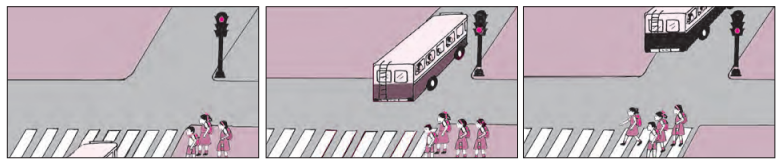
1. Always cross the road at the zebra crossing.
2. Stop driving when the signal is red. (You can add more to the list)

Question 2.
Give reasons why we should obey these rules.
Answer:
We should obey these rules so that we can avoid accidents.

Maharashtra Board Class 5 EVS Solutions Part 1 Chapter 6 Rules Are for Everyone

Question 3.
Which one of these rules do you feel need to be changed?
Answer:
(From the list you have made in Q.(l) above, choose one rule which need to be changed and give reason)

Question 4.
What other rules do you think are needed for better discipline in traffic?
Answer:
(Personal response)

Question 5.
How will you answer the question: ‘Don’t girls need as nourishing a diet as is given to boys?’
Answer:
Of cource, both girls and boys both need a nourishing diet during their growing age and both must be treated equally without any gender bias.

Question 6.
In what other ways do you feel there is discrimination between boys and girls?
Answer:
Boys are allowed to receive higher education, they are given better facilities, they are allowed to be out of the house late at night without time restrictions and they are not forced to do household chores like girls.

Maharashtra Board Class 5 EVS Solutions Part 1 Chapter 6 Rules Are for Everyone

Glossary:

  1. specify – state a fact
  2. disobeying – falling to obey
  3. occurences – incidents or events
  4. injustice – lack of fairness or justice
  5. abolished – formally put an end to
  6. banned – officially or legally prohibited
  7. enacted – put into practice
  8. obstacles – something that hinders progress
  9. colleague – a person with whom one works in a profession or business.
  10. constant – occuring continuously over a period of time
  11. discriminate – differentiate
  12. dowry – an amount of property or money brought by a bride to her husband on their marriage.
  13. instrumental – serving as a means of persuing an aim
  14. gratitude quality of being thankful
  15. combat – to take action to reduce or prevent.
  16. orthodox – following traditional rules
  17. ensure – make certain
  18. neglect – fail to care for properly.
  19. hospitable – friendly and welcoming to guests
  20. access – means to enter a place
  21. prohibited – forbidden
  22. afford -have enough money to pay for
  23. exploited – make use in an unfair way
  24. conserved – protect
  25. nourishing – containing substances necessary for growth, health
  26. bias – prejudice against someone
  27. chores – routine tasks.

Maharashtra Board Class 5 EVS Solutions Part 1 Chapter 2 Motions of the Earth

Balbharti Maharashtra State Board Class 5 Environmental Studies Solutions Chapter 2 Motions of the Earth Notes, Textbook Exercise Important Questions and Answers.

Maharashtra State Board Class 5 EVS Solutions Part 1 Chapter 2 Motions of the Earth

5th Std EVS 1 Digest Chapter 2 Motions of the Earth Textbook Questions and Answers

1. What is the Solution?

Question 1.
What is the Solution?
Amit wants to take his granny to Australia which is in the southern hemisphere. But she cannot bear very cold weather. When should they make this trip?
Answer:
They should take their trip between March and September because the southern hemisphere has its summer season then.

Maharashtra Board Class 5 EVS Solutions Part 1 Chapter 2 Motions of the Earth

2. Use your brainpower!

Question (a)
How many rotations does the earth complete during one revolution around the sun?
Answer:
Earth makes 365 complete rotations and one quarter rotation.

Question (b)
It is sunrise at Itanagar in Arunachal Pradesh. Write the names of the following cities in the order in which the sun will rise there : Mumbai (Maharashtra), Kolkata (West Bengal), Bhopal (Madhya Pradesh), Nagpur (Maharashtra).
Answer:
Kolkata (West Bengal), Bhopal (Madhya Pradesh), Nagpur (Maharashtra), Mumbai (Maharashtra)

3. Fill in the blanks:

Question 1.
The motion of the earth around itself is called …………………… .
(a) revolution
(b) rotation
(c) dual motion
Answer:
(b) rotation

Question 2.
The motion of the earth around the sun is called ………………….. .
(a) revolution
(b) rotation
(c) dual motion
Answer:
(a) revolution

Maharashtra Board Class 5 EVS Solutions Part 1 Chapter 2 Motions of the Earth

Question 3.
The rotation of the earth gives rise to …………………… .
(a) seasons
(b) day and night
(c) year
Answer:
(b) day and night

4. What is meant by each of the following terms:

Question (a)
Full moon
Answer:
At night, when we are able to see the entire illuminated part of the moon, it is called full moon.

Question (b)
New moon.
Answer:
At night, when we are not able to see the entire moon as it does not receive the sun’s light, it is called new moon.

Question (c)
Lunar month
Answer:
The period from one new moon to the next which is of 28 – 30 days is called a lunar month.

Question (d)
Tithi
Answer:
Each day of the lunar month is called a tithi.

5. Answer the following questions.

Question (a)
What is an equator?
Answer:
1. The imaginary4 circle exactly in between the north and south pole is called the equator.
2. The equator divides the earth into two equal parts.

Maharashtra Board Class 5 EVS Solutions Part 1 Chapter 2 Motions of the Earth

Question (b)
What are the two parts of the earth made by the equator?
Answer:
The two equal parts of the earth made by the equator are called northern hemisphere and southern hemisphere respectively.

Environmental Studies Part 1 Standard 5th Solutions Chapter 2 Motions of the Earth Additional Important Questions and Answers

Fill in the blanks with the correct answers from the options given below:

Question 1.
The imaginary line around which the earth rotates is called its …………………….. .
(a) axis of rotation
(b) sphere of rotation
(c) line of rotation
Answer:
(a) axis of rotation

Question 2.
The earth rotates from …………………….. .
(a) east to north
(b) west to east
(c) west to south
Answer:
(b) west to east

Question 3.
We divide the whole day into ………………….. parts.
(a) 365
(b) 7
(c) 24
Answer:
(c) 24

Question 4.
The earth’s ………………….. is inclined.
(a) equator
(b) axis
(c) north pole
Answer:
(b) axis

Maharashtra Board Class 5 EVS Solutions Part 1 Chapter 2 Motions of the Earth

Question 5.
The imaginary line that divides the earth into two equal parts is called the …………………… .
(a) axis
(b) rotation
(c) equator
Answer:
(c) equator

Question 6.
The earth completes one ………………….., it makes one complete turn around itself.
(a) rotation
(b) revolution
(c) season
Answer:
(a) rotation

Question 7.
The period of time that the earth takes to complete one rotation is called a …………………… .
(a) day
(b) night
(c) fortnight
Answer:
(a) day

Question 8.
A day has two parts, day and ………….. .
(a) day
(b) night
(c) fortnight
Answer:
(b) night

Question 9.
We divide the whole day into 24 parts, each of which is called an …………………… .
(a) day
(b) second
(c) hour
Answer:
(c) hour

Question 10.
There are about ………………. days and 6 hours in a year.
(a) 365
(b) 563
(c) 356
Answer:
(a) 365

Maharashtra Board Class 5 EVS Solutions Part 1 Chapter 2 Motions of the Earth

Question 11.
A leap year has ………………. days.
(a) 365
(b) 366
(c) 367
Answer:
(b) 366

Question 12.
Many of our festivals are connected with the
(a) songs
(b) games
(c) seasons
Answer:
(c) seasons

Question 13.
The ……………….. revolves around the earth and the earth revolves around the sun.
(a) earth
(b) moon
(c) sun
Answer:
(b) moon

Question 14.
From the earth we see only ……………. side of the moon.
(a) three
(b) two
(c) one
Answer:
(c) one

Question 15.
The moon has no ………………… of its own.
(a) light
(b) moonlight
(c) daylight
Answer:
(a) light

Question 16.
We can see the moon because of the ………………. light which falls on it.
(a) space
(b) earth’s
(c) sun’s
Answer:
(c) sun’s

Question 17.
On a full moon night, we see the entire …………………. of the moon that faces the earth.
(a) light
(b) side
(c) night
Answer:
(b) side

Question 18.
It takes ………………. days from the new moon to the full moon.
(a) 10 or 12
(b) 14 or 15
(c) 8 or 9
Answer:
(b) 14 or 15

Question 19.
The fortnight from new moon to full moon is called ………………….. of the moon.
(a) waning
(b) waxing
(c) lunar
Answer:
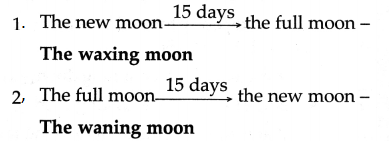
(b) waxing

Question 20.
The fortnight from the full moon to the new moon is called the ………………. of the moon.
(a) waning
(b) waxing
(c) lunar
Answer:
(a) waning

Question 21.
The period from one new moon to the next is called the ……………………… month.
(a) waning
(b) waxing
(c) lunar
Answer:
(c) lunar

Question 22.
Every day of the lunar month is called a …………………….. .
(a) cycle
(b) tithi
(c) season
Answer:
(b) tithi

Maharashtra Board Class 5 EVS Solutions Part 1 Chapter 2 Motions of the Earth

Question 23.
The revolution of the earth and the inclination of its axis give rise to the cycle of ………………….. .
(a) seasons
(b) festivals
(c) songs
Answer:
(a) seasons

Name the following:

Question 1.
The period of time that the earth takes to complete one rotation.
Answer:
A day

Question 2.
The period of time the earth takes to complete one revolution.
Answer:
One year

Question 3.
Number of days in a leap year.
Answer:
366

Question 4.
Three main seasons in India.
Answer:
Summer, rainy and winter

Question 5.
The cycle of six seasons.
Answer:
Rituchakra

Question 6.
Every day of the lunar month.
Answer:
A tithi

Question 7.
Two parts of a day.
Answer:
Day time and night time

Question 3.
Match the following:

’A’‘B’
(1) The Waxing moon(a) Krishna Paksha
(2) The Waning moon(b) 22 March to 23 September
(3) Summer in northern hemisphere(c) Shukla Paksha
(4) Winter in northern hemisphere(d) 23 September to 22 March

Answer:

’A’‘B’
(1) The Waxing moon(c) Shukla Paksha
(2) The Waning moon(a) Krishna Paksha
(3) Summer in northern hemisphere(b) 22 March to 23 September
(4) Winter in northern hemisphere(d) 23 September to 22 March

Answer the following in one sentence:

Question 1.
What is the name given to the changing shapes of the moon that we see?
Answer:
The different shapes of the moon that we see are called the phases of the moon.

Question 2.
What are the names of the days on which we see a round moon and on which day we see no moon at all?
Answer:
The day we see a round moon is called Full Moon Day and the day we see no moon is called New Moon Day.

Maharashtra Board Class 5 EVS Solutions Part 1 Chapter 2 Motions of the Earth

Question 3.
What is a day?
Answer:
The period of time that the earth takes to complete one rotation is called a day, that is 24 hours.

Question 4.
What is the duration of a year?
Answer:
There are about 365 days and 6 hours in a year.

Question 5.
What causes the cycle of seasons?
Answer:
The revolution of the earth and the inclination of its axis give rise to the cycle of seasons.

Question 6.
What is the rotation of the earth?
Answer:
The movement of the earth around itself is called ‘rotation of the earth’.

Question 7.
What is ‘axis of rotation’?
Answer:
The imaginary line around which the earth rotates is called its ‘axis of rotation’. It is an imaginery line between the north pole and south pole.

Question 8.
What is the ‘equator of the earth’?
Answer:
The imaginary line that divides the earth into two equal parts i.e. the northern hemisphere and southern hemisphere is called the equator of the earth.

Maharashtra Board Class 5 EVS Solutions Part 1 Chapter 2 Motions of the Earth

Question 9.
In which direction does the earth rotate?
Answer:
The earth rotates from west to east.

Question 10.
Into how many parts is the day divided?
Answer:
The day is divided into two parts i.e. day and night.

Question 11.
Into how many hours is the ‘day’ divided?
Answer:
The day is divided into 24 hours.

Question 12.
What is the revolution of the earth?
Answer:
The movement of the earth around the sun in one year is called the revolution of the earth.

Question 13.
Around whom does the moon revolve?
Answer:
The moon revolves around the earth.

Question 14.
What is waxing of the moon?
Answer:
The moon takes a fortnight to move from new moon to full moon. This period of time is known as waxing of the moon.

Question 15.
What is ‘waning of the moon’?
Answer:
The moon takes a fortnight to move from a full moon to new moon. This period of time is known as waning of the moon.

Question 16.
What is a lunar month?
Answer:
The period from one new moon to the next is of 28 to 30 days. It is called the lunar month.

Question 17.
What is’tithi’?
Answer:
Every day of the Lunar month is called a ‘tithi’.

Maharashtra Board Class 5 EVS Solutions Part 1 Chapter 2 Motions of the Earth

Give geographical reasons:

Question 1.
The length of day and night is not always equal.
Answer:
The length of day and night is not always equal because:
1. Of the earth’s inclined axis.
2. Its revolution around the sun.

Question 2.
From 22 March to 23 September, northern hemisphere, experiences summer and southern hemisphere experiences winter.
Answer:
1. From 22 March to 23 September the days are longer than the night in the northern hemisphere.
2. It is warmer here.
3. So, it is summer.
4. However, at this time southern hemisphere nights are longer than the days.
5. So it receives less heat.
6. Therefore, Southern hemisphere experiences winter.

Question 3.
The sun, the moon and the earth are not always along a straight line.
Answer:
1. The moon revolves around the earth.
2. The earth revolves around the sun.
3. These two orbits intersect.
4. Hence the sun, the moon and the earth are not always along a straight line.

Question 4.
We see phases of the moon.
Answer:
1. From the full moon to the new moon the illuminated part of the moon seen from the earth becomes smaller and smaller.
2. From new moon to full moon it again grows bigger and bigger.
3. Therefore we see phases of the moon.

Question 5.
Waxing moon
Answer:
The fortnight from new moon to full moon which is 14 to 15 days is called waxing moon. Here the moon seems to become bigger and bigger, i.e. it waxes.

Maharashtra Board Class 5 EVS Solutions Part 1 Chapter 2 Motions of the Earth

Question 6.
Waning moon
Answer:
The fortnight from full moon to new moon which takes 14 to 15 days is called the waning moon. Here the moon seems to become smaller and smaller, i.e. it wanes.

Answer briefly:

Question 1.
Explain ‘Phases of the moon’.
Answer:
1. From the full moon to the new moon the illuminated5 part of the moon seen from the earth becomes smaller and smaller.
2. From new moon to full moon, the illuminated part of the moon grows bigger and bigger.
3. These different shapes of the moon that we see are called the ‘phases of the moon’.

Question 2.
What are the effects of the rotation and revolution of the earth?
Answer:
1. The rotation of the earth gives rise to day and night.
2. The revolution of the earth and the inclination6 of its axis give rise to the cycle of seasons.

Write short notes on:

Question 1.
Leap year.
Answer:

  1. In the Gregorian calendar, the year has 365 days.
  2. It counts 6 hours less every year.
  3. That makes 24 hours or one day in every four years.
  4. This extra day is added in the fourth year in the month of February.
  5. That year will have 366 days.
  6. That year is called a leap year.

Question 2.
Complete the following:
Answer:
Maharashtra Board Class 5 EVS Solutions Part 1 Chapter 2 Motions of the Earth 1
3. The fortnight of the waxing moon + the fortnight of the waning moon – A lunar month

Maharashtra Board Class 5 EVS Solutions Part 1 Chapter 2 Motions of the Earth

Glossary:

  1. waning – decreasing
  2. waxing – increasing.
  3. orbits – regularly repeated elliptical course of a celestial object.
  4. imaginary – existing only in the imagination
  5. illuminated – lit up
  6. inclination – a degree of sloping.

Maharashtra Board Class 5 Hindi Solutions Chapter 16 बचाव

Balbharti Maharashtra State Board Class 5 Hindi Solutions Sulabhbharati Chapter 16 बचाव Notes, Textbook Exercise Important Questions and Answers.

Maharashtra State Board Class 5 Hindi Sulabhbharati Solutions Chapter 16 बचाव

5th Standard Hindi Digest Chapter 16 बचाव Textbook Questions and Answers

1. प्राकृतिक विपदाएँ कौन-कौन -सी हैं, लिखो

प्रश्न 1.
प्राकृतिक विपदाएँ कौन-कौन -सी हैं, लिखो

Maharashtra Board Class 5 Hindi Solutions Chapter 16 बचाव

Hindi Sulabhbharati Class 5 Solutions Chapter 16 बचाव Additional Important Questions and Answers

निम्नलिखित प्रश्नों के उत्तर दीजिए:

प्रश्न 1.
क्या आप जानते हैं 26 जुलाई, 2005 को मुंबई में कौन सी आफत आई थी?
उत्तर:
26 जुलाई, 2005 को मुंबई में बाढ़ आई थी।

प्रश्न 2.
भूकंप कैसे आता है?
उत्तर:
पृथ्वी के भीतर चट्टानों की परतों के आगे – पीछे खिसकने से भूकंप आता है।

प्रश्न 3.
बाढ़ आने पर क्या होता है?
उत्तर:
बाढ़ आने पर फसलें नष्ट हो जाती हैं। नदी के आस-पास के गाँवों, बस्तियों, इमारतों में पानी भरने लगता है।

प्रश्न 4.
सुनामी किसे कहते हैं?
उत्तर:
समुद्र के तल में भूकंप आने पर ऊँची-ऊँची लहरें उत्पन्न होती हैं। यही सुनामी है।

प्रश्न 5.
बाढ़ आने का कारण क्या है?
उत्तर:
लगातार अधिक बारिश बाढ़ का कारण है।

Maharashtra Board Class 5 Hindi Solutions Chapter 16 बचाव

प्रश्न 6.
ज्वालामुखी किसे कहते हैं?
उत्तर:
पृथ्वी के भीतर से गर्मी के कारण लावा फूटकर बाहर निकलता है, इसे ज्वालामुखी कहते हैं।

प्रश्न 7.
लावे में किसका समावेश होता है?
उत्तर:
लावे में गर्म पत्थरों का समावेश होता है। लावा रास्ते में आनेवाले घरों और पेड़-पौधों को नष्ट कर देता है।

निम्नलिखित प्रश्नों के उत्तर एक वाक्य में लिखिए:

प्रश्न 1.
प्राकृतिक विपदाएँ कौन-कौन सी हैं? लिखो।
उत्तर:
प्राकृतिक विपदाएँ – भूकंप, बाढ़, सुनामी, ज्वालामुखी विस्फोट, सूखा (अकाल) आदि हैं।

प्रश्न 2.
छत और दीवारें कब गिरने लगती हैं?
उत्तर:
धरती के हिलने से छत और दीवारें गिरने लगती हैं।

प्रश्न 3.
भूकंप के समय अपने बचाव के लिए हमें क्या करना चाहिए?
उत्तर:
भूकंप के समय अपने बचाव के लिए हमें तुरंत घर के बाहर खुली जगह में आ जाना चाहिए या मकान के कोनों, मेज़, लकड़ी के तख्त के नीचे, दरवाज़े के पीछे छिप जाना चाहिए।

प्रश्न 4.
अधिक बारिश होने पर क्या होता है?
उत्तर:
अधिक बारिश होने पर नदी-नाले पानी से भरकर बहने लगते हैं।

प्रश्न 5.
पानी बढ़ने की सूचना प्राप्त होते ही क्या करना चाहिए?
उत्तर:
पानी बढ़ने की सूचना प्राप्त होते ही सुरक्षित स्थान पर पहुँच जाना चाहिए।

प्रश्न 6.
सुनामी की सूचना मिलने पर तटवर्ती प्रदेश में रहने वाले लोगों को तुरंत क्या करना चाहिए?
उत्तर:
सुनामी की सूचना मिलने पर तटवर्ती प्रदेश में रहनेवाले लोगों को तुरंत सुरक्षित स्थान पर चले जाना चाहिए।

Maharashtra Board Class 5 Hindi Solutions Chapter 16 बचाव

प्रश्न 7.
हमें पाटकर बस्तियाँ कहाँ नहीं बनानी चाहिए?
उत्तर:
हमें समुद्र तट को पाटकर बस्तियाँ नहीं बनानी चाहिए।

प्रश्न 8.
आजकल कौन से यंत्र विकसित हो रहे हैं?
उत्तर:
आजकल त्सुनामी की पूर्व सूचना देने वाले यंत्र विकसित हो रहे हैं।

4. कोष्ठक में से उचित शब्द चुनकर रिक्त स्थानों की पूर्ति कीजिए:

प्रश्न 4.
कोष्ठक में से उचित शब्द चुनकर रिक्त स्थानों की पूर्ति कीजिए: (फसलें, छिपना, सुरक्षित, समुद्र, सुनामी, चट्टानों, बारिश, लहरें)

  1. दरवाज़े के पीछे …………. चाहिए।
  2. बाढ़ से ………….. नष्ट हो जाती हैं।
  3. हमें ………….. स्थान पर पहुँच जाना चाहिए।
  4.  ………….. के तल में भूकंप आने पर ऊँची-ऊँची लहरें उत्पन्न होती हैं।
  5. ……………. की पूर्व सूचना देनेवाले यंत्र आजकल विकसित हो रहे हैं।
  6. पृथ्वी के भीतर ………… की परतों के खिसकने पर धरती हिलने लगती है।
  7. लगातार अधिक ………… होने पर नदी-नाले पानी से भरकर बहने लगते हैं।
  8. समुद्र के तल में भूकंप आने पर ऊँची-ऊँची …………….. उत्पन्न होती हैं।

उत्तर:

  1. छिपना
  2. फसलें
  3. सुरक्षित
  4. समुद्र
  5. सुनामी
  6. चट्टानों
  7. बारिश
  8. लहरें

प्रश्न 5.
निम्नलिखित वाक्य सही ✓ हैं या गलत × निशान लगाइए:
उत्तर:

  1. भूकंप आने पर छत, दीवारें आदि गिरने लगती हैं। (✓)
  2. भूकंप आने पर दरवाज़े के पीछे छिप जाना चाहिए। (✓)
  3. भूकंप एक प्राकृतिक विपदा है। (✓)
  4. पृथ्वी के नीचे चट्टानों के खिसकने से भूकंप आता है। (✓)
  5. समुद्र के तल में होने वाले भूकंप को सुनामी कहते हैं। (✓)
  6. हमें समुद्र को पाटकर बस्तियाँ बनानी चाहिए। (×)
  7. पानी बढ़ने की सूचना नहीं दी जाती। (×)
  8. सुनामी की पूर्व सूचना यंत्रों द्वारा प्राप्त हो जाती है। (✓)
  9. बाढ़ आने पर फसलें नष्ट हो जाती हैं। (✓)

Maharashtra Board Class 5 Hindi Solutions Chapter 16 बचाव

प्रश्न 6.
निम्नलिखित स्थितियों में से सही स्थिति को चुनिए:
1. आपका घर नदी के किनारे है। अधिक वर्षा के कारण बाढ़ आने की संभावना बढ़ गयी है।
(अ) आप सामान की चिंता में घर में बैठे रहेंगे।
(ब) पैसे व कीमती चीजें लेकर सुरक्षित स्थान पर चले जाएंगे।
2. आप का घर हिल रहा है। बाहर से चिल्लाने की आवाज़े आ रही हैं।
(अ) भागकर बाथरूम में छिप जाएँगे।
(ब) तुरंत घर के बाहर खुली जगह में चले जाएँगे।
उत्तर:
1. पैसे व कीमती चीजें लेकर सुरक्षित स्थान पर चले जाएँगे।
2. तुरंत घर के बाहर खुली जगह में चले जाएंगे।

व्याकरण:

प्रश्न 1.
समान अर्थवाले शब्द लिखिए:

  1. भीतर
  2. पृथ्वी
  3. घर
  4. बारिश
  5. जल
  6. नदी
  7. फसल
  8. सूचना
  9. पूर्व

उत्तर:

  1. अंदर
  2. धरती
  3. गृह
  4. बरसात
  5. पानी
  6. सरिता
  7. उपज
  8. जानकारी
  9. पहले

प्रश्न 2.
विपरीत अर्थवाले शब्द लिखिए:

  1. ऊँची
  2. खुला
  3. नीचे
  4. पीछे
  5. छिपना
  6. सुरक्षित
  7. विकसित

उत्तर:

  1. नीची
  2. बंद
  3. ऊपर
  4. आगे
  5. निकलना
  6. असुरक्षित
  7. अविकसित

ज्ञानी Summary in Hindi

पाठ का सारांशः

प्रस्तुत पाठ में प्राकृतिक बाढ़, भूकंप, सुनामी जैसी अनेक विपदाओं के बारे में जानकारी दी गई है तथा उनसे बचाव के तरीकों के बारे में भी बताया गया है।

Maharashtra Board Class 5 Hindi Solutions Chapter 16 बचाव

शब्दार्थ:

  1. बचाव-दल – सलामती दस्ता (rescue team)
  2. भूकंप – भूचाल (earthquake)
  3. परत – तह (layer)
  4. बाढ़ – सैलाब (flood)
  5. सूचना – जानकारी (information)
  6. सुरक्षित – महफूज (protected)
  7. सुनामी – समुद्र में भूकंप (tsunami)
  8. तटवर्ती – तटीय (coastal)
  9. पाटना – भराव करना (act of filling)
  10. चट्टान – (rock)

Maharashtra Board Class 5 Hindi Solutions Chapter 13 राष्ट्रीय त्योहार

Balbharti Maharashtra State Board Class 5 Hindi Solutions Sulabhbharati Chapter 13 राष्ट्रीय त्योहार Notes, Textbook Exercise Important Questions and Answers.

Maharashtra State Board Class 5 Hindi Sulabhbharati Solutions Chapter 13 राष्ट्रीय त्योहार

5th Standard Hindi Digest Chapter 13 राष्ट्रीय त्योहार Textbook Questions and Answers

प्रश्न 1.
उचित जोड़ियाँ मिलाओ:

(अ)(ब)
1. स्वतंत्रता दिवस(अ) सदैव सावधान की मुद्रा में खड़े रहें।
2. 26 जनवरी(आ) समय पर उपस्थित होना आवश्यक है।
3. राष्ट्रगीत के समय(इ) गणतंत्र दिवस।
4. झंडा वंदन के लिए(ई) 15 अगस्त।

उत्तर:

(अ)(ब)
1. स्वतंत्रता दिवस(ई) 15 अगस्त।
2. 26 जनवरी(इ) गणतंत्र दिवस।
3. राष्ट्रगीत के समय(अ) सदैव सावधान की मुद्रा में खड़े रहें।
4. झंडा वंदन के लिए(आ) समय पर उपस्थित होना आवश्यक है।

Maharashtra Board Class 5 Hindi Solutions Chapter 13 राष्ट्रीय त्योहार

Hindi Sulabhbharati Class 5 Solutions Chapter 13 राष्ट्रीय त्योहार Additional Important Questions and Answers

निम्नलिखित प्रश्नों के उत्तर दीजिए:

प्रश्न 1.
हमारे राष्ट्रीय त्योहार कौन-कौन से हैं?
उत्तर:
स्वतंत्रता दिवस एवं गणतंत्र दिवस हमारे राष्ट्रीय त्योहार हैं।

प्रश्न 2.
गणतंत्र दिवस कब मनाया जाता है?
उत्तर:
गणतंत्र दिवस 26 जनवरी को मनाया जाता है।

प्रश्न 3.
राष्ट्रध्वज में कितने रंग होते हैं ? उनके नाम लिखिए।
उत्तर:
राष्ट्रध्वज में तीन रंग होते हैं, केसरी, सफेद और हरा।

प्रश्न 4.
जब कहीं भी राष्ट्रगीत गाया या बजाया जाता हो, तो हमें क्या करना चाहिए?
उत्तर:
राष्ट्रगीत के समय सावधान की मुद्रा में खड़े रहना चाहिए।

प्रश्न 5.
राष्ट्रध्वज के बीच में लगने वाले चक्र का नाम बताइए?
उत्तरः
राष्ट्रध्वज के बीच में लगनेवाले चक्र का नाम अशोक चक्र है।

प्रश्न 6.
‘जन गण मन’ गीत सबसे पहले किस भाषा में लिखा गया था?
उत्तरः
‘जन गण मन’ गीत सबसे पहले बंगाली भाषा में लिखा गया था।

Maharashtra Board Class 5 Hindi Solutions Chapter 13 राष्ट्रीय त्योहार

प्रश्न 7.
राष्ट्रध्वज में केसरी रंग किस बात का प्रतीक है?
उत्तर:
राष्ट्रध्वज में केसरी रंग साहस एवं बलिदान का प्रतीक है।

प्रश्न 8.
राष्ट्रध्वज में सफेद रंग किस बात को दर्शाता है?
उत्तर:
राष्ट्रध्वज में सफेद रंग शांति एवं सत्य को दर्शाता है।

प्रश्न 9.
राष्ट्रध्वज में हरा रंग किस बात को दर्शाता है?
उत्तर:
राष्ट्रध्वज में हरा रंग समृद्धि एवं हरियाली का प्रतीक है।

प्रश्न 10.
स्वतंत्रता दिवस क्यों मनाया जाता है?
उत्तरः
स्वतंत्रता दिवस के दिन भारत देश आज़ाद हुआ था।

निम्नलिखित प्रश्नों के उत्तर एक या दो शब्दों में लिखिए:

प्रश्न 1.
15 अगस्त, 1947 को किस दिन के रूप में मनाया जाता है?
उत्तर:
स्वतंत्रता दिवस।

प्रश्न 2.
आज़ाद भारत में संविधान किस दिन लागू किया गया?
उत्तर:
26 जनवरी, 1950

प्रश्न 3.
राष्ट्रीय त्योहार वाले दिन हम क्या लहराते हैं?
उत्तर:
राष्ट्रध्वज।

Maharashtra Board Class 5 Hindi Solutions Chapter 13 राष्ट्रीय त्योहार

प्रश्न 4.
ध्वजारोहण करते समय हम कौन-सा गीत गाते हैं?
उत्तर:
‘जन गण मन’।

प्रश्न 5.
राष्ट्रगान के रचयिता का नाम बताइए।
उत्तर:
रवीन्द्रनाथ टैगोर।

प्रश्न 6.
स्वतंत्रता दिवस और गणतंत्र दिवस किस प्रकार के त्योहार हैं?
उत्तर:
राष्ट्रीय।

प्रश्न 7.
किनके प्रयासों से देश स्वतंत्र हुआ?
उत्तर:
अमर सपूतों।

प्रश्न 8.
राष्ट्रीय त्योहारों के दिन हम क्या निकालते हैं?
उत्तर:
प्रभात फेरियाँ।

प्रश्न 9.
भारत देश को आज़ादी कैसे मिली है?
उत्तर:
कड़े संघर्षों से।

प्रश्न 10.
हमें किनके बलिदानों को याद रखना चाहिए?
उत्तर:
स्वतंत्रता सेनानियों।

Maharashtra Board Class 5 Hindi Solutions Chapter 13 राष्ट्रीय त्योहार

निम्नलिखित वाक्य सही ✓ हैं या गलत × निशान लगाइए।

प्रश्न 3.
निम्नलिखित वाक्य सही ✓ हैं या गलत × निशान लगाइए।
उत्तर:

  1. विद्यालय देर से जाना चाहिए। (×)
  2. हमें बड़ों का सम्मान करना चाहिए। (✓)
  3. हमें अपने सारे काम खुद नहीं करने चाहिए। (×)
  4. अपने तिरंगे का सम्मान करना हमारा कर्तव्य है। (✓)
  5. हमें अपने शिक्षक और माता-पिता की बातें माननी चाहिए। (✓)
  6. राष्ट्रीय त्योहार हमें निष्ठा के साथ मनाने चाहिए। (✓)
  7. राष्ट्रीय त्योहार राज्य, ज़िला, गाँव, शहर में धूमधाम से मनाए जाते हैं। (✓)
  8. राष्ट्रीय त्योहारों के दिन जगह-जगह सजावट और रोशनी की जाती है। (✓)
  9. 26 जनवरी, 1950 के दिन हमारा संविधान बना था। (✓)

प्रश्न 4.
उचित शब्द चुनकर रिक्त स्थानों की पूर्ति कीजिए:

  1. ……………….फेरियाँ निकालते हैं।
  2. जगह-जगह ……….. और ……….. की जाती है।
  3. झंडावंदन के लिए सभी का ………….. पर उपस्थित होना आवश्यक है।
  4. राष्ट्रगीत के समय सदैव ………….. की मुद्रा में खड़े रहें।
  5. राष्ट्रीय त्योहार पूरी ………. के साथ आनंदपूर्वक मनाने चाहिए।
  6. …………. को हमारा देश स्वतंत्र हुआ।
  7. ……….. और ……….. हमारे राष्ट्रीय त्योहार हैं।
  8. हमें अपने तिरंगे का ………… करना चाहिए।

उत्तर:

  1. प्रभात
  2. सजावट, रोशनी
  3. समय
  4. सावधान
  5. निष्ठा
  6. 15 अगस्त, 1947
  7. स्वतंत्रता दिवस, गणतंत्र दिवस
  8. सम्मान

व्याकरण:

प्रश्न 1.
समानार्थी शब्द लिखिए:

  1. दिवस
  2. त्योहार
  3. स्वतंत्रता
  4. प्रयास
  5. देश
  6. सदैव
  7. आनंद

उत्तर:

  1. दिन
  2. उत्सव
  3. आज़ादी
  4. प्रयत्न
  5. राष्ट्र
  6. हमेशा
  7. खुशी

Maharashtra Board Class 5 Hindi Solutions Chapter 13 राष्ट्रीय त्योहार

प्रश्न 2.
विपरीत अर्थवाले शब्द लिखिए:

  1. आज़ाद
  2. दिन
  3. सपूत
  4. देश
  5. शहर
  6. रोशनी
  7. सम्मान
  8. उपस्थित
  9. आवश्यक
  10. आनंद

उत्तर:

  1. गुलामी
  2. रात
  3. कपूत
  4. विदेश
  5. गाँव
  6. अँधेरा
  7. अपमान
  8. अनुपस्थित
  9. अनावश्यक
  10. दुख

राष्ट्रीय त्योहार Summary in Hindi

पाठ का सारांशः

हमारे देश को आज़ादी अनेक वीरों के बड़े संघर्ष और बलिदान से मिली है। हमें इसकी रक्षा करनी चाहिए। आज़ादी के उपलक्ष्य में मनाए जानेवाले राष्ट्रीय त्योहार हमारी शान हैं। हमें इन त्योहारों को आदर के साथ मनाना चाहिए।

Maharashtra Board Class 5 Hindi Solutions Chapter 13 राष्ट्रीय त्योहार

शब्दार्थ:

  1. स्वतंत्रता – आज़ादी (freedom)
  2. गणतंत्र – प्रजातंत्र (Republic)
  3. अमर – अमिट, अविनाशी (immortal)
  4. अथक – बिना थके (tireless)
  5. प्रयास – प्रयत्न (try)
  6. संविधान – शासन -व्यवस्था (constitution)
  7. कर्तव्य – कर्म, दायित्व (duty)
  8. मुद्रा – अवस्था (position)
  9. बलिदान – त्याग (sacrifice)
  10. सम्मान – आदर (respect)
  11. राष्ट्रीय – राष्ट्र का (national)
  12. चर्चा – बातचीत करना (discussion)
  13. जिला – (district)

Maharashtra Board Class 5 Hindi Solutions पुनरावर्तन ४

Balbharti Maharashtra State Board Class 5 Hindi Solutions Sulabhbharati पुनरावर्तन ४ Notes, Textbook Exercise Important Questions and Answers.

Maharashtra State Board Class 5 Hindi Sulabhbharati Solutions पुनरावर्तन ४

5th Standard Hindi Digest पुनरावर्तन ४ Textbook Questions and Answers

1. सुनो, और दोहराओ:

प्रश्न 1.
सुनो, और दोहराओ:
Maharashtra Board Class 5 Hindi Solutions पुनरावर्तन ४ 1
उत्तर:
(अ) 1. मैं जा रह्य / रही हूँ।
2. हम जा रहे हैं / रही हैं।
3. तू जा रहा है / रही है।
4. तुम जा रहे हो / रही हो।
5. आप जा रहे हैं। रही हैं।

(ब) 1. यह जा रहा है। रही है।
2. ये जा रहे हैं / रही हैं।
3. वह जा रहा है / रही है।
4. वे जा रहे हैं / रही हैं।

Maharashtra Board Class 5 Hindi Solutions पुनरावर्तन ४

2. तुम्हारे मित्र के पास कॉपी खरीदने के लिए पैसे नहीं हैं । तुम्हारी माँ ने मेला देखने के लिए तुम्हें तीस रुपये दिए हैं। इस स्थिति में तुम्हारे मन में कौन से भाव जागते हैं ? बताओ।

प्रश्न 1.
तुम्हारे मित्र के पास कॉपी खरीदने के लिए पैसे नहीं हैं । तुम्हारी माँ ने मेला देखने के लिए तुम्हें तीस रुपये दिए हैं। इस स्थिति में तुम्हारे मन में कौन से भाव जागते हैं ? बताओ।
उत्तर:
उन तीस रुपयों में से अपने मित्र को कॉपी खरीदकर दूंगा तथा बचे हुए पैसों से मेला घूम लूँगा।

3. पढ़ो, और समझो:

प्रश्न 1.
पढ़ो, और समझो:
उत्तर:

  1. जहाँ विद्यार्थी पढ़ते हैं – विद्यालय
  2. जादू दिखाने वाला – जादूगर
  3. खेल खेलने वाला – खिलाड़ी
  4. सच बोलनेवाला – सत्यवादी
  5. चित्र बनाने वाला – चित्रकार
  6. मूर्तियाँ बनाने वाला – मूर्तिकार
  7. सोने के गहने बनाने वाला – सुनार
  8. जो कभी न हारा हो – अजेय
  9. जो साग-सब्ज़ी खाता हो – शाकाहारी
  10. जहाँ अनाथ रहते हैं – अनाथालय
  11. जो रोगियों का इलाज करता है – डॉक्टर
  12. जो लकड़ी का काम करता है – बढ़ई
  13. जो मिट्टी के बरतन बनाता है – कुम्हार
  14. जो जूते सिलता है – मोची
  15. जो कपड़े सिलता है – दर्जी

Maharashtra Board Class 5 Hindi Solutions पुनरावर्तन ४

4. सड़क पार करते समय तुम क्या सावधानी बरतते हो? लिखो।

प्रश्न 1.
सड़क पार करते समय तुम क्या सावधानी बरतते हो? लिखो।
Maharashtra Board Class 5 Hindi Solutions पुनरावर्तन ४ 2
उत्तर:
सड़क पार करते समय जेब्रा क्रॉसिंग पर से जाना चाहिए।

5. पढ़ाई करने के बाद भी तुम्हें परीक्षा से डर लग रहा है, तो तुम क्या करोगे? बताओ।

प्रश्न 1.
पढ़ाई करने के बाद भी तुम्हें परीक्षा से डर लग रहा है, तो तुम क्या करोगे? बताओ।
(क) बड़ों से बातचीत करोगे ।
(ख) खेलने जाओगे।
(ग) गाना सुनोगे अथवा गाओगे ।
(घ) आराम करोगे ।
उत्तर:
(क) बड़ों से बातचीत करेंगे।

Maharashtra Board Class 5 Hindi Solutions पुनरावर्तन ४

Hindi Sulabhbharati Class 5 Solutions पुनरावर्तन ४ Additional Important Questions and Answers

प्रश्न 1.
चित्रों को देखकर नीचे दी गई शब्द – पहेली बूझो; (एक अक्षर का एक से अधिक बार उपयोग कर सकते हैं।)
उत्तर:
फूल: कमल, हरसिंगार, गुलाब, गुड़हल, डहलिया, रजनीगंधा, बेला, सूरजमुखी, सदाबहार।
फल: केला, अमरूद, अनार, चीकू, अंगूर, सेब, पपीता, आम, अंजीर, संतरा, सीताफल, अनन्नास।
अन्य शब्द: नीम, पीला, ताला, अंदर, चीता, कान, पतला, खीर, गेंद, जल, दानी

Maharashtra Board Class 5 EVS Solutions Part 1 Chapter 4 Environmental Balance

Balbharti Maharashtra State Board Class 5 Environmental Studies Solutions Chapter 4 Environmental Balance Notes, Textbook Exercise Important Questions and Answers.

Maharashtra State Board Class 5 EVS Solutions Part 1 Chapter 4 Environmental Balance

5th Std EVS 1 Digest Chapter 4 Environmental Balance Textbook Questions and Answers

1. What’s the solution?

Question 1.
We have to remove insects from the grains without using pesticides.
Answer:
Some plants like neem or their extract repel insects. That is insects run away from these substances. Hence if we place dried leaves of neem. The grains will be freed from the insects as they will go away. Similarly it is by applying canola oil to the grains we can remove the insects as canola oil is also an insect repellent.

Maharashtra Board Class 5 EVS Solutions Part 1 Chapter 4 Environmental Balance

2. Use your brain power.

Question 1.
Use your brain power.
Make up a food chain:
Frog, Kite, Worm, Snake, Grass
Answer:
Grass → Worm → Frog → Snake → Kite

3. Answer the following questions:

Question (a)
What is a food chain? Give an example of it.
Answer:
In nature, Plants are food for one small animal. This smaller animal is the food for a larger animal which in turn is a food for another larger animal. Thus we see that one living thing is connected to another living thing for their food, and each component or living thing is the food for the next one. Therefore we can say the components form a chain. Such a biological chain is called a food chain. Example of a food chain.

Plants → Grasshopper → Frog → Snake → Kite

The plant is eaten by the grasshopper which is eaten by the frog. The frog is eaten by the snake which is eaten by the kite.

Question (b)
How is the balance in the environment maintained?
Answer:
1. Plants use substances in the soil for their growth and when plants and animals die the micro-organisms decompose them and this added to the substances goes back to the soil once again.
2. Similarly the water cycle maintains a continuous supply of water for all the living things.
3. Living things take in oxygen and give out carbon dioxide while breathing. The plants take in carbon dioxide and give out oxygen while preparing their food. Thus oxygen gets added to the air.

There are several other such cycles which go on in nature due to interaction amongst living things. When such interactions and cycles go on uninterrupted continuously, they help in maintaining the food chain. Due to this, environmental balance is maintained.

4. What substances in the soil are useful for the growth of plants?

Question 1.
What substances in the soil are useful for the growth of plants?
Answer:
The plants use substances like water, minerals and organic matter from the soil for their growth.
Note: Grasshopper does not feed on worms. It is not a flesh eating insect. It eats only various parts of plants like seeds & leaves. The first image shown in the textbook on page 20 is of an insect called cricket, which feeds on worms, and the bird feeds on this cricket.
Hence the correct food chain is
grass → worm → cricket (insect) → bird

Maharashtra Board Class 5 EVS Solutions Part 1 Chapter 4 Environmental Balance

5. True or false?

Question 1.
True or false?

  1. Microorganisms form a part of the environment.
  2. It is necessary to maintain biodiversity.
  3. A grasshopper eats birds.

Answer:

  1. True
  2. True
  3. False

Environmental Studies Part 1 Standard 5th Solutions Chapter 4 Environmental Balance Additional Important Questions and Answers

Fill in the blanks with the correct answers from the options given below:

Question 1.
The variety we see in all living things that belong to a particular area is called ………………. of that place.
(a) biodiversity
(b) environment
(c) food chain
Answer:
(a) biodiversity

Question 2.
While studying biodiversity of a given place scientists make large number of ………………….. in different conditions using special devices.
(a) observation
(b) specification
(c) direction
Answer:
(a) observation

Question 3.
The science which studies interaction between living and non living things is known as ……………….. .
(a) environmental science
(b) food web
(c) water cycle
Answer:
(a) environmental science

Maharashtra Board Class 5 EVS Solutions Part 1 Chapter 4 Environmental Balance

Question 4.
The soil, air, water, plants, animals and microorganisms are known as the ……………… of the environment.
(a) dividents
(b) components
(c) substance
Answer:
(b) components

Question 5.
A ………………. is formed by interlinking of several food chains.
(a) food store
(b) junk food
(c) food web
Answer:
(c) food web

Question 6.
………………… make their own food using water and carbon dioxide in the presence of sunlight.
(a) Plants
(b) Animals
(c) Humans
Answer:
(a) Plants

Question 7.
………………… decompose the dead remains of plants and animals present in the soil.
(a) plants
(b) micro-organism
(c) animals
Answer:
(b) micro-organism

Question 8.
All the living organisms get a continuous supply of water in nature because of the water ……………… .
(a) fountain
(b) clouds
(c) cycle
Answer:
(c) cycle

Question 9.
Plants give out ………………. gas while preparing their food.
(a) carbon dioxide
(b) oxygen
(c) sulphur dioxide
Answer:
(b) oxygen

Question 10.
Plants take in ………………….. gas from the air while preparing food.
(a) carbon dioxide
(b) oxygen
(c) mitrogen
Answer:
(a) carbon dioxide

Question 11.
When cycles go on uninterrupted in nature, ……………….. balance is maintained in nature.
(a) environmental
(b) botanical
(c) geographical
Answer:
(a) environmental

Maharashtra Board Class 5 EVS Solutions Part 1 Chapter 4 Environmental Balance

Question 12.
Living and non-living things are ………………….. on each other.
(a) independent
(b) interdependent
(c) dependent
Answer:
(c) dependent

Question 13.
One living thing can be a part of a number of food …………………. .
(a) web
(b) chains
(c) link
Answer:
(b) chains

Question 14.
Every living thing gets its food from the …………………… .
(a) environment
(b) nature
(c) kitchen
Answer:
(a) environment

Question 15.
Many animals in the environment eat only
(a) animals
(b) plants
(c) grass
Answer:
(b) plants

Question 16.
Animals eat other animals that live on …………………. .
(a) plants
(b) animals
(c) humans
Answer:
(a) plants

Question 17.
……………………… are the main support of every food chain.
(a) Animals
(b) Plants
(c) Humans
Answer:
(b) Plants

Question 18.
Due to the ………………… every living thing gets the food it needs and therefore continues to live.
(a) food chain
(b) water cycle
(c) oxygen
Answer:
(a) food chain

Question 19.
………………. living in the soil helps the process of decomposition.
(a) Worms
(b) Microorganisms
(c) Insects
Answer:
(b) Microorganisms

Question 20.
Living things use …………………. from the air for breathing.
(a) oxygen
(b) nitrogen
(c) carbon
Answer:
(a) oxygen

Maharashtra Board Class 5 EVS Solutions Part 1 Chapter 4 Environmental Balance

Question 21.
Plants use ………………. from the air for making their food.
(a) oxygen
(b) carbon dioxide
(c) nitrogen
Answer:
(b) carbon dioxide

Question 2.
Find the odd man out and state its reasons:

  1. Snake, Cow, Grains, Mouses
  2. Sparrow, Grass, Elephant, Worm
  3. Water, Soil, Microorganisms, Sun

Answer:

  1. Cow – (Snake, Mouse, Grains form a food chain.)
  2. Elephant – (Sparrow, worm, grass form a food chain.)
  3. Microorganism (water, soil, air are non-living components of the environment.)

Question 3.
State whether the following statements are true or false:

  1. Plants give out oxygen while breathing.
  2. If forests are destroyed environmental balance is disturbed.
  3. Tigers, Lions and Leopards harm the environment.
  4. When substances present in nature are used up by the living organisms they are returned back to the soil after decomposition of their dead bodies.
  5. In a given environment we always see only one type of food chain.
  6. A mouse can be a link of two different food chains.
  7. Pollution of air, water and soil can disturb the environmental balance.

Answer:

  1. False
  2. True
  3. False
  4. True
  5. False
  6. True
  7. True

Question 4.
Give one word for the following processes:
1. Process of give and take between living things and non living things.
2. Process of breaking down of dead bodies into simpler substances so that the plants can use it.
Answer:
1. Interaction
2. Decomposition

Question 5.
Use your brain power. Make up a food chain:

  1. Deer, Plants, Tiger, Microorganisms
  2. Sea lion, Algae, Small fish, Big fish
  3. Owl, Nuts, Squirrel, Fox
  4. Algae, Dragon fly, Mosquito larvae, Chameleon
  5. Grass, Fox, Bird, Snail
  6. Grasshopper, Cow, Turkey bird, Grass, Humans
  7. Elephant Calf, Lion, Plants, Deer
  8. Snakes, Caterpillars, Chicken, Eagles
  9. Flowers of plant, Falcon (Bird), Lizard, Honeybee

Answer:
1. Plants → Deer → Tiger → Microorganisms
2. Algae → Small fish → Large fish → Sea lion → Shark
3. Nuts → Squirrel → Owl → Fox
4. Algae → Mosquito larvae → Dragonfly → Chameleon
5. Grass → Snail → Bird → Fox

Maharashtra Board Class 5 EVS Solutions Part 1 Chapter 4 Environmental Balance 1

9. Caterpillars → Chicken → Snake → Eagle
10. Flowers of plants → Honeybee → Spider → Lizard → Falcon (Bird)

Maharashtra Board Class 5 EVS Solutions Part 1 Chapter 4 Environmental Balance

Answer the following in one or two sentences:

Question 1.
Which living organism is the main support of every food chain?
Answer:
The plants which prepare their own food are the main support of every food chain.

Question 2.
What is the food of the plants?
Answer:
Plants prepare their own food using carbon dioxide from air and water from the soil in presence of sunlight.

Question 3.
What is an environment?
Answer:
The surroundings and the conditions in those surroundings which affect the life of the organisms there, are together known as their environment.

Question 4.
What are the components of the environment?
Answer:
Sunlight, air, water, soil, plants and animals etc. are the components of the environment.

Question 5.
What is a food web?
Answer:
One living thing can be a part of a number of food chains. That gives rise to a food web in nature.

Question 6.
Name the following (Give any two examples):

  1. Animals which eat only plants.
  2. Animals which eat animals that live on plants.
  3. Birds which eat insects.
  4. Birds which eat fruits or seeds of plants.
  5. Birds which eat small animals or small birds.
  6. Birds and animals which eat dead animals.

Answer:

  1. Goat, Cow, Elephant, Rhinoceros
  2. Tiger, Lion, Leopard, Cheetah
  3. Robin, Peacock, Chicken (Hen), Woodpecker
  4. Sparrow, Pigeon, Parrot, Toucans, Canary
  5. Kite, Eagle, Falcon, Hawk, Owl
  6. Vulture, Hyena, Crow, Raccoons

Give reasons:

Question 1.
Plants are the main support of every food chain.
Answer:
Many animals in the environment eat only plants. Some animals eat smaller animals that live on plants. Plants make their own food using water from soil and carbon dioxide from air in the presence of sunlight. They are the only living organisms which do not depend for their food on other animals. All other animals directly or indirectly depend on plants for food. Hence, plants are the main support of every food chain.

Maharashtra Board Class 5 EVS Solutions Part 1 Chapter 4 Environmental Balance

Question 2.
It is important to maintain the environmental balance for existence of living things.
Answer:
When various cycles present in nature go on uninterrupted, environmental balance is maintained in nature. This helps in maintaining the food chains in the environment. If environmental balance is not maintained the food chains get affected and some animals may die due to shortage of food. If this continues, it will destroy nature and all the living things. Therefore, to maintain the food chains and existence of living things environmental balance should be maintained.
Maharashtra Board Class 5 EVS Solutions Part 1 Chapter 4 Environmental Balance 2

State how the following non-living things found in nature are useful to living things:

Question 1.
Hollow of a tree:
Answer:
Many animals like squirrels, birds etc. take shelter in the hollow of the tree. Insects also are known to be found in this hollow.

Question 2.
Rocks:
Answer:
Small rocks present in the soil help the roots of the plant to breathe and grow as they allow air and water to pass through the soil. Soil which helps plant to grow is formed by breaking down of these rocks. Many insects also take shelter under large rocks e.g. Scorpions live below the rocks.

Question 3.
Sun:
Answer:
The Sun is the source of energy. It provides sunlight. Plants cannot grow without sunlight. Hence no life would exist without the Sun.

Question 4.
Mountains:
Answer:
Large forests are found on mountains. Rivers also originate in mountains. Hence, mountains are homes for many living things. They are homes for many birds, monkeys, wild animals etc.

Answer the following questions:

Question 1.
What do you mean by a link in a food chain? If one of the links in a chain is lost from the chain, can the food chain last? Explain.
Answer:
In a food chain, one animal is the food for the next animal. Each one of the living things forming a food chain is called the link of the food chain. If one link of the food chain is lost it will affect the next link. It means if one animal is lost, the next animal for which it is the food will also get affected, as it will cause shortage of food.

This will lead to starvation8 and death of the animals in the next link. For Example: If deer disappear from the forest, the lions and tigers will starve for food and they will die. Thus we see that the food chain will not last if one link in the food chain is lost.

Maharashtra Board Class 5 EVS Solutions Part 1 Chapter 4 Environmental Balance

Question 2.
Who eats birds?
Answer:
Birds are eaten by various animals depending on their size. Small birds like sparrow, robins, canary etc. are eaten by snakes. Pythons can eat large birds like herons, stork, etc. by coiling around them and crushing them. Dogs, cats also eat birds like chicken, hens etc. Some large birds eat the young ones of birds or smaller birds.

For example: kite, eagle, owls, falcons eat small birds or young ones of other birds. Foxes, racoons, coyotes are wild animals which eat small birds and other birds like owls. Lastly human beings also eat birds like, chicken, turkey, duck as food. Birds like eagles, kite and vultures are not eaten by any animals. Microorganisms decompose them after they die.

Question 3.
Explain how the balance in the level of oxygen and carbon dioxide present in the air is maintained in nature.
Answer:
The animals take in oxygen and give out carbon dioxide while breathing. However plants take in carbon dioxide and give out oxygen while preparing food. Due to this process the balance in the level of oxygen and carbon dioxide present in the air is maintained.

Question 4.
Describe the water cycle present in nature.
Answer:
Our earth is covered with water bodies. The heat of the sun evaporates the water from the water bodies like sea, lake, ponds stveanes of rivers and also the water which has percolated beneath the soil. This evaporated water vapour is light, so it moves up into the higher and cooler atmosphere to form fine drops of water which float.

These smaller drops form clouds. They later join together to form big and heavy drops; which fall down as rain. The rain water goes back to the water bodies, thus the process of condensation, evaporation and rainfall continue to form a water cycle.

Observe the picture given below and answer the following:

Maharashtra Board Class 5 EVS Solutions Part 1 Chapter 4 Environmental Balance 3

Question (A)
Find the different food chains of whichthe worm and the mouse form a link:
Answer:
There are two food chains as shown below :
Maharashtra Board Class 5 EVS Solutions Part 1 Chapter 4 Environmental Balance 4

Maharashtra Board Class 5 EVS Solutions Part 1 Chapter 4 Environmental Balance

Question (B)
Find the different food chains where the fox and lion form a link.
Answer:
There are two food chains as shown below:
Maharashtra Board Class 5 EVS Solutions Part 1 Chapter 4 Environmental Balance 5

Question 1.
Draw a diagram showing the water cycle occurring in Nature:
Answer:
Maharashtra Board Class 5 EVS Solutions Part 1 Chapter 4 Environmental Balance 6

Question 2.
Draw a diagram showing the oxygen cycle:
Answer:
Maharashtra Board Class 5 EVS Solutions Part 1 Chapter 4 Environmental Balance 7

What’s the solution?

Question 1.
Mosquitoes cause malaria. To prevent malaria mosquitoes need to be stopped from growing.
Answer:
Mosquitoes larvae grow in water. Hence to prevent them from growing we should not allow water to accumulate. We should keep our surroundings dry. Also fishes like guppies, gold fish and killifish eat up the mosquto larvae. Hence sometimes these fish are grown in ponds to prevent mosquitoes.

Maharashtra Board Class 5 EVS Solutions Part 1 Chapter 4 Environmental Balance

Question 2.
The soil is to be made fertile without adding chemical fertilizers.
Answer:
Organic manure is added to the soil. Organic manure is prepared by mixing remains of plants, vegetables, fruits etc. with soil and is allowed to decompose by microorganisms. Microorganisms convert the above substances to organic manure which helps plants to grow.

Can you tell?

Question 1.
What is the deer’s food?
Answer:
The deer feeds on various kinds of plants and grass. They eat leaves, twigs and stems of the plant.

Question 2.
What is food for the tiger?
Answer:
The tiger feeds on plant eating animals like deer, cows, zebra, giraffe, goats, buffaloes, rhinoceros, calf etc.

Maharashtra Board Class 5 EVS Solutions Part 1 Chapter 4 Environmental Balance

Glossary:

  1. interaction – a particular way in which matter affects one another
  2. component – part of a larger whole
  3. residues – a small amount that remains behind.
  4. uninterrupted – without break.
  5. organic – derived from living matter
  6. presence – being present.
  7. hollow – having a hole or empty space inside.